The Protein Lab Notebook: Unpacking WPI 90, Whey Science, and What Actually Ends Up in the Shaker

Walk into any supplement store and the protein aisle looks like a wall of noise. Tubs shouting numbers, percentages, flavours, and claims that all seem to promise the same thing. Somewhere in that chaos sits whey protein isolate 90, often shortened to WPI 90, and it tends to be the one that quietly outperforms the rest. But what actually makes it different? And why do nutritionists, athletes, and label-readers keep circling back to it?
To answer that properly, it helps to start at the very beginning, back when whey was nothing more than a watery byproduct of cheese making. From there, the journey to a 90% pure protein powder involves more science than most people realise.
Where Whey Actually Comes From
Whey is the liquid left behind when milk is curdled during cheese production. For centuries, it was considered a waste product. Farmers fed it to pigs, poured it onto fields, or dumped it altogether. The shift happened when researchers discovered that this pale yellow liquid was packed with high-quality protein, essential amino acids, and bioactive compounds that the body absorbs extremely efficiently.
Milk contains two main types of protein: casein and whey. Casein makes up around 80% of milk protein and digests slowly. Whey makes up the remaining 20% and digests quickly, making it the go-to for post-workout recovery and any situation where the body needs amino acids fast.
The catch is that raw liquid whey is mostly water, with a small percentage of protein, some lactose, some fat, and a scattering of minerals. Turning it into a usable powder, especially a premium one, requires careful filtration and processing.
The Three Main Types of Whey Protein
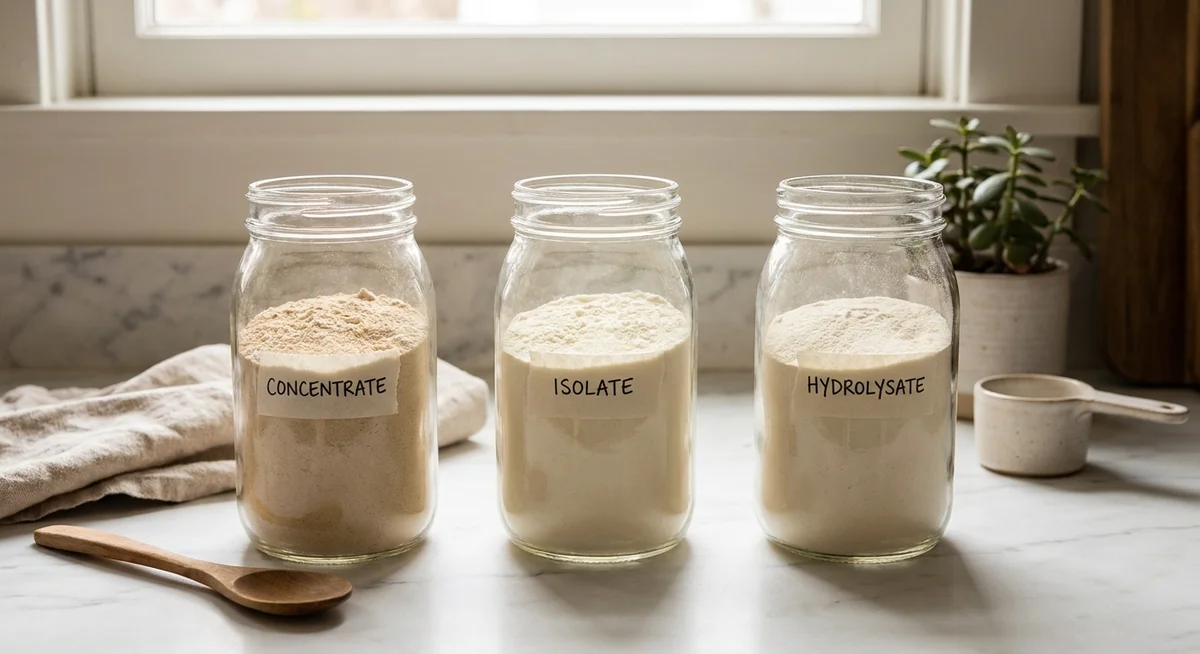
Not all whey is created equal. The category gets broken down into three main forms, each with different levels of processing, purity, and price.
Whey Protein Concentrate (WPC)
This is the most basic and most common form. Whey concentrate typically contains anywhere from 30% to 80% protein by weight, with the rest made up of lactose, fat, and moisture. It's cheaper to produce because it requires less filtration. The trade-off? More carbs, more fat, more lactose, and a less clean nutritional profile.
WPC is fine for casual use, but for anyone tracking macros closely or sensitive to dairy sugars, it can fall short.
Whey Protein Isolate (WPI)
This is where the bar rises. Isolate is filtered further to remove most of the lactose, fat, and other non-protein content. A true whey protein isolate sits at around 90% protein by weight, hence the WPI 90 label. That extra filtration means a leaner, purer powder with significantly less lactose, making it easier on the stomach for many people.
Whey Protein Hydrolysate (WPH)
Hydrolysate takes things one step further by partially "pre-digesting" the protein through enzymatic processing. The protein chains are broken down into smaller peptides, which can speed up absorption. It's often used in medical nutrition and infant formulas. The downside is cost and, frankly, taste. Hydrolysates tend to be bitter and expensive without offering dramatic benefits over a quality isolate for most users.
How WPI 90 Is Actually Made
The path from liquid whey to a 90% pure isolate is a precise one. It's less "mixing powders in a factory" and more "industrial-scale chemistry experiment." Here's the general flow.
- Cheese production: Milk is curdled, the solids are pressed into cheese, and the liquid whey is collected.
- Pasteurisation: The whey is gently heated to eliminate bacteria without damaging the protein structure.
- Filtration: This is the critical step. Liquid whey is pushed through ultra-fine membranes that separate protein from lactose, fat, and minerals. The two main methods used for premium isolates are microfiltration and ultrafiltration, often combined.
- Ion exchange (optional): Some manufacturers use ion exchange, which uses electrical charges to separate proteins. It's effective but can damage delicate immunoglobulins, which is why many premium brands stick to cross-flow microfiltration.
- Concentration and drying: The protein-rich liquid is concentrated, then spray-dried at low temperatures to preserve the protein structure. The result is a fine, off-white powder ready for blending.
The temperature and method matter enormously. Aggressive heat or harsh chemicals can denature proteins, reducing their biological value. A well-made WPI 90 keeps those protein structures intact, which is why the source and processing method are worth paying attention to.
Why Quality Genuinely Matters
It's tempting to think protein is protein, but that's not how it plays out in practice. Two tubs labelled "whey protein" can contain wildly different products. Quality shows up in several places.
The Source of the Milk
Grass-fed, pasture-raised dairy tends to produce whey with a better fatty acid profile and higher levels of beneficial compounds like CLA and omega-3s. The taste is cleaner too. Mass-produced commodity whey, often sourced from feedlot operations, doesn't carry the same nutritional richness.
The Filtration Method
Cross-flow microfiltration is the gold standard. It uses no chemicals and preserves more of the native protein structure. Cheaper methods can strip out beneficial subfractions like lactoferrin, immunoglobulins, and beta-lactoglobulin.
What's Added (Or Not)
This is where a lot of cheap proteins fall apart. Fillers, artificial sweeteners, gums, soy lecithin, skim milk powder, and amino spiking (adding cheap free-form amino acids to inflate the protein count on a label) are all common shortcuts. A genuinely premium WPI 90 keeps the ingredient list short and the protein content honest.
The label can say 90% protein, but unless the testing backs it up and the ingredient list is clean, that number is just marketing.
The Benefits That Actually Hold Up
Whey protein has been studied more than almost any other supplement on the market, and the research consistently points to a few clear benefits, especially when it comes to a high-quality isolate.
- Muscle protein synthesis: Whey is rich in leucine, the amino acid that flips the switch on muscle building. Studies repeatedly show whey outperforms plant proteins gram-for-gram when it comes to triggering this response.
- Fast absorption: Whey hits the bloodstream quickly, making it ideal for post-workout recovery or any time the body needs amino acids without delay.
- Lean body composition: Higher protein intake supports fat loss while preserving muscle, and whey isolate offers protein without the extra carbs and fat that come with concentrate.
- Immune support: Whey contains immunoglobulins and lactoferrin, which play a role in immune function. Less aggressive filtration preserves these compounds.
- Easier digestion: With most of the lactose removed, WPI 90 is generally well tolerated, even by people who struggle with regular dairy.
- Satiety: Protein keeps people feeling full longer, which is helpful for anyone managing appetite or trying to lose weight without feeling miserable.
Who WPI 90 Is Really For
The short answer? Most people who care about what they're putting in their body. But there are a few groups who benefit the most.
Athletes and lifters need fast, high-quality protein to support recovery and muscle growth. WPI 90 delivers without the bloat or the lactose-related stomach issues.
People watching their macros appreciate the low carb, low fat profile. A typical serving might deliver 25 grams of protein with less than a gram of sugar and barely any fat.
Those with mild lactose sensitivity often find WPI 90 sits much better than concentrate. The filtration process removes most of the lactose that causes problems.
Anyone over 40 dealing with the natural decline in muscle mass that comes with age. Higher protein intake, particularly leucine-rich protein, helps slow sarcopenia and maintain strength.
Busy people who just need a clean, convenient source of protein when whole food isn't realistic. A shake takes thirty seconds and delivers a complete amino acid profile.
What to Look for on a Label
Reading a protein label is a bit of an art. A few things worth checking before buying anything:
- The protein source listed first should be whey protein isolate, not concentrate.
- Check the protein percentage. A true WPI 90 should deliver around 90% protein by dry weight.
- Look at the ingredient list. Shorter is better. Watch out for amino spiking ingredients like taurine, glycine, or creatine listed separately.
- Check for third-party testing or transparency around sourcing.
- If grass-fed or pasture-raised matters, look for it specifically. Vague terms like "premium dairy" don't mean much.
The Bottom Line
Whey protein has come a long way from being a cheese-making leftover. The modern process of turning it into a 90% pure isolate is genuinely impress