WPI 90 vs. WPI 80: What Those Numbers Actually Mean
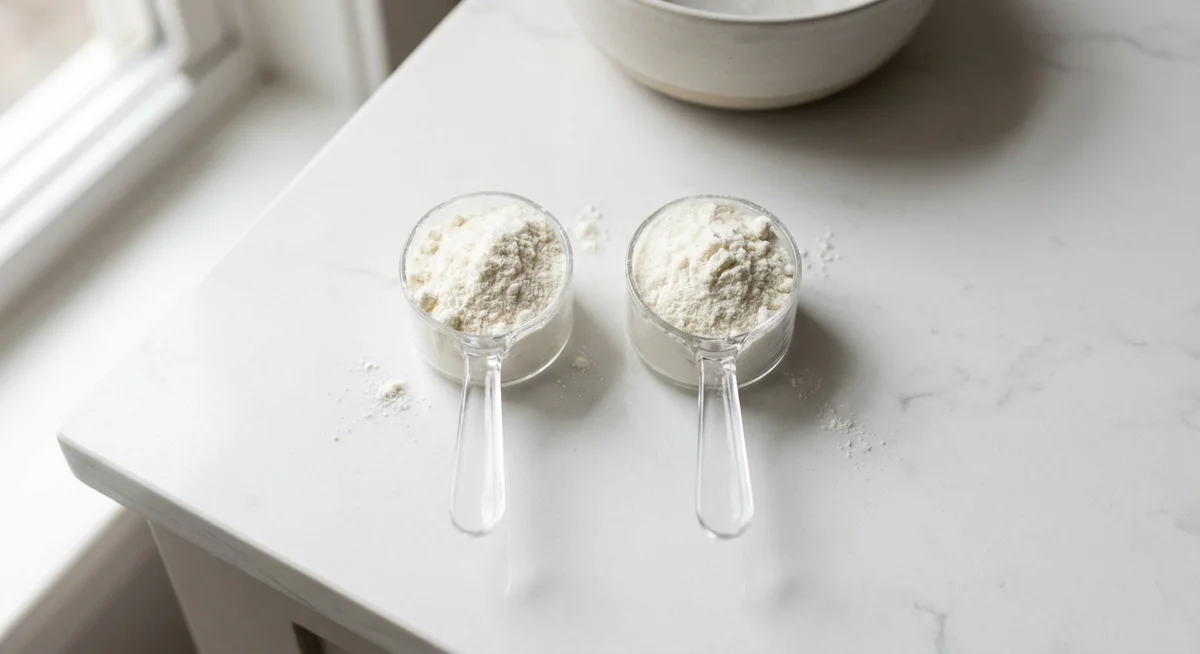
When you see "WPI 90" or "WPI 80" on a protein label, those numbers are telling you the protein percentage by weight, dry basis. A WPI 90 delivers at least 90g of protein per 100g of powder. A WPI 80 delivers around 80g. That 10g gap sounds small, but it compounds across every scoop you take and changes what you're actually paying for.
Key takeaways
- The number after "WPI" is the minimum protein percentage by dry weight.
- WPI 80 and WPI 90 are both whey protein isolates, but filtered to different purity levels.
- A 10-point gap in protein percentage means roughly 10g more protein per 100g of powder, every single serve.
- The remaining percentage is fats, carbohydrates, moisture, and ash - not protein.
- Higher purity generally means fewer processing shortcuts and better ingredient quality, not just a marketing number.
What does the number after "WPI" actually measure?
It measures protein content as a percentage of the total dry powder weight. A WPI 90 must contain at least 90% crude protein on a dry basis. A WPI 80 sits at around 80%. Both are isolates, meaning they have had most of the fat and lactose filtered out through processes like cross-flow microfiltration or ultrafiltration - but the WPI 90 has gone further. More filtration passes, tighter membranes, or additional ion-exchange steps are used to push the purity up those extra 10 points.
So what's filling the other 10-20%? Mostly moisture (all powders carry some water), small amounts of residual fat, trace carbohydrates (including any remaining lactose), minerals, and ash. A WPI 80 has more of all of these. That's not necessarily a disaster, but it does mean less actual protein in each scoop you measure out.

How does the gap play out in real serving sizes?
Most scoops are calibrated to deliver around 25-30g of protein. But the actual scoop weight needed to hit that target differs between WPI 80 and WPI 90, and that changes the economics of the tub.
| Metric | WPI 80 | WPI 90 |
|---|---|---|
| Protein per 100g powder | ~80g | ~90g |
| Powder needed for 30g protein | ~37.5g | ~33.3g |
| Serves per 1kg tub (at 30g protein) | ~26 serves | ~30 serves |
| Typical residual lactose | Low (1-2%) | Very low (<0.5%) |
| Typical fat content | Moderate (~3-4%) | Low (~1-2%) |
| Filtration intensity | Standard ultrafiltration | Multi-pass or tight microfiltration |
That four-serve difference per kilogram adds up. Over a year of daily shakes, you're looking at roughly 1.5 extra kilograms of protein delivered by the WPI 90 from the same number of tubs purchased. When you're comparing protein powders on price, the sticker cost per kilogram is almost always misleading. Cost per gram of actual protein is the number that matters.
Are both actually "isolates"?
Yes, legally and technically. The term "whey protein isolate" doesn't carry a regulated minimum protein percentage in most markets. That means a manufacturer can print "WPI" on a tub that comes in at 80% protein and another can print it for 90% protein, and both are correct. This is why reading the nutrition panel and doing the maths yourself is the only reliable check - not trusting the branding on the front of the bag.
Where WPI 80 makes sense
- Budget is the main constraint and absolute purity is less of a priority
- Lactose tolerance is fine and fat content doesn't matter
- Used in baking or cooking where taste and cost per serve are the main factors
- Blended with other protein sources in a stack
Where WPI 90 earns its price
- You're lactose sensitive and need minimal residual lactose
- You're on a strict calorie or fat target
- You want the most protein per gram of powder with the fewest extras
- Quality and consistency of the base ingredient matter to you
Does higher purity mean better quality protein?
Purity and quality aren't the same thing, but they often move together. Producing a consistent WPI 90 requires tighter process controls, better raw milk sourcing, and more careful filtration. A manufacturer cutting corners on milk quality or processing temperature is unlikely to hit 90% protein consistently, because impurities accumulate when inputs are lower grade.
That's why the protein percentage is a useful proxy for overall manufacturing discipline, not just a measure of what's in the powder. It's also why sourcing decisions matter more than most brands admit. The purity of the finished powder is largely determined upstream, at the farm and the first stage of processing, not just in the filtration room.
It's also worth noting that higher purity isolates tend to have cleaner amino acid profiles relative to their protein content. The protein fractions - beta-lactoglobulin, lactoferrin and other minor whey proteins - are more concentrated when there's less non-protein filler diluting them. If you've read about the fractions inside whey protein, you'll know these are worth preserving.
What about hydrolysed WPI? Where does that fit?
Hydrolysed whey protein isolate starts with a high-purity base (usually a WPI 90) and then puts it through enzymatic hydrolysis, which partially breaks the protein chains into shorter peptides. The protein percentage can actually read lower on a hydrolysate because the peptide fragments include water from the hydrolysis reaction - this doesn't mean less protein, it means the measurement method captures the chemistry differently. Hydrolysates deserve their own breakdown, but the starting point almost always needs to be a clean WPI 90 to be worth the process.
FAQ
Is WPI 90 always better than WPI 80?
For pure protein delivery with minimal fat and lactose, yes. But "better" depends on your goals. If you're blending the powder into a high-calorie mass gainer recipe, the extra fat in a WPI 80 might not bother you at all. If you're lactose sensitive or counting macros tightly, the WPI 90 is the right call nearly every time.
Can I tell the difference by taste?
Often, yes. WPI 90 tends to dissolve more cleanly and has a lighter, less fatty mouthfeel. WPI 80 can taste slightly richer or creamier in an unflavoured form because of the higher fat fraction. In a flavoured product, additives can mask this, which is one reason to look at the numbers rather than relying on taste alone.
Why do some WPI 90 products seem cheaper than WPI 80 from other brands?
Price is also affected by brand margin, flavouring costs, packaging, and whether the product is sold direct or through retail. A WPI 90 sold directly from the manufacturer with minimal packaging overhead can undercut a WPI 80 sold through multiple retail middlemen. The protein percentage tells you about the ingredient. The price tells you about the business model.
How do I know the percentage is accurate?
Look for brands that publish third-party testing results or certificates of analysis. These documents show actual batch-level protein measurements, not just label claims. It's the same principle as how protein content is actually measured - the method and the verifier both matter. If a brand doesn't publish testing data, that's worth noting before you buy.
See what to look for in a quality protein powderA straight breakdown of what separates good protein from filler, and how to read labels without getting burned.