How Protein Content Is Actually Measured (And Why the Method Matters)

When a tub of WPI 90 says it contains 90% protein, that number didn't come from guesswork. It came from a lab. But here's the part most brands skip over: the way protein is measured in a lab has a meaningful effect on how accurate that number is - and whether it holds up to scrutiny. Understanding how protein content is tested helps you separate brands that actually verify their product from the ones that are just printing nice numbers on a label.
Key takeaways
- All protein testing works by measuring nitrogen, because protein contains nitrogen and other nutrients mostly don't.
- Kjeldahl is the oldest and most widely used method - but it can be fooled by amino spiking.
- Dumas combustion is faster, cleaner, and increasingly preferred by quality-focused producers.
- Third-party batch testing is the gold standard: it means an independent lab verifies what the brand claims.
- A brand that publishes its certificates of analysis is showing, not just telling.
Why labs measure nitrogen instead of protein directly
You can't put protein under a microscope and count it. Protein molecules are too complex and varied for direct measurement, so labs take a shortcut that works reliably: they measure nitrogen.
Protein contains nitrogen. Most other nutrients - fats, carbohydrates, sugars - don't contain significant nitrogen. So if you burn or digest a sample and measure how much nitrogen comes off, you can back-calculate how much protein must have been present. The standard conversion factor used for whey protein is 6.25, meaning every gram of nitrogen found equals 6.25 grams of protein.
This is the foundation of the two main methods used globally: Kjeldahl and Dumas. They both measure nitrogen. They just do it differently.
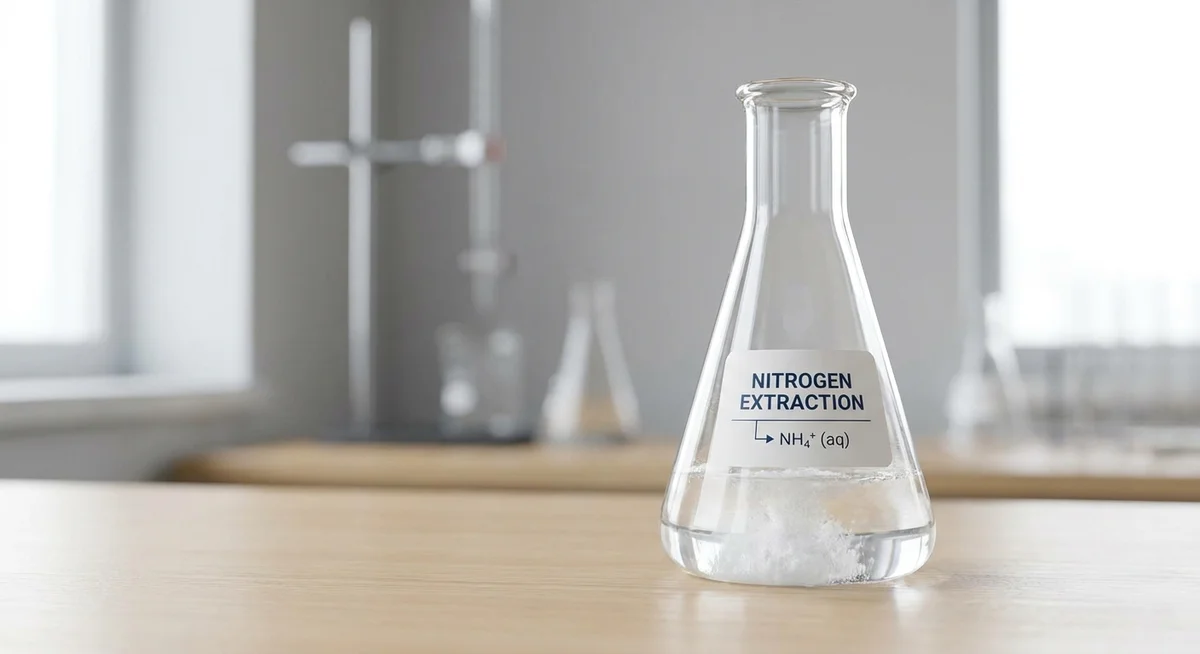
What is the Kjeldahl method and why is it so common?
Kjeldahl testing has been around since 1883. A sample is digested in strong sulfuric acid, which breaks it down and converts all its nitrogen into ammonium sulfate. That ammonium is then distilled off and measured. The nitrogen content is calculated, multiplied by 6.25, and you have your protein percentage.
It became the global standard because it works, it's reproducible, and it's been validated across more than a century of food science. Regulatory bodies and food standards agencies still use it as a reference method.
The problem is that Kjeldahl measures total nitrogen - not specifically protein nitrogen. That distinction opened the door to amino spiking, where brands add cheap free-form amino acids like glycine or taurine to inflate the nitrogen reading without adding complete protein. The method can't tell the difference between nitrogen from a complete protein chain and nitrogen from a single added amino acid.
If you've read about amino spiking and how to spot it, this is exactly why it works as a scam: it exploits the limits of nitrogen-based testing.
What is the Dumas method and is it more accurate?
Dumas combustion - also called the flash combustion method - was developed as a faster, cleaner alternative to Kjeldahl. Instead of acid digestion, the sample is burned at extremely high temperatures (around 900 to 1000°C) in pure oxygen. The combustion gases are passed through a series of traps and the nitrogen content is measured directly using a thermal conductivity detector.
Kjeldahl
- Over 140 years of validation
- Widely accepted by regulators worldwide
- Cheap per test at scale
- Requires hazardous chemicals
- Slower turnaround (hours per sample)
- Vulnerable to amino spiking manipulation
Dumas combustion
- Faster results (minutes per sample)
- No hazardous acid waste
- Highly repeatable across labs
- Better suited to automated high-volume testing
- Same vulnerability to total nitrogen inflation
- Higher upfront equipment cost
Both methods measure total nitrogen, so both share the same theoretical weakness around spiking. The real advantage of Dumas is speed and precision: it's harder to introduce human error, and results come back in minutes rather than hours. High-volume quality labs have largely shifted to Dumas for this reason.
Some advanced labs now pair nitrogen testing with HPLC (High Performance Liquid Chromatography), which can identify and quantify individual amino acids. This approach actually does catch spiking, because it shows whether the protein profile matches genuine whey - but it's more expensive and not yet standard across the industry.
What does "batch testing" mean and why does it matter?
A formula might pass quality testing when it's first developed. But if the raw whey protein concentrate or isolate coming from the dairy changes batch to batch - and it does, because milk composition shifts with seasons, feed, and herd health - the final product can drift from what the original test showed.
Batch testing means that every production run of the finished product goes through independent lab analysis before it ships. The protein content, moisture level, fat content, and microbial safety markers are all checked against the specification.
This matters more than most people realise. A product that tested at 90.3% protein in January might test at 87.1% protein in August if the raw material changed and nobody checked. Brands that batch test catch that variance before it reaches the customer. Brands that don't may not even know it happened.
When you're reading labels and looking for quality signals, the five quality markers worth checking all tie back to this kind of verifiable testing - not just claims on packaging.
What should you actually look for from a brand?
Most brands won't publish COAs on their website by default. That doesn't automatically mean they're hiding something - but if you ask and the answer is vague, that tells you something too.
| What to ask | Strong answer | Weak answer |
|---|---|---|
| Is the product batch tested? | Yes, every production run | We test our formula regularly |
| Who does the testing? | Named accredited third-party lab | Our quality team / our supplier |
| Can I see the COA? | Here it is, batch number included | We can send you something on request |
| What method is used? | Dumas or Kjeldahl, specific details | Industry-standard testing |
| Is the lab ISO/IEC 17025 accredited? | Yes, here's their accreditation number | They're a reputable lab |
Understanding the testing behind the label is part of understanding how to read a whey protein label properly. The protein percentage printed on the front panel is the output of a specific test run in specific conditions. Knowing what that test is - and who ran it - is what turns a marketing claim into an actual fact.
FAQ
Is Kjeldahl or Dumas more accurate for measuring protein in WPI 90?
For pure whey isolate, both methods give comparable results under controlled conditions. Dumas is faster and has fewer operator variables, which makes it more consistent in high-throughput lab settings. Neither method is inherently more accurate for genuine product - the difference shows up when spiking is involved, because both measure total nitrogen rather than protein nitrogen specifically.
Can a protein powder really be "spiked" if it's third-party tested?
It depends on what the third party is testing for. If the lab is only running a nitrogen test and converting to protein using a standard factor, spiking can still go undetected. Labs that test the full amino acid profile via HPLC will catch it. This is why the type of testing matters, not just who does it.
What is a certificate of analysis and how do I read one?
A certificate of analysis (COA) is a lab document that lists the test results for a specific batch of product. It typically includes protein percentage, fat, moisture, carbohydrates, and microbial counts. Look for the batch or lot number (confirms it's a real production test, not a formula spec), the testing lab's name and accreditation, and the date the analysis was completed. Results outside specification should be flagged.
Does the season affect the protein content of whey?
Yes, to a degree. Milk composition shifts with season, feed quality, and the stage of a cow's lactation cycle. These variations flow through to whey concentrate and, to a lesser extent, whey isolate (because isolate undergoes more filtration, which strips out some of the variability). High-quality producers account for this by setting tighter raw material specifications and testing incoming ingredients before production, not just testing the finished product.
Shop WPI 90 that's third-party batch testedEvery batch verified by an independent accredited lab before it ships.