Natural vs. Artificial Flavours in WPI 90: What's Actually in That Chocolate Shake
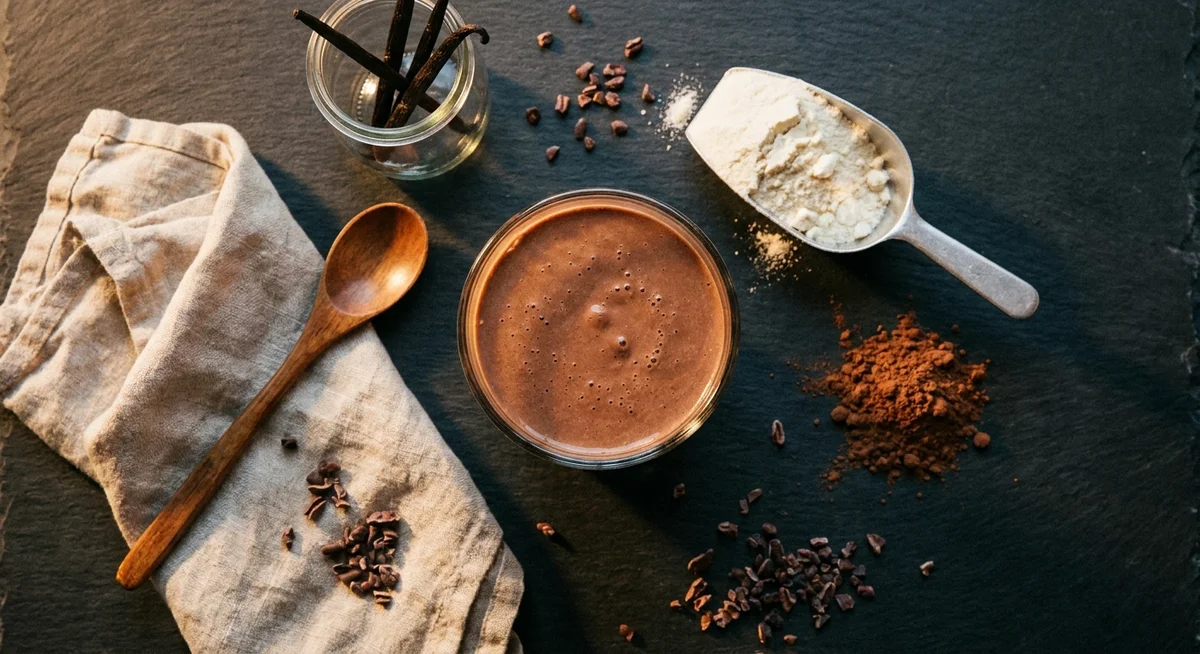
When you pick up a tub of flavoured WPI 90, most of the attention goes to the protein percentage. Fair enough. But the flavouring system is the part of the ingredient list that varies the most between brands, and it's where manufacturers hide a lot of cost-cutting. Here's what natural and artificial flavours actually mean, how they affect your protein, and what the ingredient list is really telling you.
Key takeaways
- "Natural flavour" and "artificial flavour" are legal definitions, not quality guarantees.
- Flavour systems can quietly push protein content down if a brand isn't careful with the ratio.
- Artificial flavours aren't automatically worse for your health, but some additives that travel with them are worth watching.
- A short, readable ingredient list is still the most reliable sign of a well-made protein powder.
- Unflavoured WPI 90 gives you the purest baseline, but a well-formulated flavoured version can be just as clean.
What do "natural" and "artificial" flavours actually mean?
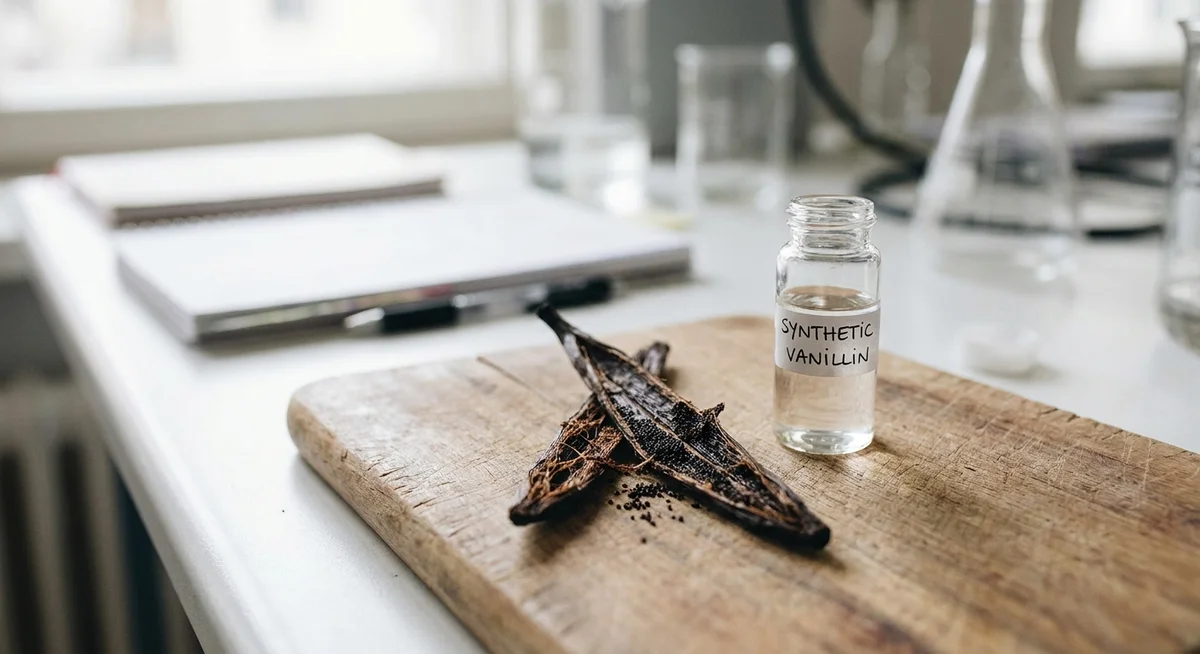
In most markets, the difference comes down to source, not chemical structure. A natural flavour is derived from a plant, animal, or fermentation process. An artificial flavour is synthesised in a lab. The twist: both can be chemically identical. Vanillin, for example, the main flavour compound in vanilla, is found in real vanilla beans (natural) and is also produced from wood pulp or guaiacol (artificial). Your taste buds can't tell the difference, because there isn't one at the molecular level.
What separates them in practice is cost and consistency. Natural vanilla extract is expensive and varies batch to batch depending on the harvest. Synthetic vanillin is cheap and perfectly consistent. This is why budget protein brands lean on artificial flavours: it's not that they're trying to poison you, it's that they're trying to hit a price point.
How does flavouring affect your protein percentage?
This is the part most buyers miss. When a brand formulates a flavoured WPI 90, everything that goes into the tub takes up weight. Flavours, sweeteners, thickeners, and anti-caking agents all dilute the protein percentage relative to an unflavoured base. A pure WPI 90 unflavoured might test at 93-94% protein by weight. Once you add a flavour system, that number drops.
A well-formulated flavoured WPI 90 will still sit around 88-92% protein by weight if the flavouring load is kept minimal. A heavily flavoured or sweetened version can drop below 80%, which puts it closer to a WPC (whey protein concentrate) in actual protein yield, even though it's labelled as an isolate.
| Product type | Typical protein % by weight | Common extras |
|---|---|---|
| Unflavoured WPI 90 | 90-94% | None (just WPI) |
| Well-formulated flavoured WPI 90 | 85-92% | Minimal flavour + sweetener |
| Heavily flavoured WPI 90 | 75-83% | Multiple flavours, thickeners, gums |
| Flavoured WPC 80 | 70-78% | Higher fat/lactose + flavour system |
This is why checking the grams of protein per 100g on the nutrition panel matters more than what the label says on the front. If a "WPI 90" delivers 75g of protein per 100g serve, it's not really a 90% product once it's in your scoop. You can read more about this in our guide to what you're actually paying for in a protein powder.
Which sweeteners travel with artificial flavours?
Artificial flavours rarely arrive alone. Most come as part of a flavour system that includes sweeteners, and this is where the ingredient list gets interesting.
Common sweeteners in budget proteins
- Acesulfame-K (Ace-K): Often used alongside sucralose for a more rounded sweetness. Some people report a metallic aftertaste.
- Aspartame: Increasingly rare in protein powders but still present in some. Breaks down with heat, making it a poor choice if you cook with your WPI.
- Sucralose: Very common and heat-stable, so it keeps its sweetness when you cook or bake with your WPI. It is intensely sweet, so only a very small amount is needed per serve.
Sweeteners in cleaner formulations
- Stevia (steviol glycosides): Plant-derived and often marketed as natural. Can have a slight bitterness that some people notice.
- Monk fruit extract: Milder than stevia, increasingly popular in premium formulations.
- Thaumatin: A protein-based sweetener with a very clean profile. Less common but worth noting if you see it.
- No added sweetener: Unflavoured WPI 90 uses none, which is the cleanest option if you're sensitive to any of the above.
Does the flavour system affect protein quality?
The protein itself, meaning the actual whey isolate, isn't changed by how it's flavoured. Cross-flow microfiltration or ion exchange produces the same amino acid profile regardless of whether chocolate or vanilla is added afterward. The bioavailability and leucine content remain the same.
Where flavouring can indirectly affect quality is through heat. If a brand uses aspartame and markets its product for baking or cooking, there's a mismatch. Aspartame degrades above about 100°C, meaning any sweetness disappears when you heat it. Sucralose and stevia are both heat-stable. If you cook with your protein regularly, check what sweetener your flavoured WPI uses.
How to read the ingredient list on a flavoured WPI 90
Ingredients are listed from highest to lowest by weight. A good flavoured WPI 90 should have whey protein isolate as the first (and ideally, the only major) ingredient. Everything else should be a short, recognisable list. If the first five ingredients are fine but then you hit a wall of emulsifiers, gums, thickeners, and anti-caking agents in positions six through fourteen, that's a sign the formulation is doing a lot of work to mask an inferior base protein or to improve texture on the cheap.
Three things to check specifically:
- Is WPI the first ingredient? Not "whey protein blend" or "milk protein", just whey protein isolate.
- How many grams of protein per 100g? Should be above 85g for any product calling itself WPI 90.
- How many ingredients total? A clean flavoured WPI typically has five to eight. More than twelve is a yellow flag.
For a deeper look at what else hides in labels, the blog post on how to read a whey protein label without getting fooled walks through the full checklist.
Is unflavoured WPI 90 always the better choice?
Not necessarily. Unflavoured WPI 90 is the purest form, which makes it the most flexible (you can add it to anything without the flavour conflicting) and the easiest to evaluate for protein quality. But if you need a fast, convenient shake and you're buying from a brand that formulates carefully, a flavoured WPI can be just as useful and still deliver the protein numbers you're paying for.
The real question is whether the flavouring is there to make a quality product more enjoyable, or to disguise a lower-quality base. That's a question the ingredient list and the protein-per-100g figure answer between them.
See what actually separates good protein from averageOur plain-English guide to protein concentration, source, and ingredients.Frequently asked questions
Are natural flavours healthier than artificial ones?
Not automatically. The regulatory definition of "natural" covers a very wide range of compounds, some of which are highly processed before they end up in your tub. Artificial flavours face equally strict safety testing before approval. The more useful question is whether the overall ingredient list is short and recognisable, not whether each flavour source started life on a plant.
Does flavoured WPI 90 have more calories than unflavoured?
Usually a small amount more, because sweeteners and flavouring agents add marginal calories. In practice the difference is under 5 calories per serving for most formulations using non-caloric sweeteners like sucralose or stevia. If the brand uses significant amounts of sugar as part of the flavour system, the gap can widen, so check the sugars row on the nutrition panel.
Can I trust "no artificial flavours" on the label?
It means the flavouring compounds come from natural sources, which is a real distinction. But it doesn't mean the product is additive-free. Natural flavours can still be processed extensively, and the product may still contain artificial sweeteners, thickeners, or preservatives that aren't classed as flavours. Read the full ingredient list, not just the front-of-pack claim.
What's the cleanest way to flavour WPI 90 at home?
Start with unflavoured WPI 90 and add your own. A teaspoon of raw cacao powder, a half-teaspoon of cinnamon, a scoop of frozen berries, or a small amount of natural peanut butter all work well. You control exactly what goes in, and you skip every additive the manufacturer would otherwise include. It takes about thirty extra seconds per shake.
What's in the Other 10%? The Additives Inside Your WPI 90
WPI 90 is 90% protein by weight - but what fills the other 10%? Emulsifiers, sweeteners, fillers, and flavours all live there. Here's what each one does, and why it matters more than most people think.
WPI 90 vs. WPI 80: What Those Numbers Actually Mean
The difference between WPI 90 and WPI 80 isn't just 10 grams. Here's what the numbers actually measure, how they affect what you're getting per scoop, and why it changes the math on price.
WPI 90 as a Meal Replacement: Smart or a Shortcut Too Far?
Using WPI 90 as a meal replacement sounds convenient, but it's not always the right call. Here's what you actually get, what you miss, and when it makes sense to swap a scoop for a full plate.