What's in the Other 10%? The Additives Inside Your WPI 90
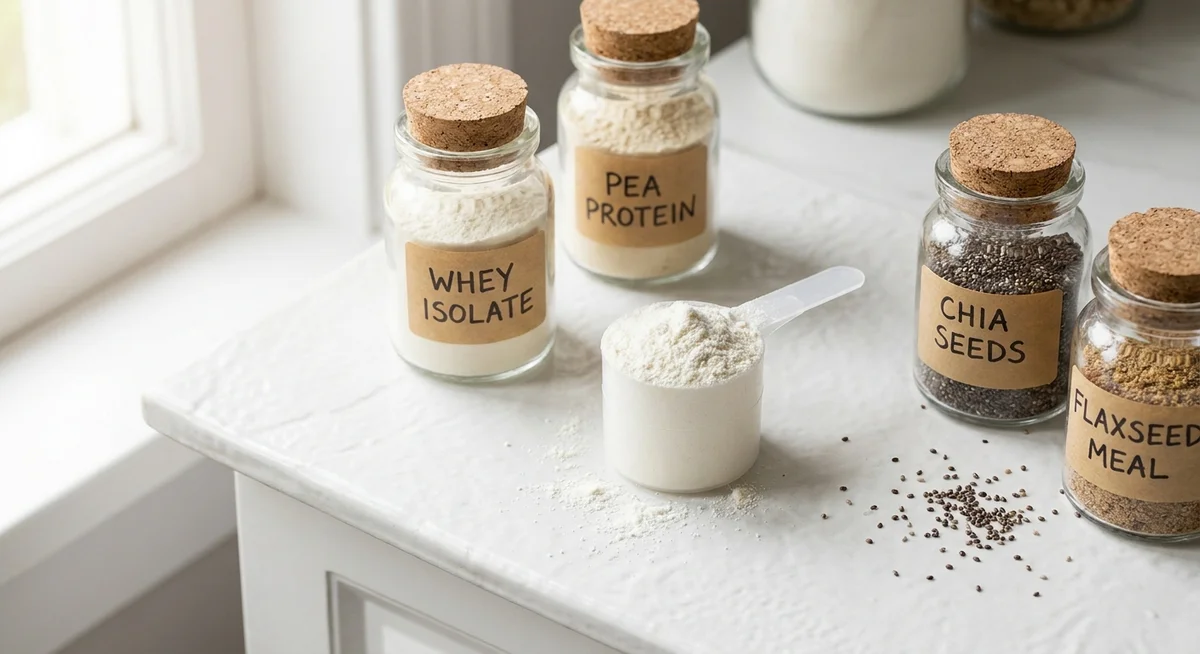
WPI 90 gets marketed on its protein percentage, and fairly so: 90 grams of protein per 100 grams of powder is genuinely impressive. But that number also means roughly 10 grams per 100 grams is something else entirely. Most people never stop to ask what that something else actually is. Some of it is harmless or even helpful. Some of it tells you a lot about how seriously a brand takes what goes into their product.
Key takeaways
- WPI 90 is about 90% protein. The remaining 10% is typically made up of flavour, emulsifiers, thickeners, sweeteners, and sometimes fillers.
- Not all additives are bad. Some improve mixability or shelf life without any downside.
- A short, readable ingredient list is usually a sign of a higher-quality powder.
- Sweetener choice and filler type vary widely between brands and affect both taste and tolerance.
- Understanding the ingredient list is one of the easiest ways to spot a quality product from a padded one.
Why does WPI 90 have anything other than protein?
Pure whey protein isolate, straight out of the filtration process, is a fine white powder with almost no flavour. It mixes into water reasonably well but clumps easily, tastes faintly of milk solids, and has no sweetness. To make it palatable, shelf-stable, and pleasant to drink, manufacturers add a small number of supporting ingredients. The goal of a quality brand is to use as few as necessary, choosing each one with a reason. The goal of a cheaper brand is sometimes to add ingredients that bulk out the powder or disguise poor-quality protein underneath.
What are the most common additives and what do they actually do?
Lecithin (usually sunflower or soy)
Lecithin is an emulsifier. Its job is to help the powder mix smoothly into liquid without clumping into a paste at the bottom of your shaker. Without it, even a high-quality isolate can be frustrating to mix. Sunflower lecithin is the more common choice in premium products; soy lecithin works the same way but comes from soy, which matters if you have a sensitivity. At the small amounts used (usually under 1%), lecithin is well-tolerated and has no meaningful effect on the product's nutrition profile.
Flavouring
Flavours are listed as either "natural flavour" or "artificial flavour" depending on their origin. Natural flavours are derived from real food sources but are still processed; the term doesn't mean the flavour is superior. Artificial flavours are synthesised in a lab but aren't necessarily worse. What matters more is how much flavour is needed: a powder that requires heavy flavouring to be palatable may be masking something. A well-filtered isolate with clean taste characteristics needs less flavour to reach a good result.
Sweeteners
Sweeteners are where brands differ the most. The main options are:
| Sweetener | Type | Calories | Common notes |
|---|---|---|---|
| Stevia | Natural (plant-derived) | Zero | Can have a mild bitter aftertaste at higher doses |
| Sucralose | Artificial | Zero | Very sweet, heat-stable, widely used and well-studied |
| Acesulfame potassium (Ace-K) | Artificial | Zero | Often blended with sucralose to round out sweetness |
| Monk fruit extract | Natural | Zero | Clean taste, increasingly used in premium products |
| Sugar (cane sugar, dextrose) | Natural | 4 cal/g | Adds real carbs; sometimes used in concentrate blends |
None of the zero-calorie options above will spike your blood sugar or meaningfully change the protein content. Preference for one over another usually comes down to taste and personal tolerance. If your stomach feels off after a shake, the sweetener is worth investigating first.
Thickeners and stabilisers
Xanthan gum, guar gum, and carrageenan are the most common. In small amounts they improve texture, giving the shake a slightly fuller mouthfeel instead of watery. At higher amounts they can cause bloating in sensitive people. If a powder lists two or three thickeners, it's worth asking why the texture needs that much help.
Salt (sodium)
A small amount of sodium is sometimes added to round out flavour, similar to how a pinch of salt makes everything taste better. Most flavoured WPI 90 products contain 100 to 200 mg of sodium per serve from this source. It's not a concern for most people, but worth knowing if you're watching sodium intake carefully.
Anti-caking agents
Silicon dioxide (silica) is often added in tiny amounts to keep the powder free-flowing in the tub and to prevent moisture absorption during storage. It's inert and passes through the body without being absorbed. If it's on the label, it's doing a mundane but useful job.
What about fillers?
This is where quality really separates from shortcuts. Some manufacturers add cheap bulking agents to their protein powders to increase volume, reduce cost, or artificially inflate protein-per-serve numbers before third-party testing catches them. Common culprits include maltodextrin (a fast-digesting carbohydrate), added creamers, or cheap gums used in excess. None of these are inherently harmful, but they dilute the protein you're actually paying for.
Unflavoured WPI 90: the clearest picture
If you want to see exactly what your protein is, unflavoured WPI 90 cuts out almost everything. No sweetener, no flavour, sometimes no emulsifier. The ingredient list might read: whey protein isolate. That's it. This makes it easy to know precisely what you're consuming, and it mixes into food and recipes without affecting the taste. The trade-off is that it's harder to drink straight in water, though it pairs well with milk or a smoothie base.
Flavoured WPI 90
- Better taste straight in water or milk
- More convenient as a daily shake
- More ingredients to scrutinise
- Sweetener choice affects tolerance for some people
- Varies more between brands
Unflavoured WPI 90
- Minimal ingredient list - easy to verify
- Works well in cooking and smoothies
- No sweetener issues or aftertaste
- Less enjoyable to drink plain
- Protein quality is easier to assess on its own
Why does this matter if the additives are all legal and safe?
Most approved food additives are exactly that: approved and safe at the doses used in protein powder. The reason to pay attention isn't fear of individual ingredients. It's that a long, complicated ingredient list often signals a product that's been engineered around cost rather than quality. A brand confident in the standard of their protein doesn't need to dress it up. When the base ingredient is good, the rest of the list stays short.
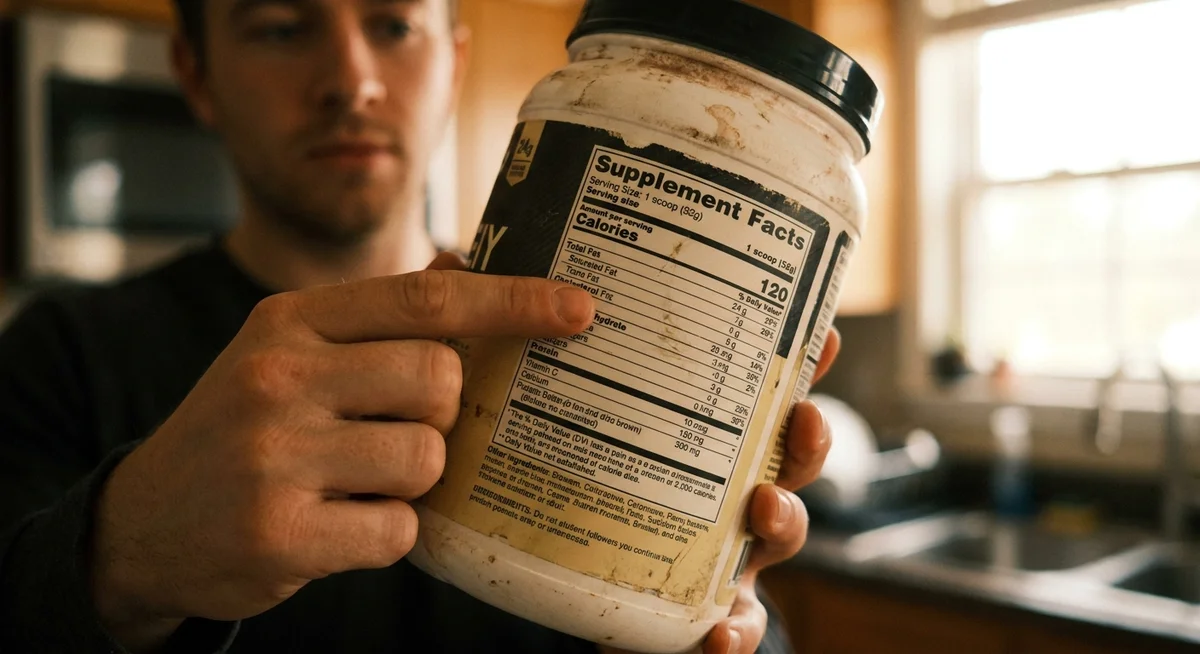
Understanding the full label - not just the protein number - is also one of the ways you can verify a product before you commit to a bag. That's covered in more detail in our guide to reading a whey protein label, which walks through every panel from nutrition facts to ingredient order. And if you've ever wondered whether the specific filtration method affects what ends up in your scoop, this breakdown of cross-flow microfiltration vs. ion exchange explains how processing choices shape the finished product.
Frequently asked questions
Is maltodextrin bad in a protein powder?
Maltodextrin isn't dangerous, but it's a fast-digesting carbohydrate with a high glycaemic index. In small amounts used as a flavour carrier it's not a concern. When it appears high on the ingredient list, it's often a sign the protein content is being diluted. A WPI 90 should have very little to no maltodextrin.
Does artificial sweetener affect muscle building or fat loss?
At the amounts found in a single serve of protein powder, no evidence shows that sucralose, Ace-K, or stevia meaningfully affect muscle protein synthesis or fat metabolism. The long-term effects of sweetener consumption at higher doses are still studied, but from one or two scoops a day the effect is negligible.
Why do some WPI 90 products have more ingredients than others?
Flavour system complexity is the main driver. A basic chocolate or vanilla flavour can be achieved with two or three ingredients. A more elaborate flavour (cookies and cream, salted caramel) needs more components to get right. That's not always a quality problem. Where it becomes a concern is when thickeners and fillers appear in large quantities alongside a relatively low protein percentage.
Should I avoid soy lecithin if I have a soy allergy?
Most soy allergies are triggered by soy protein, not soy lecithin, which is a fat-based compound with very little residual protein. That said, if you have a confirmed soy allergy and react to trace soy, choose a product that uses sunflower lecithin instead. It does the same job without the soy derivation.
See what's actually in our WPI 90Clean ingredients, short list. Read the label on our product page before you buy.