Cross-Flow Microfiltration vs. Ion Exchange: Which WPI 90 Is Actually Better?

Your WPI 90 was built in one of two ways: pushed through a physical membrane under pressure, or stripped apart by charged chemicals and reassembled. Both produce a high-protein powder. But the process leaves fingerprints on the final product - in the amino acid profile, the bioactive fraction, the taste, and the way your body responds. Knowing which method your brand uses is one of the most practical things you can read on a protein label.
Key takeaways
- Cross-flow microfiltration (CFM) uses physical ceramic membranes and no heat or chemicals, keeping bioactive proteins intact.
- Ion exchange uses a chemical pH process to bind and release protein - fast and high-yield, but it strips out most bioactives.
- Both methods can hit 90%+ protein by weight. What differs is what else survives the process.
- CFM is generally gentler and better suited to people who care about the full protein fraction, not just the grams-per-serve number.
- Neither method is automatically superior if quality control is poor. Source milk and processing standards still matter most.
What actually happens during cross-flow microfiltration?
Cross-flow microfiltration is a cold, physical process. Liquid whey (the watery by-product of cheese making) is pushed sideways - "cross-flow" - across a series of ceramic or polymer membranes. The pores in those membranes are sized precisely: small enough to block fat and most bacteria, large enough to let whey protein molecules through while retaining lactose and minerals on the other side.
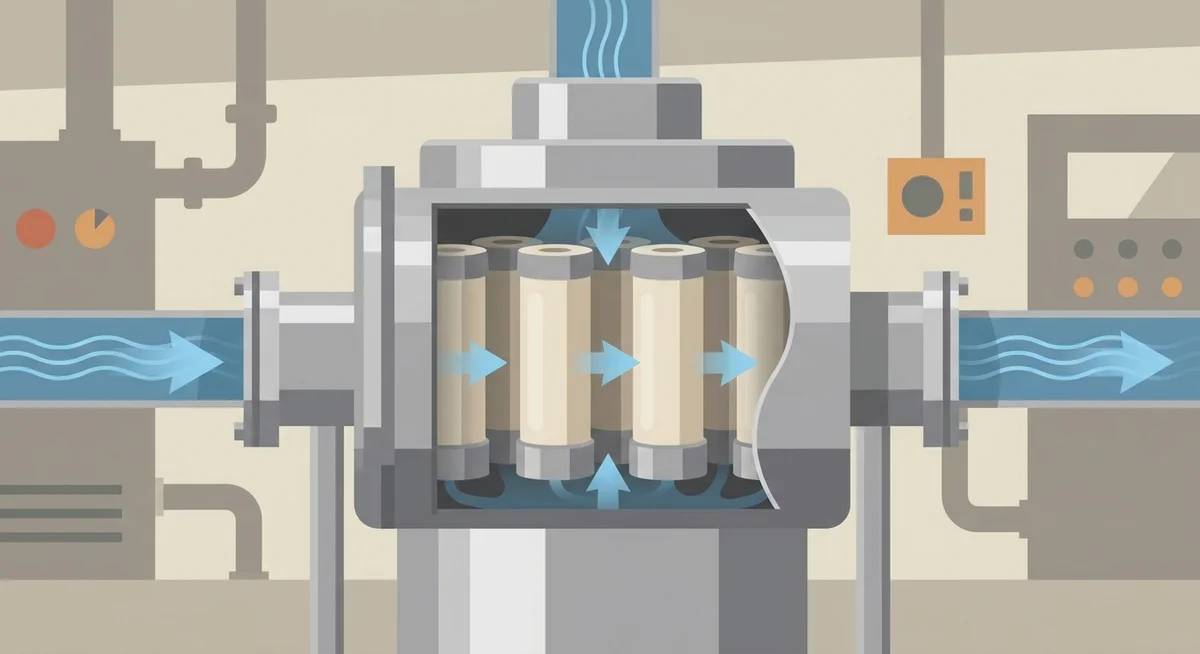
Because the whole thing runs at low temperatures (around 4-8°C in quality plants), the proteins are never denatured. "Denatured" just means unfolded - heat or acid causes proteins to lose their three-dimensional shape, which can affect how your body uses them and wipes out the biological activity of smaller proteins like lactoferrin and immunoglobulins. CFM keeps those intact.
The result is a powder where the full whey protein fraction - beta-lactoglobulin, alpha-lactalbumin, lactoferrin, glycomacropeptide, and immunoglobulins - is still present in meaningful amounts. You're not just getting isolated chains of amino acids. You're getting the whole protein picture.
What happens during ion exchange processing?
Ion exchange works very differently. The liquid whey is passed over a resin bed carrying an electrical charge. At a low pH (acidic conditions), whey proteins bind to the resin because they're positively charged. Everything else - lactose, fat, minerals, and crucially most of the minor proteins - washes away. Then the pH is raised, the resin releases the bound protein, and you collect it.
The yield is high - sometimes higher per batch than CFM - and the protein percentage can hit 90-95% with relative ease. On paper it looks great. But the chemical environment (two distinct pH swings, exposure to acidic and alkaline conditions) denatures much of the minor protein fraction. Lactoferrin and immunoglobulins are particularly sensitive. In a typical ion exchange WPI, they're largely gone.
Cross-flow microfiltration
- No chemicals, no significant heat
- Full minor protein fraction retained (lactoferrin, immunoglobulins)
- Native protein structure preserved
- Naturally low lactose without chemical stripping
- Higher production cost, often reflected in price
- Slightly lower maximum yield per batch
Ion exchange
- Chemical pH process (acidic + alkaline stages)
- Most bioactive proteins destroyed or heavily reduced
- Very high protein percentage achievable
- Lower production cost and faster throughput
- Beta-lactoglobulin is enriched, alpha-lactalbumin depleted
- More widely used in commodity WPI products
Does the bioactive fraction actually matter for everyday use?
This is the honest question to ask. If your only goal is hitting a gram target, the difference between 90% protein from CFM and 90% protein from ion exchange is minimal - both deliver amino acids in similar total quantities. But the bioactive fraction does real work that the grams-per-serve number doesn't capture.
Lactoferrin, for example, is an iron-binding protein with well-documented antimicrobial and immune-modulating properties. Immunoglobulins support gut mucosal immunity. Alpha-lactalbumin has one of the highest tryptophan concentrations of any food protein, which links to serotonin synthesis. None of this is fringe science. The question is just how much you weigh it against the cost difference.
How do they compare head to head?
| Factor | Cross-flow microfiltration | Ion exchange |
|---|---|---|
| Processing temperature | Cold (4-8°C) | Ambient with pH swings |
| Chemicals used | None | Acid + alkali reagents |
| Protein % achievable | 88-92% | 90-95% |
| Lactoferrin retained | Yes (meaningful levels) | Largely destroyed |
| Immunoglobulins retained | Yes | Minimal |
| Alpha-lactalbumin | Proportional to source milk | Significantly depleted |
| Beta-lactoglobulin | Present, not enriched | Enriched (binds preferentially) |
| Taste profile | Cleaner, milder | Can have slight chemical note |
| Typical price | Higher | Lower |
| Lactose content | Very low (<1%) | Very low (<1%) |
What does this mean when you're reading a label?
A few things to look for. "Cold-processed" is a reasonable indicator but it's not regulated - any brand can print it. Look for "cross-flow microfiltration" or "CFM" specifically. If the brand mentions lactoferrin content on the panel, they're almost certainly using a gentle filtration method, because ion exchange would have nothing to list. Third-party testing certificates that show the full protein fraction breakdown (not just total protein) are even better.
The story behind how a brand sources and processes its whey tells you a lot. A company that publishes its filtration method and milk source is confident in its process. One that leads with marketing language and buries the spec sheet is worth questioning.
It's also worth reading labels with the full label-reading framework in mind - filtration method is just one piece of the puzzle alongside ingredient order, amino acid spiking signals, and serving size maths.
So which one should you buy?
If budget is the primary constraint, a well-made ion exchange WPI from a reputable source still delivers a very high protein dose with minimal lactose and fat. It's a legitimate product. But if you're buying premium WPI 90 because you want the best the category offers, CFM is the process that earns that label. It preserves everything the source milk brought to the table, not just the amino acid chains.
The honest answer is that most people shopping for WPI 90 are already in the upper tier of the protein market. At that price point, there's a reasonable case for spending the extra dollar per serve on a product that hasn't chemically stripped half its protein fraction in the factory.
Frequently asked questions
Does cross-flow microfiltration WPI taste different from ion exchange WPI?
Often, yes. CFM WPI tends to have a cleaner, slightly milky flavour with less of a bitter edge. Ion exchange products can carry a faint chemical aftertaste from the reagents, though this varies by brand and flavouring. Unflavoured versions make the difference more obvious - CFM unflavoured is usually easier to mix into food without affecting the taste.
Is WPI 90 from ion exchange still a good protein source?
Yes. Total amino acid delivery is similar between methods, and both hit the leucine threshold needed to trigger muscle protein synthesis. The difference is in the minor protein fraction, not the fundamental quality as a protein source. For someone primarily focused on muscle building and hitting daily targets, either can work well.
Can you tell from the label which method was used?
Not always directly. Look for "CFM", "cross-flow microfiltration", or "cold-processed" in the product description. If the panel shows lactoferrin content, it's almost certainly CFM. If none of that is mentioned and the price is low, ion exchange is the likely method. Contacting the brand directly and asking for a Certificate of Analysis is always a valid move.
Does the filtration method affect lactose content?
Both methods produce a very low-lactose product - typically under 1% by weight. The main factor in lactose removal is the ultrafiltration step that both methods include, not the protein isolation stage specifically. So if lactose sensitivity is your main concern, either method delivers a product most people with mild lactose intolerance handle fine.
See the WPI 90 we use and how it's madeGrass-fed, cold-processed, and built to actually deliver what the label says.