The Macro That Earns Its Keep: Unpacking WPI 90 and the Science of a Cleaner Scoop

Walk down any supplement aisle and the noise is deafening. Tubs covered in flexing silhouettes, flavour names that sound like energy drinks, and percentages thrown around like confetti. Somewhere in all that chaos sits whey protein isolate at 90% purity, quietly doing the heavy lifting while flashier products fight for attention.
For people who actually care about what goes into their body, WPI 90 has become the gold standard. But understanding why takes a quick step back to look at where whey protein comes from, how it's processed, and what that little number after the name really means.
What Whey Protein Actually Is (Without the Marketing Spin)
Whey is the liquid that separates from milk during cheese production. For decades it was considered a byproduct, often dumped or used as livestock feed. Then food scientists realised this watery leftover was packed with some of the highest quality protein on the planet, complete with all nine essential amino acids and a particularly generous helping of leucine, the amino acid most responsible for triggering muscle protein synthesis.
From there, whey protein became one of the most studied nutritional supplements in existence. It digests quickly, mixes easily, and delivers a complete amino acid profile in a form the human body recognises and uses efficiently. That's the short version. The longer version involves a lot of filtration equipment.
The Three Main Forms
Whey protein generally shows up in three forms on shelves:
- Whey Protein Concentrate (WPC): Usually 70-80% protein, with more lactose, fat, and carbohydrates left in. Cheaper to produce, but heavier on the stomach for some people.
- Whey Protein Isolate (WPI): Filtered further to remove most of the fat and lactose, typically landing between 85-92% protein. WPI 90 sits firmly in the premium end of this category.
- Whey Protein Hydrolysate (WPH): Pre-digested using enzymes, breaking the protein into smaller peptides. Absorbs faster but tends to taste bitter and cost considerably more.
Each has its place, but isolate strikes a balance that's hard to argue with: high protein, low everything else, and a clean taste that doesn't fight back when blended with anything from fruit to coffee.
How WPI 90 Gets Made
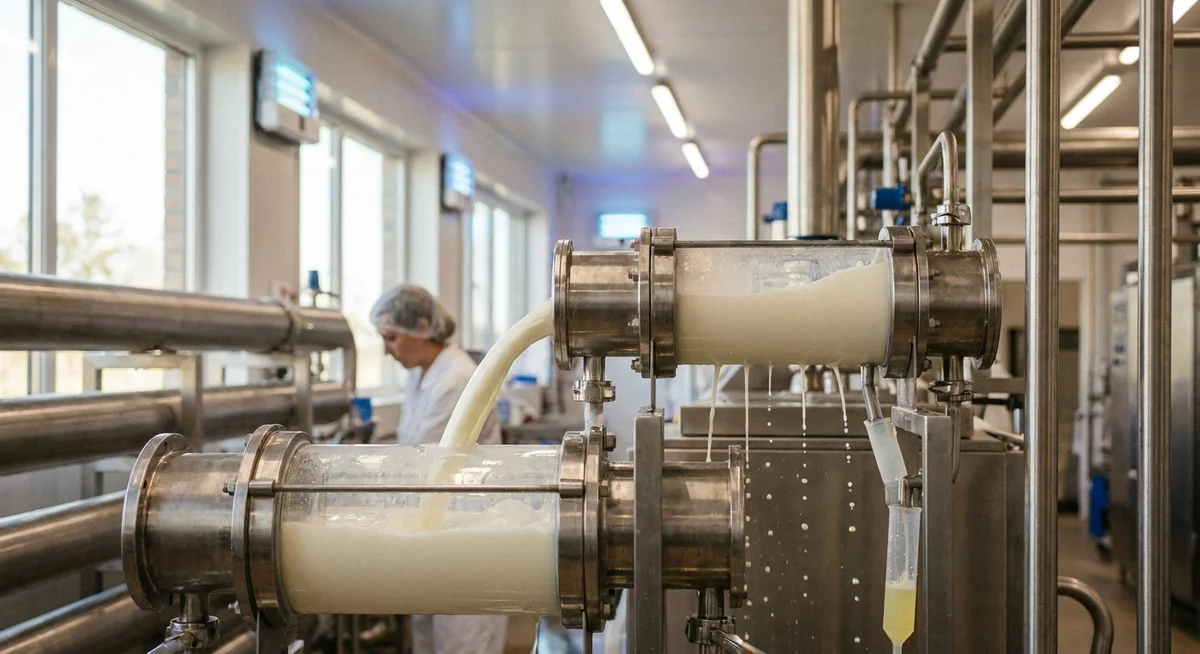
The journey from cow to scoop is more involved than most people realise. It starts with fresh milk, which gets separated into curds (for cheese) and whey (the liquid). That whey then goes through several rounds of processing to concentrate the protein and strip out the rest.
Microfiltration and Ultrafiltration
The cleanest WPI 90 is typically produced using cross-flow microfiltration or ultrafiltration. These are mechanical processes that push the liquid whey through extremely fine membranes at low temperatures. The membranes act like microscopic sieves, letting smaller molecules (water, lactose, minerals) pass through while keeping the larger protein molecules behind.
What makes this method special is that it preserves the natural structure of the protein. The bioactive components, things like immunoglobulins, lactoferrin, and beta-lactoglobulin, stay largely intact. Heat-based or chemical processing methods tend to denature these compounds, leaving behind a less functional protein.
Ion Exchange (The Other Route)
Some manufacturers use ion exchange processing, which uses charged resins to attract and isolate the protein. It can technically yield higher protein percentages, but it also tends to strip out many of those beneficial bioactive components. So while the number on the tub might look impressive, what's actually inside isn't quite the same.
This is one of the reasons quality-focused brands lean toward microfiltered WPI 90. The protein content is high, the impurities are low, and the nutritional integrity stays put.
Why That 90% Matters
The "90" in WPI 90 refers to the protein content by weight. In a 30g serving, roughly 27g is pure protein. The remaining 3g or so is a tiny amount of naturally occurring fat, carbohydrates (mostly trace lactose), and minerals.
Compare that to a standard concentrate at 75% protein, where the same 30g serving delivers around 22g of protein and 8g of "other stuff." That other stuff isn't necessarily bad, but for anyone counting macros, managing lactose sensitivity, or just wanting the cleanest fuel possible, those numbers add up over weeks and months.
Higher protein percentage means more of what's useful and less of what's filler. It's a simple equation that becomes obvious the moment someone switches from a lower-grade powder to a true premium isolate.
The Lactose Factor
One of the biggest practical benefits of WPI 90 is how little lactose it contains. For people who get bloated or uncomfortable after dairy, isolate is often the answer. The filtration process removes most of the lactose, making it far gentler on digestion. It's not technically lactose-free, but it's close enough that many sensitive individuals tolerate it without issue.
The Benefits Worth Talking About
Whey protein research has piled up over the past few decades, and the findings are remarkably consistent. Here's what a quality WPI 90 actually does:
Muscle Recovery and Growth
Whey is one of the fastest-digesting proteins available. After a workout, when muscle tissue is primed to repair and rebuild, getting amino acids into the bloodstream quickly matters. WPI 90's high leucine content kickstarts muscle protein synthesis, the biological process that turns training into actual progress.
Satiety and Body Composition
Protein is the most satiating macronutrient, and whey is particularly effective at curbing appetite. People who include adequate protein in their diet tend to find it easier to manage hunger, which is why isolate often shows up in fat-loss plans as much as muscle-building ones.
Immune Support
The bioactive peptides preserved in microfiltered whey, especially lactoferrin and immunoglobulins, have been linked to immune function. This is one of those quiet benefits that doesn't make it onto flashy marketing, but it's a genuine perk of choosing a properly processed product.
Convenience That Doesn't Compromise
Real food should always come first, but the reality is that hitting daily protein targets through whole foods alone isn't always practical. A scoop of WPI 90 in water or milk delivers around 25-27g of high-quality protein in under a minute, with minimal prep and zero washing up beyond a shaker.
Why Quality Is Non-Negotiable
Here's where things get uncomfortable. Not all whey protein is created equal, and the difference between a premium WPI 90 and a budget powder isn't just about taste or texture. It's about what's actually in the tub.
Protein Spiking
Some manufacturers use a practice called amino acid spiking, where cheap free-form amino acids like glycine or taurine are added to boost the apparent protein content on lab tests. The total nitrogen reads high, but the actual usable protein is much lower than advertised. Reputable brands test for this and are transparent about their amino acid profiles.
Sourcing and Traceability
Where the milk comes from matters. Cows raised on healthy pastures produce whey with a better fat and nutrient profile, and farms with strong animal welfare and processing standards tend to deliver a cleaner end product. Quality brands talk openly about sourcing because they have nothing to hide.
Processing Temperature
High-heat processing is cheaper and faster, but it damages the protein's natural structure. Cold-processed or low-temperature microfiltered WPI keeps the protein functional and the bioactive compounds intact. It's a small detail with a big impact on the final product.
What to Look For
- Protein content clearly stated, ideally with third-party testing
- Short, recognisable ingredient lists
- Transparent sourcing information
- Low temperature or microfiltration processing
- Minimal added sugars, fillers, or artificial thickeners
If a tub can't tick most of those boxes, it's probably not worth the shelf space.
The Bottom Line
WPI 90 isn't a magic powder. No supplement is. But for anyone who takes their nutrition seriously, whether the goal is building muscle, recovering faster, managing weight, or just hitting a sensible daily protein target without the bloat, a premium whey protein isolate is one of the most efficient tools available.
The 90% protein content, the gentle processing, the minimal lactose, and the complete amino acid profile all add up to something that genuinely earns its place in the daily routine. It's not about hype or aesthetics. It's about a product that does exactly what it says on the label, made by people who care enough to do it properly.
In a market full of noise, that kind of honesty is rarer than it should be. And once someone tries a real WPI 90, the difference is hard to ignore.