The Macro Math Behind WPI 90: Why That Extra 10% of Purity Changes Everything

Walk into any supplement store and the wall of protein tubs looks roughly the same. Big fonts. Bold claims. Numbers stamped across the front. But peel back the marketing and the actual protein content per scoop tells a story most shoppers never read. The difference between an 80% whey concentrate and a 90% whey isolate sounds small on paper. In practice, it changes what ends up in the shaker, what gets absorbed, and what the body actually does with it.
This is a closer look at how whey protein gets made, why filtration methods matter more than flavour, and what the "90" in WPI 90 really represents once it leaves the factory floor.
From Udder to Powder: The Quick Version
Whey starts its life as a byproduct of cheese making. When milk is curdled, two things separate: the solid curds (which become cheese) and the liquid whey. For a long time, that whey was treated like industrial wastewater. Then someone figured out it was packed with high quality, fast absorbing protein, and the modern supplement industry was born.
Raw liquid whey is mostly water. It contains a small percentage of protein, some lactose, a bit of fat, and various minerals. Turning that watery liquid into the fine powder that gets scooped into shakers involves a series of filtration and drying steps, and the choices made at each stage decide what category the final product falls into.
The Three Main Players
- Whey Protein Concentrate (WPC): Typically 70-80% protein by weight. Still contains noticeable amounts of lactose, fat, and carbs.
- Whey Protein Isolate (WPI): 90% or higher protein content. Most of the lactose, fat, and carbs have been filtered out.
- Whey Protein Hydrolysate (WPH): Whey that has been partially broken down (pre-digested) for faster absorption. Tends to be bitter and pricey.
Each has its place, but they are not interchangeable. A bodybuilder cutting weight, a lactose-sensitive athlete, and a casual gym goer all have different needs, and the gap between these three categories is where those needs get sorted out.
How WPI 90 Actually Gets Made
Getting whey from 80% protein to 90% protein is not a small jump. It requires additional processing steps that strip out everything that is not protein, while ideally keeping the protein structure intact. There are two main methods used to do this.
Ion Exchange
This method uses electrically charged resins to separate whey proteins from other compounds. It produces a very high protein percentage, sometimes pushing past 90%. The downside is that ion exchange can denature some of the more delicate immunoglobulins and bioactive fractions, meaning some of the "good stuff" that makes whey more than just amino acids can get lost in translation.
Cross-Flow Microfiltration (CFM)
This is the gentler, more modern approach. CFM uses ceramic membranes with microscopic pores to physically separate the protein from lactose and fat. The protein never gets exposed to harsh chemicals or extreme temperatures, so the native protein structure stays intact. CFM-processed WPI tends to preserve more of the beneficial bioactive compounds, which is why it shows up more often in premium products.
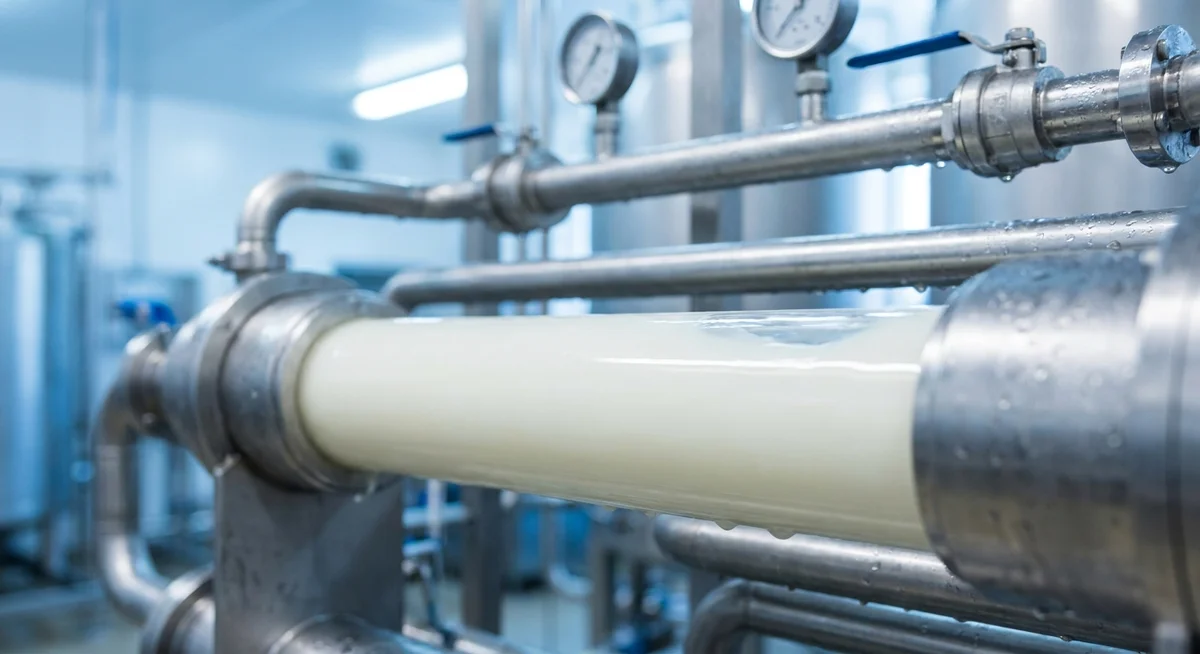
Once the whey has been filtered to the desired purity, it gets spray dried. Liquid whey concentrate is sprayed as a fine mist into a chamber of hot air, where the water evaporates almost instantly and what falls to the bottom is the protein powder ready for packaging. Good spray drying preserves the protein. Bad spray drying (too hot, too long) can damage it.
Why That 10% Gap Matters More Than It Looks
On paper, the difference between 80% and 90% protein content seems minor. Ten percent. Not nothing, but not a deal breaker. Except the numbers are deceiving because the 10% that gets removed is not neutral filler. It is lactose, fat, and carbohydrate. And whether those things belong in a protein shake depends entirely on the goal.
Lactose Tolerance
Roughly two-thirds of the global adult population has some degree of lactose intolerance. Whey concentrate can contain anywhere from 4-8% lactose by weight, which is enough to cause bloating, cramping, or worse in sensitive individuals. WPI 90, by contrast, usually contains less than 1% lactose, often dropping below 0.5%. For people who love the idea of whey but hate what it does to their stomach, this is the whole game.
Calorie Density
A 30g scoop of WPC might deliver 22-24g of protein, plus 2-3g of fat and 3-4g of carbs. A 30g scoop of WPI 90 delivers around 27g of protein with under 1g of fat and under 1g of carbs. For anyone tracking macros tightly, especially during a cut, that difference adds up across a week.
Faster, Cleaner Absorption
With less fat and lactose to slow things down, WPI gets absorbed faster. That post-workout window, the one where the muscles are essentially asking for amino acids, gets used more efficiently when the protein hits the bloodstream quickly.
The Benefits Side of the Equation
Whey protein in general is one of the most studied supplements on the planet. Its benefits are not hype, they are pretty well documented. WPI 90 inherits all of those benefits and tends to amplify them by virtue of being purer.
Muscle Protein Synthesis
Whey is rich in leucine, the branched-chain amino acid that acts as the main switch for muscle protein synthesis. WPI 90 delivers a higher dose of leucine per gram than concentrate, which means the threshold for triggering muscle building gets hit faster with smaller serving sizes.
Recovery and Soreness
Faster absorption means amino acids show up in the bloodstream sooner after training. Studies have linked whey supplementation to reduced exercise-induced muscle damage and quicker recovery between sessions.
Satiety and Body Composition
Protein is the most satiating macronutrient, and whey specifically has been shown to influence hunger hormones in ways that help with appetite control. For anyone trying to lose fat while holding onto muscle, a clean, high-protein, low-carb option like WPI 90 is hard to beat.
Immune Support
Whey contains immunoglobulins, lactoferrin, and other bioactive compounds that play a role in immune function. This is one of the reasons gentle filtration methods matter so much. Aggressive processing can strip these compounds out, leaving behind something that is technically high in protein but missing the extra benefits.

Why Quality Actually Matters (And How to Spot It)
Here is the uncomfortable truth about the protein industry: not all WPI is created equal, and the label on the front rarely tells the full story. Two tubs can both claim "whey protein isolate" and contain wildly different products underneath.
Watch for Protein Spiking
Some manufacturers add cheap amino acids like glycine, taurine, or creatine to boost the nitrogen content of their powder, which makes the protein test higher than it really is. This is called amino spiking or nitrogen spiking, and it is exactly as shady as it sounds. Buyers think they are getting complete protein, when in reality a chunk of what they paid for is filler.
Look at the Source
The milk that becomes whey matters. Grass-fed dairy from countries with strict agricultural standards (like Australia, New Zealand, and parts of Europe) tends to produce a cleaner, more nutrient-dense raw material. Cattle raised on pasture without growth hormones or routine antibiotics yield milk with better fatty acid profiles and fewer unwanted residues.
Check the Ingredient List
A quality WPI 90 should have a short ingredient list. Whey protein isolate, maybe a natural flavour, maybe a sweetener like stevia, maybe a thickener for mixability. If the ingredient list reads like a chemistry textbook, that is a red flag.
Mixability and Taste
Premium WPI mixes cleanly with water (not just milk) and does not leave clumps, foam, or a gritty residue. The taste profile should be smooth, not chalky or artificial. These details are not just about enjoyment, they are signals of how well the product has been processed.
So Who Is WPI 90 Actually For?
It is fair to ask whether anyone really needs the higher tier protein, or whether concentrate gets the job done for most people. The honest answer is: it depends on the goal.
- Athletes and serious lifters who track macros and want maximum protein per gram of powder.
- People with lactose sensitivity who want the benefits of whey without the digestive aftermath.
- Anyone in a cutting phase looking to minimise carbs and fat while keeping protein intake high.
- Those who prioritise clean ingredients and want the purest form of whey available.
For casual gym goers who are not tracking every macro, whey concentrate is still a solid, affordable option. But once goals get more specific, the case for WPI 90 gets harder to argue against.
The Bottom Line
Whey protein is one of those rare supplements where the science actually backs up the marketing. The catch is that not all whey is