Past the Hype Label: How WPI 90 Stacks Up Against Every Other Protein on the Shelf

Walk down any supplement aisle and the wall of tubs starts to blur together. Every label shouts about gains, recovery, and "premium quality," but the actual differences between products often get buried in marketing speak. The truth is that not all whey is created equal, and the gap between a basic concentrate and a properly filtered isolate like WPI 90 is bigger than most people realise.
This piece breaks down what whey protein actually is, how the different types come to be, and why that little "90" on the label of a tub of WPI 90 carries more weight than it might first appear.
Where Whey Even Comes From
Whey starts its life as a byproduct. When milk is processed to make cheese, it separates into two parts: the thick, solid curds and a thin, watery liquid. That liquid is whey. For decades it was treated as waste, sometimes dumped or fed to livestock, until food scientists figured out it was packed with high-quality protein, essential amino acids, and bioactive compounds that the human body loves.
From that liquid whey, manufacturers can take several different paths. Each path involves a different level of processing, filtration, and purification, and each one results in a noticeably different end product. Understanding those paths is the key to understanding why some proteins cost twice as much as others, and why some actually deliver on what they promise.
The Three Main Forms of Whey
- Whey Protein Concentrate (WPC): The least processed of the bunch. Typically sits between 30% and 80% protein by weight, with the rest made up of fats, carbs (mostly lactose), and moisture.
- Whey Protein Isolate (WPI): Filtered further to strip out most of the fat and lactose. Usually clocks in at 90% protein or higher.
- Whey Protein Hydrolysate (WPH): An isolate that has been broken down further using enzymes, making it absorb faster but often tasting bitter and costing significantly more.
How WPI 90 Gets Made
The journey from raw whey to a fine, pourable powder with 90% protein content involves some seriously clever food science. It is not just about drying milk byproducts; it is about isolating one specific component (the protein) and removing almost everything else.

Step One: Pasteurisation and Separation
The fresh liquid whey is pasteurised to kill off any unwanted microbes. Then it heads through a series of separators that spin out the larger fat globules and any residual milk solids that came along for the ride.
Step Two: Microfiltration and Ultrafiltration
This is where the real magic happens. The whey is pushed through extremely fine membranes under pressure. These membranes have pores small enough to let water, lactose, and minerals pass through, while the protein molecules (which are larger) get held back. The retained protein-rich liquid is what eventually becomes isolate.
Some manufacturers use a method called cross-flow microfiltration (CFM), which is a low-temperature, non-chemical process that keeps the protein structures intact. This is generally considered the gold standard because it preserves the natural bioactive compounds found in whey, things like immunoglobulins and lactoferrin that are often damaged by harsher processing methods.
Step Three: Drying
The concentrated protein liquid is then spray-dried into the fine powder that ends up in the tub. Done right, this step preserves the amino acid profile and keeps the protein soluble, meaning it mixes properly into a shaker rather than clumping at the bottom.
Why WPI 90 Is Not Just Marketing Numbers
The "90" in WPI 90 refers to the protein content by weight: at least 90% of the powder is pure protein. That might not sound like a massive leap from, say, a concentrate sitting at 75% or 80%, but the difference plays out in real, measurable ways.
Less of What You Do Not Want
A higher protein percentage means there is less room in the tub for fat, lactose, and carbs. For anyone watching their macros, dealing with mild lactose intolerance, or just wanting a leaner shake, this matters. A standard scoop of WPI 90 might contain 25 to 27 grams of protein with under one gram of fat and barely a trace of lactose. Compare that to a concentrate scoop with similar protein content but two to three grams of fat and four to six grams of carbs.
Better Absorption, Cleaner Digestion
Because most of the lactose has been filtered out, people who normally feel bloated or sluggish after a standard whey shake often find isolate much easier on the gut. The protein itself is also highly bioavailable, meaning the body can actually use a large percentage of what gets consumed rather than passing it through.
A Complete Amino Acid Profile
Whey protein, in any form, is a complete protein containing all nine essential amino acids. But WPI 90 packs a particularly dense dose of the branched-chain amino acids (BCAAs) leucine, isoleucine, and valine, which are heavily involved in muscle protein synthesis and recovery.
The difference between an 80% protein and a 90% protein product is not just a 10% gap on paper. It is a fundamentally cleaner, more concentrated product that delivers more of what the body needs and less of what it does not.
Concentrate vs Isolate: Which One When?
Concentrate is not "bad" protein. It is a perfectly fine option for plenty of people, and it tends to be cheaper, which is a legitimate factor. The question is really about what someone wants out of their protein, not whether one is universally superior.
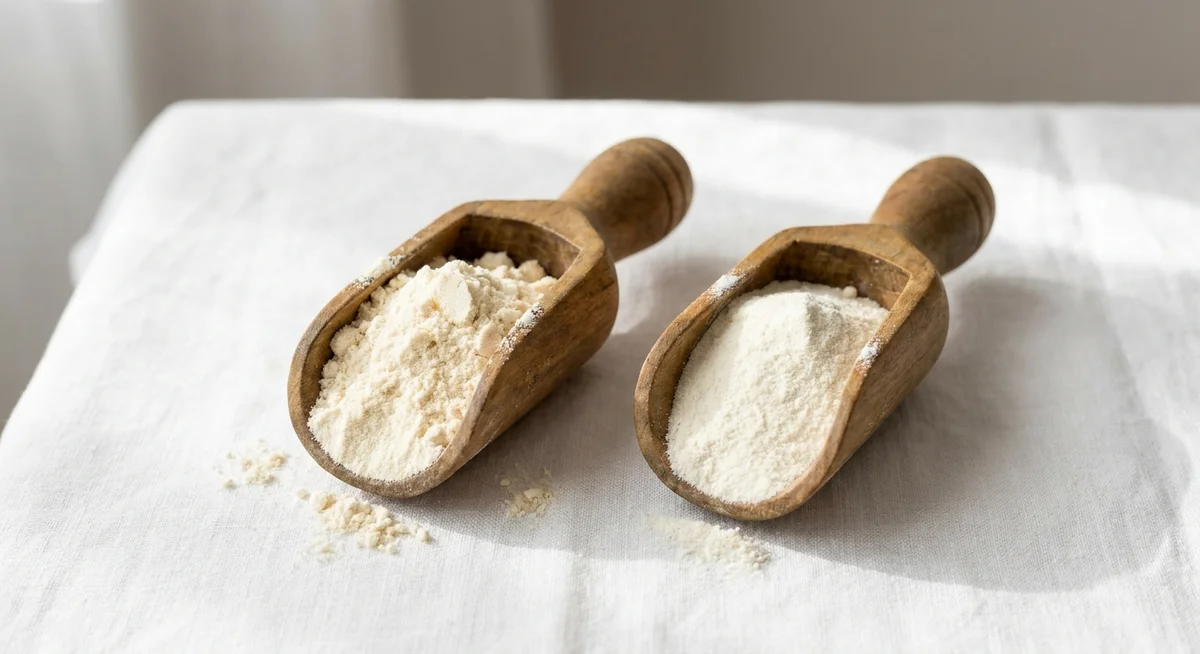
Concentrate Makes Sense When
- Budget is the main driver
- There is no lactose sensitivity
- Macros are flexible and a bit of extra fat or carbs is not a concern
- The shake is a meal replacement rather than a precise post-workout tool
WPI 90 Makes Sense When
- Lean protein with minimal extras is the goal
- Lactose causes any kind of digestive trouble
- Recovery and muscle protein synthesis are the priority
- Tracking macros precisely matters
- Mixability and a smoother texture are wanted
Why Quality Actually Matters (Beyond the Buzzwords)
Two tubs can both claim to contain whey protein isolate and still be wildly different products. Quality shows up in places most people never look: the source of the milk, the processing temperature, the filtration method, and what gets added to the powder after the fact.
The Source of the Milk
Whey from grass-fed, well-treated dairy herds tends to have a better fatty acid profile and more of those beneficial bioactive compounds. Countries with strict dairy standards (Australia and New Zealand being prime examples) produce whey that consistently scores higher on independent purity tests.
Low-Temperature Processing
Heat is the enemy of protein structure. When whey is processed at high temperatures or with harsh chemicals, the delicate protein chains can denature, which means they lose some of their functional properties. Low-temperature, non-chemical filtration (like cross-flow microfiltration) preserves the protein in a much more natural, usable state.
What Is Not in the Tub
Premium WPI 90 products tend to keep ingredient lists short. The protein, maybe some natural flavouring, an emulsifier like sunflower lecithin, and a sweetener. Cheaper products often pad their tubs with thickeners, artificial colours, fillers, and high doses of artificial sweeteners that can cause their own digestive issues.
Third-Party Testing
Quality manufacturers are transparent about what is in their product. Independent lab testing confirms the protein percentage actually matches the label, checks for heavy metals, and verifies that no banned substances have snuck in. If a brand will not show its testing, that is usually a red flag.
The Real Benefits of a Properly Made WPI 90
When all the above is done well, the end product genuinely earns the "premium" label. The benefits are not just theoretical:
- Muscle recovery and growth: The fast-absorbing nature of isolate combined with its high leucine content makes it ideal for the post-workout window.
- Lean body composition support: High protein, low everything else, which fits cleanly into most fat-loss or recomposition plans.
- Satiety: Protein is the most filling macronutrient, and a clean WPI shake can curb hunger for hours.
- Immune support: The bioactive fractions preserved in well-filtered whey have been linked to immune function and gut health.
- Convenience without compromise: A shaker bottle and 30 seconds of mixing delivers a meal's worth of protein anywhere.
The Bottom Line
Whey protein has come a long way from being the leftover liquid in a cheesemaker's vat. Modern filtration technology has made it possible to produce a powder that is 90% pure protein, with minimal fat, almost no lactose, and a complete amino acid profile that the body absorbs efficiently. That is what a tub of WPI 90 actually represents.
The label numbers matter, but so does the story behind them: where the milk came from, how the whey was filtered, what temperature it was processed at, and what (if anything) was added at the end. A quality WPI 90 is not just a marketing t