Cream of the Crop: Why Whey Protein Isolate 90 Sits at the Top of the Protein Food Chain

Whey protein has gone from being a niche bodybuilder staple to a pantry essential for pretty much everyone who cares about how they feel, train, and recover. Walk into any health store or scroll through any wellness feed, and there it is, sitting on shelves in tubs of every shape, colour, and claim. But here's the thing: not all whey is created equal, and the difference between an average scoop and a genuinely great one comes down to how it's made, what's left in it, and what's been stripped out.
That's where Whey Protein Isolate 90, or WPI 90, enters the chat. It's the cleaner, leaner, more refined cousin of regular whey, and it's become a favourite for people who want maximum protein per scoop without dragging along extra fats, lactose, or fillers. This article unpacks what whey protein actually is, how WPI 90 gets made, the real differences between the various forms of whey on the market, and why quality is the whole ballgame.
What Is Whey Protein, Really?
Whey is one of two proteins found in milk, the other being casein. When milk is curdled during cheese-making, it splits into two parts: the solid curds that go on to become cheese, and a liquid byproduct called whey. For a long time, whey was considered waste. Farmers would feed it to pigs or pour it out, not realising they were tossing one of the most bioavailable, complete proteins nature has to offer.
Fast forward to today, and whey is celebrated for being packed with all nine essential amino acids, particularly leucine, which plays a starring role in muscle protein synthesis. It's also absorbed quickly by the body, making it ideal for post-workout recovery or for slotting into a busy day when getting enough protein from whole foods alone is tricky.
But raw whey isn't what ends up in a tub. It goes through some serious processing first, and that's where the different categories of whey protein start to emerge.
The Three Main Types of Whey Protein
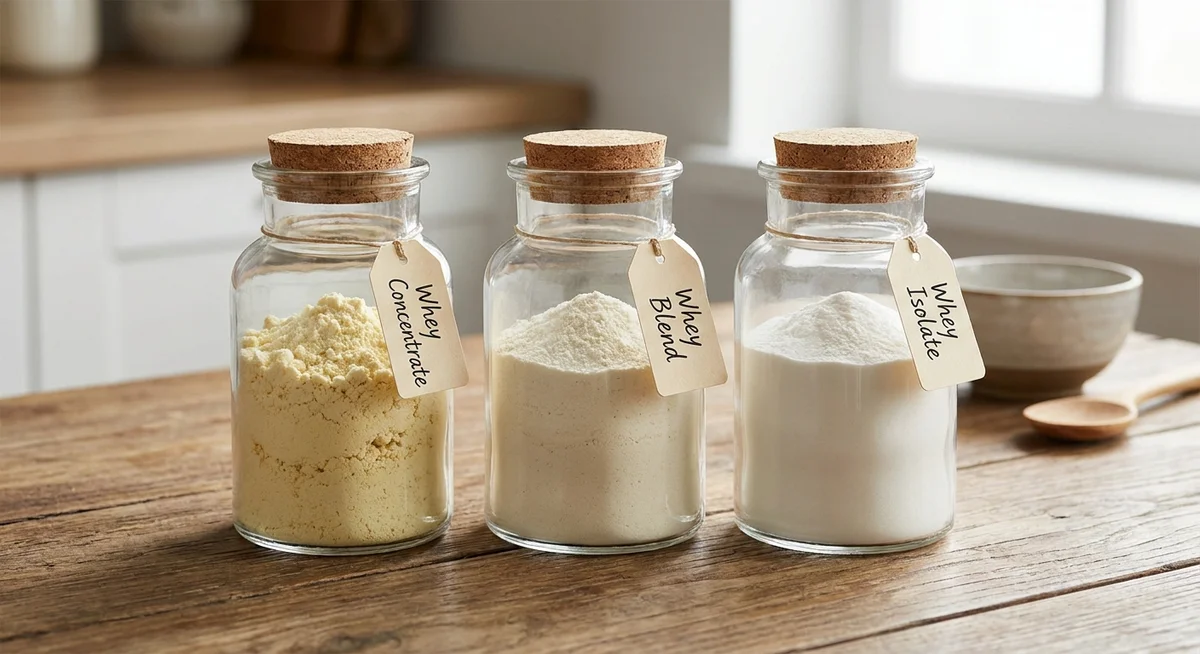
Most whey products fall into one of three categories, and knowing the difference helps explain why pricing, taste, and results can vary so much from one product to the next.
Whey Protein Concentrate (WPC)
This is the most basic and most common form. WPC typically contains anywhere from 30% to 80% protein by weight, with the rest made up of carbs (mostly lactose), fats, and some bioactive compounds. It's cheaper to produce, has a creamier mouthfeel, and works well for general nutrition. The trade-off is that it's not ideal for people who are lactose intolerant or who want to keep their fat and carb intake on the lower side.
Whey Protein Isolate (WPI)
Isolate goes through extra filtration steps to strip out most of the fat and lactose, leaving a product that's typically 90% or more pure protein by weight. This is where WPI 90 lives. It's smoother, easier on the digestive system for most people, and delivers more protein per gram than concentrate. The flavour tends to be cleaner too, which makes it more versatile in shakes, smoothies, and recipes.
Whey Protein Hydrolysate (WPH)
Hydrolysate is essentially isolate that's been partially broken down, or "pre-digested," through enzymatic hydrolysis. This makes it absorb even faster, but it often has a bitter taste and a heftier price tag. It's mostly used in medical nutrition or by serious athletes chasing every last percentage point of recovery speed.
How WPI 90 Is Actually Made
Getting from a tank of liquid whey to a tub of fine, premium-grade protein powder is more complicated than most people realise. It involves a series of filtration and drying steps, each designed to remove unwanted components while preserving the integrity of the protein itself.
Step One: Separation
The liquid whey is first separated from the curds during cheese production. At this point it's mostly water with a small percentage of proteins, lactose, minerals, and fats floating around in it.
Step Two: Filtration
This is where the magic happens. There are two main methods used to refine whey into isolate:
- Microfiltration and Ultrafiltration: These processes use temperature-controlled membranes to physically filter out fats and lactose while keeping the protein structure intact. This is generally considered the gentler, higher-quality method and is often called "cross-flow microfiltration" or CFM.
- Ion Exchange: This uses chemical reactions and pH changes to separate the protein. It can produce a very high protein percentage but tends to strip out some of the beneficial protein fractions along the way.
Premium WPI 90 products typically rely on microfiltration to preserve as many of the natural protein subfractions as possible, including immunoglobulins, lactoferrin, and beta-lactoglobulin, all of which contribute to the broader health benefits of whey.
Step Three: Drying
Once filtered, the liquid concentrate is spray-dried into a fine powder. The drying temperature matters here too. Lower temperatures help protect the protein from denaturing, which keeps the final product bioactive and effective.
Step Four: Testing and Packaging
Quality producers don't just stop at the drying stage. The finished powder is tested for protein content, contaminants, heavy metals, and microbiological safety before being packed and sealed. This is the part most consumers never see, but it's a huge marker of whether a product is genuinely premium or just dressed up to look that way.
The Benefits of WPI 90 in Real Life
Numbers on a label are one thing. What WPI 90 actually does for the body in day-to-day life is another. Here's where it earns its keep.
Higher Protein Per Scoop
With around 90% protein by weight, WPI 90 delivers more usable protein per serving than concentrate. For anyone counting macros or trying to hit a daily protein target without bloating up on calories, that efficiency matters.
Easier on Digestion
Because most of the lactose has been filtered out, WPI 90 tends to sit much better with people who get gassy, bloated, or generally uncomfortable after regular whey concentrate. It's not lactose-free, but it's low enough that many sensitive individuals tolerate it well.
Faster Recovery
Whey isolate is absorbed quickly, which means the amino acids hit the bloodstream and start doing their job not long after a workout. That rapid delivery is part of why it's a go-to for athletes and gym regulars.
Versatility
A clean, neutral-tasting isolate blends into smoothies, oats, yoghurt, baking, and even savoury cooking without overwhelming everything else. It's a workhorse ingredient, not just a shake mix.

Why Quality Matters More Than Marketing
Here's the uncomfortable truth about the protein industry: a lot of products look almost identical on the outside but vary wildly on the inside. Two tubs labelled "whey isolate" can come from completely different sources, use different filtration methods, and contain very different amounts of actual protein per scoop once fillers, flavourings, and amino spiking are factored in.
Amino spiking, in case it's a new term, is when manufacturers add cheap free-form amino acids like glycine or taurine to artificially inflate the protein reading on lab tests. Technically it counts as "protein content," but it doesn't deliver the same benefits as a complete, intact whey protein.
This is why sourcing matters. Where the milk comes from, how the cows are raised, what they're fed, and how the whey is handled from start to finish all influence the final product. Grass-fed dairy from well-managed farms tends to produce whey with a better amino acid profile and fewer contaminants. Gentle filtration preserves the bioactive compounds. Honest labelling tells the consumer exactly what's in the tub.
The difference between an average whey and a truly premium one isn't in the marketing. It's in the milk, the method, and the mindset of whoever makes it.
When evaluating a whey protein, a few things are worth checking:
- Is the protein source clearly stated, including country of origin?
- What filtration method is used, and is it microfiltration or ion exchange?
- Is the ingredient list short and recognisable, or full of fillers and artificial additives?
- Does the brand publish third-party testing or quality certifications?
- How does it actually taste and mix, without needing a milkshake's worth of sugar to disguise it?
Who Is WPI 90 Best Suited For?
WPI 90 isn't only for bodybuilders or competitive athletes, even though those crowds love it. It works just as well for:
- Busy professionals who need a quick, high-quality protein hit between meetings.
- People managing weight who want lean protein without extra fats and carbs.
- Those with mild lactose sensitivity who can't handle concentrate.
- Older adults looking to support muscle maintenance as part of healthy ageing.
- Anyone simply trying to eat better and round out their daily nutrition.
It's flexible, clean, and effective, which is a rare combination in the supplement world.
The Bottom Line
Whey protein has come a long way from being a discarded byproduct of cheese-making. Today, it's one of the most studied and trusted nutritional supplements on the planet, and within that category, WPI 90 stands out