Is WPI 90 Worth the Extra Cost? A Per-Serve Price Breakdown
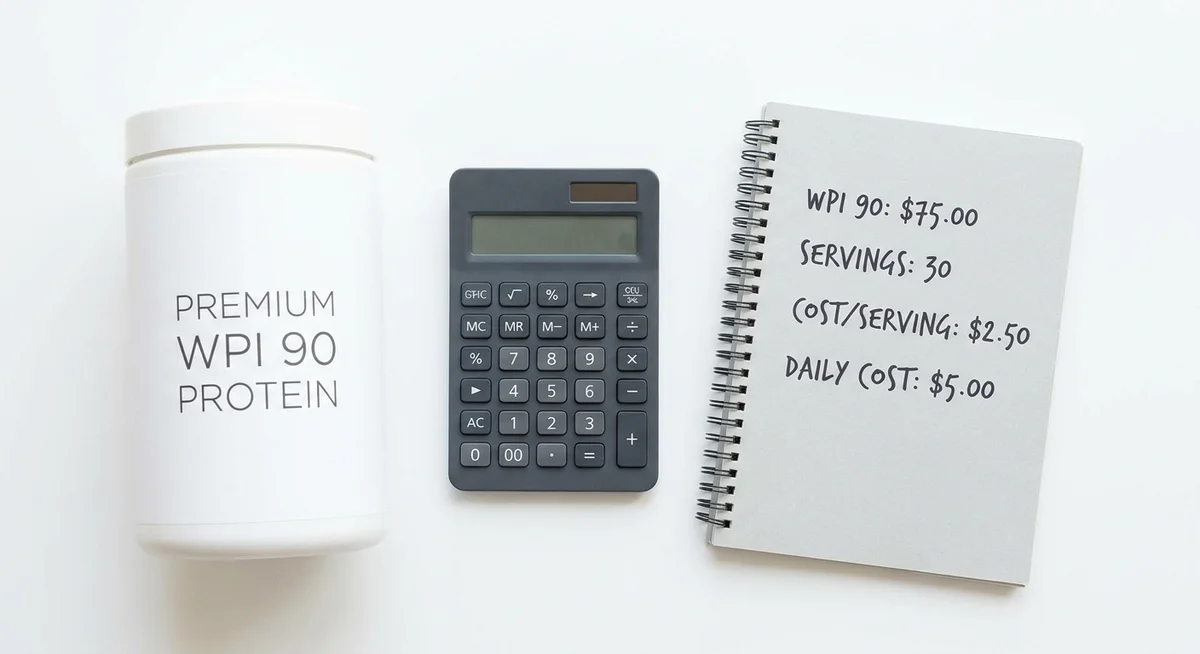
WPI 90 costs more per tub. That's just the truth. But "more expensive" and "worse value" are two different things, and once you work out the cost per gram of actual protein (not powder), the picture changes pretty quickly. Here's a straightforward breakdown of whether the premium is worth it, and for whom.
Key takeaways
- Cheaper whey usually means less protein per gram of powder, not a better deal.
- Once you calculate cost per gram of actual protein, WPI 90 often closes most of the gap.
- Fillers, fat, and lactose in concentrate inflate the serving size without adding protein value.
- For anyone eating in a calorie deficit, the cleaner macros in WPI 90 do real work.
- Consistency matters more than any single scoop. A powder you actually enjoy using is never wasted money.
Why does WPI 90 cost more in the first place?
The price difference comes down to what happens after the cheese vat. Both whey concentrate and WPI 90 start from the same place: liquid whey, a byproduct of cheesemaking. From there, concentrate gets filtered once, lightly dried, and packaged. You end up with a powder that's typically 70 to 80 percent protein by weight, with the remaining 20 to 30 percent made up of fat, lactose, and other milk solids.
WPI 90 goes through additional filtration (usually cross-flow microfiltration or ion exchange) to strip out almost all of the fat and lactose. What's left is a powder that's at least 90 percent protein by weight. More processing means higher manufacturing cost, and that gets passed on at the shelf.

So how do you actually compare the cost?
The only number that matters is cost per gram of protein, not cost per tub or cost per scoop. Here's how to run the maths yourself.
| Protein Type | Typical protein % | Example: 1kg tub price | Protein per kg of powder | Cost per 10g of protein |
|---|---|---|---|---|
| Whey Concentrate (WPC 80) | ~80% | $40 | 800g | ~$0.50 |
| Whey Isolate (generic) | ~85-88% | $55 | 860g | ~$0.64 |
| WPI 90 | ~90% | $65 | 900g | ~$0.72 |
The gap at the register looks like 25 to 60 percent more. The gap in actual protein delivered is much smaller. If you're chasing 150g of protein per day from supplements alone (which nobody should be, but bear with the maths), the real cost difference between WPC 80 and WPI 90 might be $1.50 to $2.00 per day. Over a month, that's the price of a couple of coffees.
And that's before you account for what you're NOT getting with WPI 90: no meaningful lactose, almost no fat, and a much shorter ingredients list. Those aren't just marketing points. They're macros that would otherwise push you over your daily targets without contributing protein.
Who gets the most value from WPI 90?
Not everyone needs the highest-purity option, but for some people it pays off clearly and quickly.
WPI 90 makes clear sense if you...
- Are tracking macros tightly and every gram of fat and carb counts
- Have lactose sensitivity or find concentrate causes bloating
- Are eating in a calorie deficit and need protein without much else
- Use protein powder multiple times a day and the clean macros add up
- Cook or bake with protein powder, where extra fat can change the texture
Concentrate might be fine if you...
- Are in a bulk phase with calories to spare and fewer macro constraints
- Handle lactose well with no digestive issues
- Only use one scoop a day as a top-up to a food-first diet
- Are just starting out and want to trial protein powder before committing to premium
Worth noting: if you're already building your protein intake around real food and only using powder to fill small gaps, the concentrate vs. isolate debate matters less. One scoop a day is one scoop a day.
What about fillers and "proprietary blends"?
This is where cheaper tubs can become genuinely bad value. Some products use a blend of whey concentrate, soy protein, or pea protein to hit a protein percentage on the label without using a higher-cost whey isolate. Others pad the serving size with maltodextrin or thickeners so the scoop looks generous while the actual protein content per gram stays low.
To check: look at the ingredients list. Whey protein isolate should be the first ingredient. If concentrate is first, or if there are multiple protein sources listed, the protein per serve will almost certainly be lower than the headline number implies. Learning to read a whey protein label properly is the single fastest way to spot a tub that's overpriced for what it delivers.
The consistency factor (and why it matters for value)
There's a cost that never shows up in a per-serve calculation: the cost of not using the powder you bought.
A tub of concentrate that gives you bloating, leaves grit in the shaker, or just tastes off gets used less consistently. You might skip the afternoon shake, or mix it weaker to reduce the aftertaste. That reduces the effective protein per dollar without changing the sticker price.
WPI 90 mixes cleaner, sits lighter, and tends to have a less heavy dairy taste because the fat and lactose are largely gone. How a powder mixes is actually a quality indicator, not just a convenience feature. A powder you use every day delivers more value than one sitting half-used at the back of the cupboard.
FAQ
Is WPI 90 worth it for beginners?
If you're new to protein powder, concentrate will work fine to start. But if you find you want to use it daily and care about keeping your fat and carb intake controlled, the jump to WPI 90 is worth making early. The price difference per day is small and the cleaner macros make tracking much easier from the beginning.
Can I save money by using less WPI 90 per scoop?
You could, but there's little reason to. Because WPI 90 is about 90% protein by weight, a standard 30g scoop delivers around 27g of protein. With concentrate at 80%, you'd need 33 to 34g to match that. The higher protein density means you're using less powder per gram of protein anyway.
Does the source of the whey affect value?
Yes, and it's worth paying attention to. Grass-fed or pasture-raised dairy tends to produce whey with a better fatty acid profile before filtration, and better manufacturing controls mean fewer batches that fall short on protein content. A cheap isolate from an unclear source may technically hit the 90% mark but vary more batch to batch than a consistent premium option.
What if I can only afford concentrate right now?
Use it. A consistent, slightly lower-purity protein intake beats an inconsistent premium one. If budget is the constraint, buy concentrate, track your macros accounting for the extra fat and carbs, and upgrade when it makes sense. The difference between good protein habits and no protein habits is far bigger than the difference between WPC 80 and WPI 90.
See our WPI 90 range90%+ protein per serve, no fillers, made to be used every day.