WPI 90 vs. Whey Protein Concentrate: Which One Should You Actually Buy?
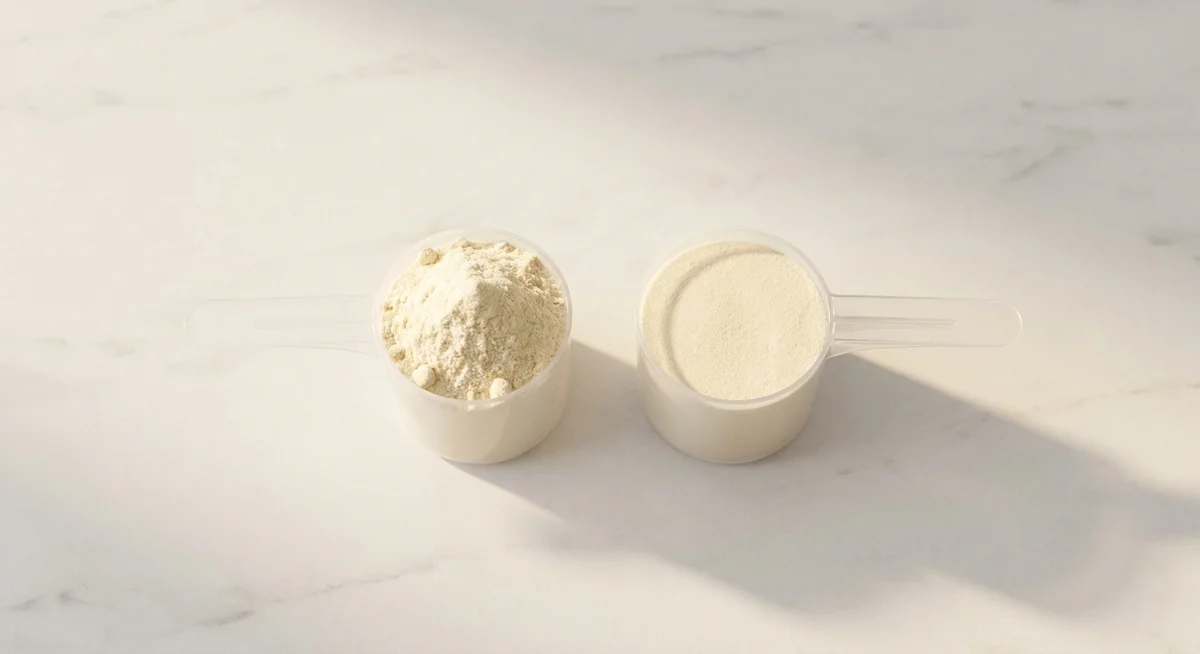
Walk into any supplement aisle (or scroll any online store) and you will find whey protein concentrate and whey protein isolate sitting next to each other at very different price points. Both come from the same source: liquid whey drained off during cheese making. The difference is what happens after that. Understanding the gap between them takes about five minutes, and it will save you from buying the wrong thing for the next twelve months.
Key takeaways
- Whey protein concentrate (WPC) typically delivers 70-80% protein by weight; WPI 90 hits 90% or above.
- WPI 90 contains almost no lactose or fat, making it easier to digest and cleaner per calorie.
- WPC costs less per tub but often costs more per gram of actual protein once you do the maths.
- For anyone managing calories tightly, dealing with a sensitive gut, or training seriously, WPI 90 is the better daily driver.
- WPC still has a place: baking, budget phases, and people with no lactose sensitivity who prioritise cost above all else.
How are WPC and WPI 90 actually made?
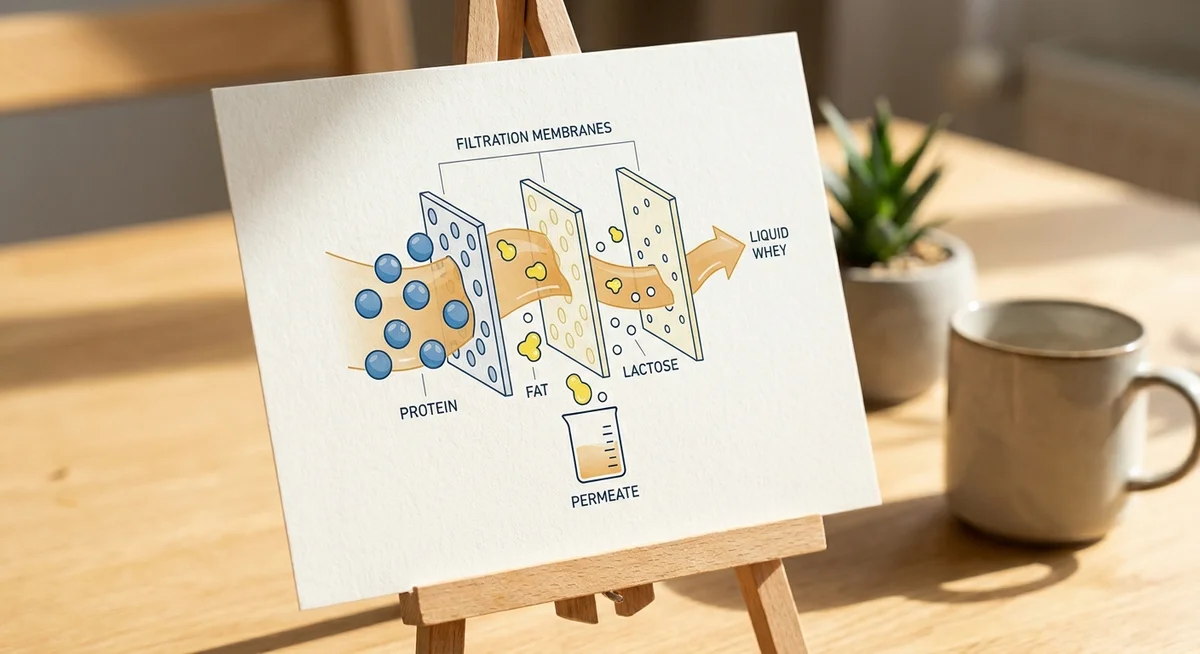
Both start as a liquid byproduct of cheesemaking. That liquid passes through filtration membranes that catch protein and let fat, lactose, and water flow through. The difference is how many passes it takes and how tight those membranes are.
Whey protein concentrate goes through one or two filtration stages. That is enough to concentrate the protein but leaves meaningful amounts of fat and lactose behind. Depending on the brand and processing method, you end up with roughly 70 to 80 grams of protein per 100 grams of powder.
WPI 90 goes further. Extra filtration stages (cross-flow microfiltration is the most common method at this level) strip out nearly all the fat and lactose, pushing protein content up to 90 grams per 100 grams or higher. Less "other stuff" means more protein in every scoop, and less for your gut to deal with.
What do the numbers actually look like side by side?
Here is a realistic comparison based on typical commercial products. Exact numbers vary by brand, so always check the nutrition panel, but these ranges are representative.
| Nutrient (per 30g serve) | Whey Protein Concentrate (WPC 80) | WPI 90 |
|---|---|---|
| Protein | ~22–24g | ~27–28g |
| Fat | ~2–4g | ~0.5–1g |
| Lactose | ~3–5g | ~0.5g or less |
| Calories | ~120–130 kcal | ~105–115 kcal |
| Protein % by weight | ~74–80% | ~90%+ |
That extra 4 to 5 grams of protein per scoop might not sound dramatic on its own. Across two scoops a day for a year, it adds up to roughly 3 kilograms of extra protein from the same number of serves. That gap matters if muscle retention or growth is your goal.
Does the difference in lactose actually matter?
For a lot of people, yes. Lactose intolerance sits on a spectrum. Some people handle moderate amounts without trouble. Others feel bloated and uncomfortable after a couple of grams. Most WPC products contain 3 to 5 grams of lactose per serve, which is enough to cause noticeable symptoms in people who are moderately sensitive.
WPI 90 typically contains less than half a gram per serve, which falls well below the threshold that triggers discomfort even in people with genuine lactose sensitivity. That is one reason so many people who write off protein powder as "the thing that makes my stomach hurt" do fine once they switch to a quality isolate. If you want to dig deeper into why isolate is gentler on digestion, the full explanation of WPI 90 and gut health is worth a read.
When WPC makes sense
- You have no lactose sensitivity at all
- You are in a strict budget phase and cost per tub matters most
- You are baking or cooking with protein powder (heat degrades both equally)
- Your daily protein target is moderate and any shortfall is easy to cover with food
When WPI 90 makes sense
- You are tracking calories and want maximum protein per calorie spent
- You have any level of lactose sensitivity
- You are training hard and relying on protein powder as a daily anchor
- You want a powder that mixes clean and sits light in your stomach
Is WPC actually cheaper when you run the real numbers?
WPC almost always costs less per kilogram of powder. That makes it look like the budget-friendly pick. But the more useful number is cost per gram of actual protein, not cost per gram of powder.
Here is a quick example. Say a 1kg bag of WPC 80 costs $35 and delivers 750 grams of protein across the whole bag. That works out to roughly $0.047 per gram of protein. A 1kg bag of WPI 90 at $50 delivers around 880 grams of protein, which works out to $0.057 per gram. The gap is about one cent per gram of protein, not the dramatic saving that the label price suggests.
Factor in that you need more WPC per serve to hit the same protein number, and the real cost difference shrinks again. It does not disappear, but for most people it is not the deal-breaker it looks like at first glance. The per-serve price breakdown guide covers this maths in detail if you want to plug in your own numbers.
What about taste and mixability?
WPC tends to have a slightly creamier mouthfeel because of the fat content. Some people prefer it. WPI 90 mixes thinner and cleaner, which is an advantage in shakers, smoothies, and anything where you want protein without a heavy, milky texture.
Both can be flavoured well. The difference is that WPC's fat content gives flavour manufacturers more to work with, which is why some of the richest-tasting powders on the market are concentrates. WPI 90 flavouring has improved a lot over the past decade, and a well-made isolate is now hard to distinguish from concentrate in a blind taste test.
Mixability is generally better in WPI 90. Less fat means less clumping, and the finer particle size produced by tight filtration membranes dissolves faster in cold water. If you have ever had a protein shake with lumps that refuse to break up, there is a reasonable chance it was a lower-grade WPC.
FAQ
Can I switch between WPC and WPI 90 without noticing a difference in my results?
If your total protein intake stays the same, the difference in results will be small. The practical gap is in how your stomach handles each one, how many calories the powder adds to your day, and how many scoops you need to hit your target. For casual use with no digestive issues, swapping between them is unlikely to change your outcomes noticeably. For serious training phases, the cleaner macros in WPI 90 give you more control.
Is WPI 90 better for weight loss than WPC?
Fewer calories per gram of protein makes WPI 90 the tidier option when you are watching your intake. The difference per serve is roughly 10 to 20 calories, which sounds minor but adds up over daily use. More importantly, the higher protein content per serve helps you hit your target with less powder, which reduces total calorie load from supplements. There is a full guide on using WPI 90 on a calorie deficit if this is your primary goal.
Does WPC have any nutritional advantages over WPI 90?
The fat in WPC includes small amounts of naturally occurring milk fats, some of which carry fat-soluble vitamins. In practice, the amounts per serve are too small to make a meaningful difference to your diet. WPC is not nutritionally inferior in any important way, but it is not nutritionally superior either. The main trade-off is protein purity versus cost, not nutrition quality.
How do I know if a protein powder is WPC or WPI 90?
Check the ingredients list. It should say "whey protein isolate" (WPI) or "whey protein concentrate" (WPC) clearly. The protein percentage on the nutrition panel is your next clue: anything above 85% protein by weight is almost certainly an isolate. Anything in the 70 to 80% range is concentrate. Some blends mix both to hit a price point; the label will list both, usually with isolate first if it is the dominant ingredient.
Try a premium WPI 90 with 90%+ protein per scoopMade from quality Australian whey with no unnecessary fillers.