Why WPI 90 Is Easier on Your Gut Than Most Protein Powders

If you've ever finished a protein shake and spent the next hour feeling bloated and uncomfortable, the powder is almost certainly the problem. Most people assume gut discomfort after protein is just part of the deal. It's not. A well-made WPI 90 is genuinely easy to digest for the vast majority of people, and the reason comes down to what's been removed during processing, not what's been added.
Key takeaways
- Bloating from protein shakes is usually caused by residual lactose, high fat, or cheap fillers - not protein itself.
- WPI 90 removes most of the lactose and fat during filtration, leaving a cleaner product your gut can handle more easily.
- Protein percentage is the fastest way to judge purity: aim for 90g or more per 100g of powder.
- Whey concentrate and mass gainers carry far more lactose and fat, which is where the gut trouble usually starts.
- Even people with mild lactose sensitivity often tolerate WPI 90 without issues.
Why do protein shakes cause bloating in the first place?
Protein itself is not the culprit. Your gut is well-equipped to digest amino acids. The discomfort most people feel comes from everything else sitting alongside the protein in lower-grade powders: residual lactose, significant fat, artificial sweeteners in large doses, and bulking agents like maltodextrin that push the carb count up without adding nutrition.
Whey concentrate, for example, typically contains 70 to 80 percent protein by weight. The remaining 20 to 30 percent is made up of fat, carbohydrates (including lactose), and moisture. That's a meaningful amount of lactose per scoop, and for anyone whose gut is even mildly sensitive to dairy sugar, it's enough to cause gas and bloating within an hour.
Mass gainers are worse again. They're designed to be calorie-dense, so they stack in oats, maltodextrin, and sometimes vegetable oils. Your digestive system has to work considerably harder to process a 150g serve of that than a single 30g scoop of a clean isolate.
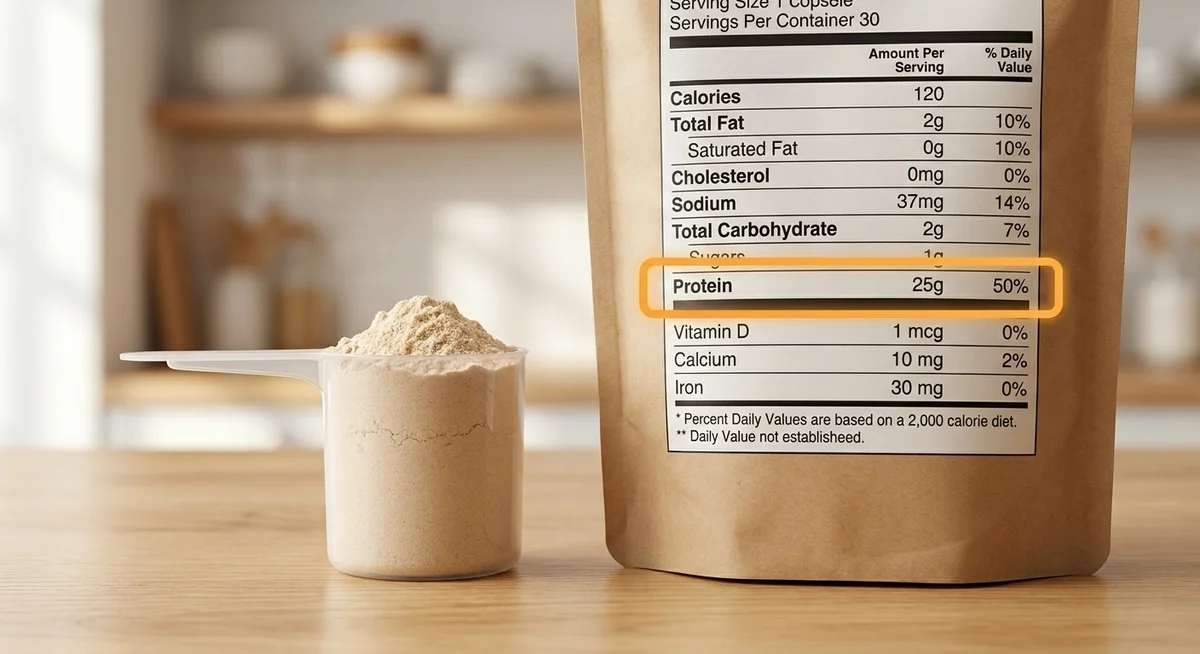
What does WPI 90 actually remove during filtration?
The "90" in WPI 90 refers to the protein concentration: at least 90 grams of protein per 100 grams of powder. Getting there requires pushing liquid whey through extremely fine ceramic membranes in a process called cross-flow microfiltration (or, in some cases, ion exchange). The membranes physically separate the small protein molecules from the larger fat globules and most of the lactose.
By the time the process is done, a quality WPI 90 typically has:
- Less than 1g of fat per 30g serve
- Less than 1g of carbohydrates (including lactose) per 30g serve
- Somewhere between 27g and 29g of protein per 30g serve
Compare that to a standard whey concentrate at the same serve size: you might get 21 to 23g of protein, 2 to 4g of fat, and 3 to 5g of carbohydrates including lactose. It doesn't sound enormous, but for someone whose gut is sensitive it absolutely adds up across multiple shakes per day.
WPI 90 per 30g serve (typical)
- Protein: 27 to 29g
- Fat: under 1g
- Carbohydrates: under 1g
- Lactose: trace to none
- Digestive load: low
Whey concentrate per 30g serve (typical)
- Protein: 21 to 23g
- Fat: 2 to 4g
- Carbohydrates: 3 to 5g
- Lactose: moderate
- Digestive load: higher
Does lactose really matter if I'm not officially lactose intolerant?
Yes, more than most people realise. Clinical lactose intolerance (where consuming any dairy triggers significant discomfort) affects a portion of the population, but mild lactase insufficiency is far more common. Lactase is the enzyme your small intestine produces to break down lactose. Many adults produce less of it than they did as children, and while they can handle a glass of milk without drama, stacking two or three protein shakes a day adds up to a cumulative lactose load their gut struggles with.
Because a quality WPI 90 carries so little lactose per scoop, it effectively sidesteps this issue for most people. You're not relying on your lactase levels to process the shake, because there's almost nothing for them to do. That's a practical advantage even if you've never been formally diagnosed with any dairy sensitivity.
What about artificial sweeteners and fillers?
This is where flavoured proteins can cause separate issues, regardless of purity. Some sweeteners, particularly sugar alcohols like sorbitol, xylitol, and maltitol, are known to cause bloating and loose stools in higher doses because your gut bacteria ferment them rather than your small intestine absorbing them cleanly. Cheap flavouring systems often rely on these to hit a sweetness target without adding sugar.
A well-formulated flavoured WPI 90 uses sucralose or stevia in small amounts, both of which are absorbed or passed through without the fermentation problem. If you're consistently gassy after flavoured shakes but feel fine on unflavoured, the sweetener blend is worth investigating before you blame the protein itself.
For anyone who wants to remove the variable entirely, unflavoured WPI 90 is just protein and nothing else. You can read more about the tradeoffs in our breakdown of flavoured vs. unflavoured WPI 90.
Is WPI 90 easier to digest than plant proteins?
Generally, yes. Plant proteins like pea, rice, and hemp have a lower digestibility score (measured by PDCAAS or DIAAS) than whey, meaning your gut has to work harder to extract the amino acids from the protein structure. Many plant powders also contain significant amounts of fibre, which is healthy in food but adds bulk in a protein shake that can cause heaviness and gas in some people.
WPI 90's amino acid profile is also more complete, which means fewer complementary foods are needed to hit all nine essential amino acids. You can dig into the full numbers in our WPI 90 vs. plant protein comparison.
| Protein type | Typical lactose | Digestibility (PDCAAS) | Bloating risk |
|---|---|---|---|
| WPI 90 | Trace to none | 1.0 (maximum) | Low |
| Whey concentrate | Moderate | 1.0 | Low to moderate |
| Casein | Low to moderate | 1.0 | Low to moderate |
| Pea protein | None | 0.69 | Moderate (fibre, oligosaccharides) |
| Rice protein | None | 0.47 | Low to moderate |
| Mass gainer blends | Moderate to high | Varies | High |
How to tell if your current protein is causing the problem
The simplest test: swap to an unflavoured WPI 90 for two weeks and keep everything else the same. If the bloating disappears, your old powder was the issue. If it persists, something else in your diet is worth looking at (high-fibre foods around shake time, eating too fast, carbonated mixers).
When reading labels, these are the numbers that tell you the most:
- Protein per 100g: If it's under 80g, it's a concentrate or blend. 90g or above signals a true isolate.
- Carbohydrates per serve: Under 2g is clean. Over 5g in a 30g serve means meaningful lactose or added carbs.
- Fat per serve: Under 1g is the isolate standard. Over 3g suggests a concentrate or added fat source.
- Ingredient list: Whey protein isolate should appear first. If concentrate leads, that's the majority protein source regardless of how the product is marketed.
You can find a full walkthrough of label reading in our guide on how to read a whey protein label.
Try a WPI 90 that's built for clean digestionPremium whey protein isolate with 90g+ protein per 100g and nothing you don't need.Frequently asked questions
Can I take WPI 90 if I'm lactose intolerant?
Most people with mild to moderate lactose intolerance handle WPI 90 without problems because the filtration process removes the vast majority of lactose. If you have a severe intolerance or a true dairy allergy (which is an immune response to the proteins themselves, not the lactose), you'd need to avoid all whey products and look at plant-based alternatives instead. If you're unsure, start with a small serve and see how your body responds.
Why does my protein shake make me feel heavy even when I don't bloat?
Heaviness after a shake is usually a sign the carbohydrate or fat load is higher than expected, the serve size is too large, or you're drinking it too quickly. A 30g scoop of WPI 90 mixed with water should digest and clear your stomach within 30 to 60 minutes. If it's sitting heavily, check the carb count on the label and consider halving your serve to see if that changes how you feel.
Is there any protein powder that's completely free of digestive side effects?
No supplement works the same for everyone. Even a very clean WPI 90 can cause issues if you're genuinely allergic to dairy proteins, if you take it on a completely empty stomach and your gut is sensitive to rapid gastric emptying, or if you're mixing it with something that doesn't agree with you. For most people though, switching to a high-purity isolate removes the vast majority of common complaints.
Does the digestive difference between WPI 90 and concentrate matter if I'm already tolerating my current powder?
If you have zero digestive symptoms on your current powder, you don't need to change for gut reasons. The other arguments for WPI 90 (more protein per gram, fewer calories, better amino acid density per serve) still apply, but gut comfort alone isn't a reason to switch if everything already feels fine. Our cost-per-serve breakdown covers whether the price difference makes sense for your situation.