Flavoured vs. Unflavoured WPI 90: Which One Should You Buy?

When you're buying WPI 90, protein content is the main event. But there's a second choice that trips up a lot of people: flavoured or unflavoured? Neither is universally better. The right answer depends on how you actually use the powder day to day, what you mix it with, and whether you want flexibility or convenience out of a tub.
Key takeaways
- Flavoured WPI 90 is more convenient for straight shakes but limits how you use the powder in food and cooking.
- Unflavoured WPI 90 blends invisibly into almost anything: smoothies, oats, yoghurt, baked goods, savoury recipes.
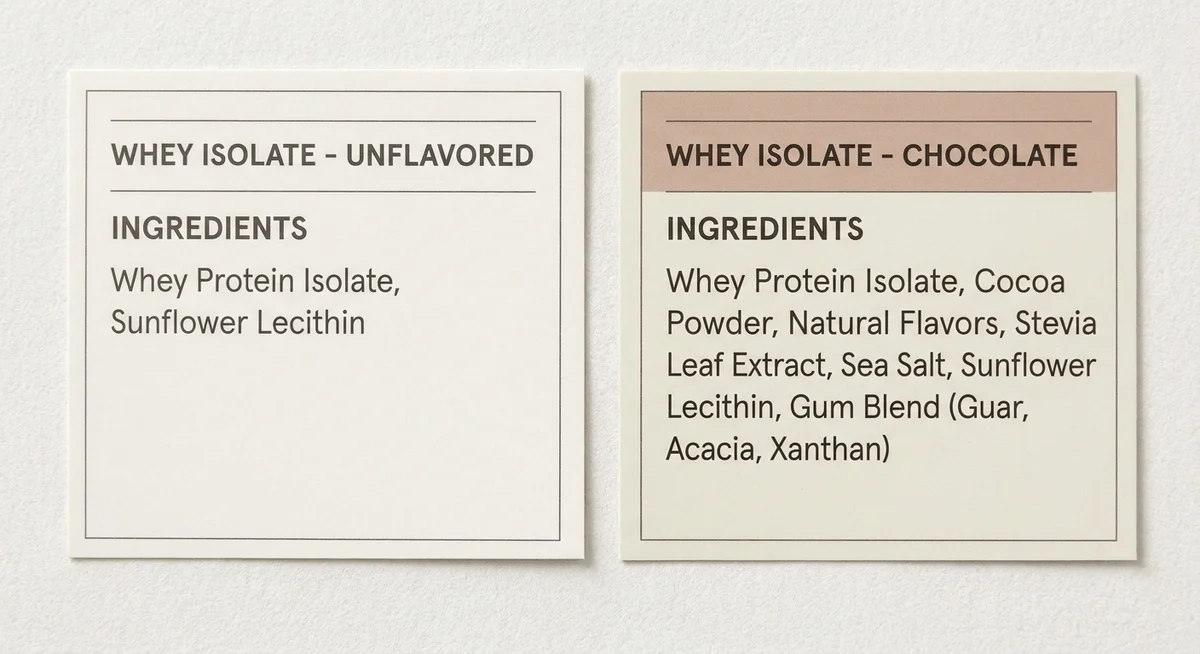
- Both options deliver the same protein per gram, but flavoured versions typically have slightly more ingredients on the label.
- The best pick depends on your routine, not on which option sounds cleaner or more "serious".
What's actually different between the two?
At the core, the protein is identical. Both start from the same cross-flow microfiltered whey, both hit around 90% protein by weight, and both carry the same amino acid profile. The difference is everything that comes after the filtration process.
Flavoured WPI 90 has sweeteners (usually stevia or sucralose), flavour compounds, and sometimes a thickening agent like xanthan gum to give the shake a smoother mouthfeel. Unflavoured is just the protein, sometimes with a trace of sunflower lecithin for mixability, and nothing else. When you look at the ingredient list on a quality unflavoured tub, you might see one or two lines. A flavoured version will have five to eight.
That's not a knock on flavoured protein. Those extra ingredients are food-grade and well-tested. But it is worth knowing what you're getting.
When does flavoured WPI 90 make more sense?
If your main use case is shaking the powder with water or milk straight after training, flavoured wins on convenience. You don't need to think about it. Scoop, shake, drink. The flavour does the work, and a good chocolate or vanilla WPI 90 actually tastes like something worth looking forward to.
Flavoured also makes it easier to stay consistent. Consistency is the single biggest factor in whether a protein supplement actually moves the needle. If a good-tasting shake means you hit your protein target on the days when you really can't be bothered, that's worth the slightly longer ingredient list.
| Use case | Flavoured WPI 90 | Unflavoured WPI 90 |
|---|---|---|
| Post-workout shake with water | Great | Bland without additions |
| Blended into a fruit smoothie | Can clash with flavours | Blends in cleanly |
| Stirred into oats or yoghurt | Works if flavours match | Adds protein invisibly |
| Baked into muffins or pancakes | Works, but sweeteners can intensify with heat | Most versatile option |
| Mixed into savoury food | Not suitable | Works well |
| Ingredient count on label | 5 to 8 typically | 1 to 2 typically |
When does unflavoured WPI 90 make more sense?
Unflavoured is the more flexible option, full stop. If you want to use your protein powder across a wider range of meals and not just post-workout shakes, unflavoured gives you that range without adding a vanilla or chocolate note to everything you make.
A few practical examples: unflavoured WPI 90 stirred into Greek yoghurt with berries tastes exactly like Greek yoghurt with berries. Flavoured chocolate WPI 90 in the same bowl tastes like chocolate yoghurt. One of those is probably not what you had in mind at breakfast. Same idea with smoothies - unflavoured lets the fruit and other ingredients do their job without competing flavours muddying the result.
Unflavoured also tends to suit people who are already eating well and hitting most of their protein through whole food, using the powder to fill the remaining gap. If you're aiming to combine WPI 90 with real food to hit your daily protein target, unflavoured makes it much easier to fold protein into meals you'd already be eating.
Does the choice affect how much protein you get?
Not in any meaningful way. A high-quality WPI 90 will land at around 88-90g of protein per 100g regardless of whether it's flavoured or not. The flavouring ingredients added to the flavoured version are present in small enough quantities that they don't push the protein percentage down significantly.
Where you might see a difference is in the sugar and carbohydrate count. Some flavoured proteins, particularly those using real cocoa or natural flavour extracts, will carry a small amount of naturally occurring sugar. Unflavoured versions typically show zero or trace carbohydrates. For most people training and eating normally, this difference is negligible. If you're tracking macros precisely - say, during a lean-out phase - it's worth checking the panel on the specific product you're considering. If you want a deeper look at reading those panels, this guide on reading whey protein labels covers exactly what to look for and what to ignore.
The quality question: does it matter more for one than the other?
Yes, but not in the direction most people assume. Quality matters for both, but flavoured protein gives manufacturers more places to hide a lower-grade base. A strong vanilla or chocolate flavour can mask off-notes that would be obvious in an unflavoured product. Unflavoured powder has nowhere to hide - if it tastes chalky, grainy, or slightly sour, you'll know immediately.
That's actually one reason serious buyers sometimes prefer unflavoured: it's a more honest signal about the protein inside. A clean-tasting, well-mixing unflavoured WPI 90 is a reliable indicator that the filtration process was done properly.
With flavoured protein, the quality check moves to the ingredient list. Look for natural flavour sources, minimal sweeteners, and a short overall list. A long list of fillers, gums, and artificial colours alongside the flavouring is a sign the base protein is being propped up by a lot of extras.
Flavoured WPI 90: pros
- Ready to drink with just water or milk
- Easier to stay consistent when you don't feel like preparing food
- Familiar taste makes the habit stick
- Good for people new to protein supplements
Unflavoured WPI 90: pros
- Mixes invisibly into almost any food or drink
- No sweetener aftertaste in savoury applications
- Shorter ingredient list
- Easier to combine with strong natural flavours (fruit, coffee, spices)
Can you use both?
Plenty of people do. A common approach is keeping a tub of flavoured protein for post-training shakes and a bag of unflavoured for everything else: morning yoghurt, overnight oats, pancakes on the weekend. The flavoured one handles convenience; the unflavoured handles flexibility. If that sounds like overkill, start with whichever suits your most common use case and add the other later if you find yourself wanting more options.
Frequently asked questions
Does unflavoured WPI 90 taste bad on its own?
Not bad, but it's not interesting either. Mixed with water, a good unflavoured WPI 90 tastes mildly milky with a slight sweetness from the whey itself. Some people are fine drinking it straight; others find it dull. The real strength of unflavoured is in food applications where you don't want any flavour at all. If you plan to drink it plain, flavoured is probably the better call.
Are the sweeteners in flavoured WPI 90 a problem?
For most people, no. Stevia and sucralose used in typical protein powder quantities are well within safe intake levels. Some people are sensitive to the aftertaste of artificial sweeteners, particularly sucralose. If that's you, look for flavoured proteins sweetened only with stevia, or go unflavoured. The label reading guide can help you spot the sweetener type quickly.
Does flavoured WPI 90 work in cooking and baking?
It can, but you need to factor the flavour into the recipe. Chocolate-flavoured WPI 90 works in chocolate protein brownies. Vanilla works in banana bread. Where it gets tricky is with sweeteners - some, especially stevia, can become bitter when exposed to prolonged high heat. Unflavoured is the safer choice for anything baked above 160°C for more than 20 minutes. For a full breakdown of how protein powder behaves under heat, this article on cooking with WPI 90 covers the science.
Is one option significantly cheaper than the other?
Unflavoured is often slightly cheaper per kilogram because the manufacturing process is simpler. The gap is rarely huge - usually a few dollars per tub - but if you're buying in bulk, it adds up. That said, the cost difference shouldn't be the deciding factor. Buy the version you'll actually use consistently, because a tub of the "cheaper" option you reach for less often is no bargain.
Try Premium WPI 90Flavoured and unflavoured options with 90% protein per serve and nothing to hide.