WPI 90 on a Calorie Deficit: How to Keep Muscle While You Lose Fat

Eating less while training hard is a balancing act that most people get wrong. The body does not neatly burn fat and leave muscle alone. When calories drop, muscle is on the chopping block too, unless you actively protect it. That is where protein quality stops being a nice-to-have and starts being the actual strategy. WPI 90 gives you one of the highest protein concentrations per gram of anything you can mix in a shaker, and that matters a lot when every calorie counts.
Key takeaways
- A calorie deficit puts muscle at risk. Higher protein intake is the main defence.
- WPI 90 delivers around 90% protein by weight, so you get more protein per calorie than concentrate or most whole foods.
- Its leucine content triggers muscle protein synthesis even when total calories are low.
- Timing matters more in a deficit than in a surplus. Post-training and before bed are your two most valuable windows.
- Not all protein powders are built the same. Filler-heavy concentrates eat into your calorie budget without matching the amino acid payload.
Why does a calorie deficit threaten muscle in the first place?
When you eat less than you burn, the body looks for fuel anywhere it can find it. Stored fat is the target, but muscle tissue is also on the menu because it can be broken down into amino acids and converted to glucose. This process, called muscle protein breakdown, runs constantly in the background. The goal when cutting is to keep muscle protein synthesis (building) running fast enough to at least match that breakdown rate. The problem: a calorie deficit directly suppresses anabolic signalling, which means synthesis slows down at exactly the moment breakdown wants to speed up.
The solution is not complicated, but it is specific. You need more dietary protein than you would in a surplus, spread across the day, with enough leucine per serve to reliably trigger a muscle-building response each time you eat. Research consistently puts the protein target for muscle retention during a deficit somewhere between 2.0 and 2.4 grams per kilogram of body weight per day. For a 75 kg person, that is 150 to 180 grams of protein daily, from a reduced calorie budget. Every gram has to earn its place.
Why does protein quality matter more when calories are restricted?
When you have plenty of calories to play with, you can afford some inefficiency. When you are cutting, every calorie that is not protein is a calorie that either fuels your workout or makes the deficit harder to hit. That trade-off is where WPI 90 pulls away from the pack.
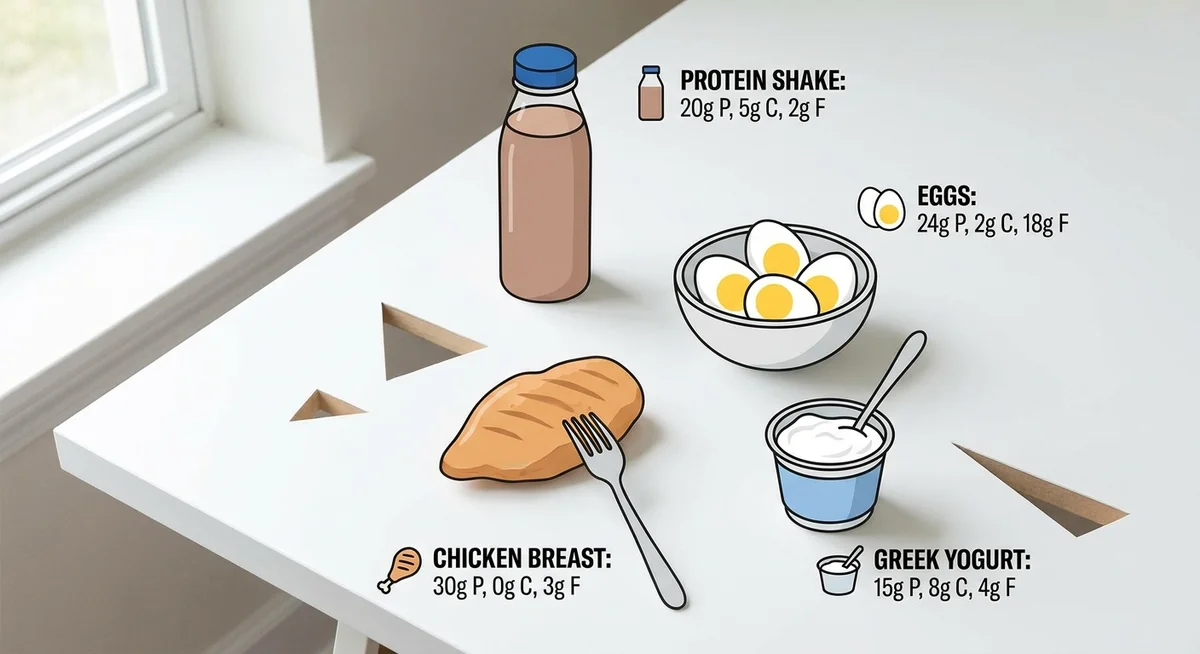
| Protein Source | Protein per 100 g | Fat per 100 g | Carbs per 100 g | Calories per 100 g |
|---|---|---|---|---|
| WPI 90 | ~90 g | ~1 g | ~2 g | ~375 kcal |
| Whey Concentrate (WPC 80) | ~80 g | ~5 g | ~8 g | ~400 kcal |
| Chicken breast (cooked) | ~31 g | ~3.6 g | 0 g | ~165 kcal |
| Greek yoghurt (full fat) | ~10 g | ~5 g | ~4 g | ~97 kcal |
| Whole eggs | ~13 g | ~10 g | ~1 g | ~143 kcal |
The numbers tell the story. WPI 90 is the most protein-dense option in the table by a wide margin. A 30 g serve lands around 27 g of protein for roughly 113 calories. Getting the same protein from Greek yoghurt would cost you over 250 calories. When you are aiming for 170 g of protein on a 1,800-calorie day, that efficiency gap becomes genuinely significant.
Beyond protein density, WPI 90's amino acid profile is built for muscle retention. It is rich in all three branched-chain amino acids (BCAAs), and particularly high in leucine, the amino acid that acts as the trigger for muscle protein synthesis. Most research points to around 2.5 to 3 grams of leucine per serve as the threshold needed to fully activate that response. A standard scoop of WPI 90 typically clears that bar comfortably. Many plant proteins and lower-grade concentrates do not.
When should you take WPI 90 during a deficit?
Timing is always useful, but it becomes more important when you are training in a deficit because the anabolic window matters more when your body is already under pressure. Here are the two windows worth locking in:
Post-training. This is the classic window, and it still holds. After resistance training, your muscles are primed to use amino acids for repair. A fast-absorbing protein like WPI 90 gets to work quickly because it has already been processed down to near-pure protein with minimal fat or lactose slowing digestion. Getting 30 to 40 g of high-quality protein in within an hour of training supports recovery without adding unnecessary calories from fat or carbs.
Before bed. This one surprises people. Most muscle repair happens overnight. If you go to bed without adequate amino acids in your system, you are asking your body to rebuild muscle from not much. A moderate serve of WPI 90 (25 to 30 g) before sleep keeps muscle protein synthesis ticking through the night. Some people prefer casein here for slower digestion, but WPI 90 works well if casein is not in your stack.
Spreading the rest of your daily protein across three or four meals through the day, rather than loading most of it into one sitting, also makes a real difference. The body can only use so much leucine to trigger synthesis at one time. Multiple smaller protein hits across the day outperforms one large hit, especially in a deficit.
What about the hunger side of the equation?
One underrated benefit of high-protein eating on a cut is satiety. Protein is the most filling macronutrient, gram for gram. Studies consistently show that higher protein intake reduces overall hunger and makes it easier to stick to a calorie target without feeling wretched. WPI 90, mixed with water, is also genuinely low in calories for how filling it is. A 30 g serve is over before you know it, but the protein content keeps hunger quieter between meals.
If you want to build a proper eating plan around your deficit, the WPI 90 range makes a clean foundation. You can read more about dialling in your daily protein targets in our guide to WPI 90 for fat loss vs. muscle gain and get the full picture on how serving sizes should shift with your goal over on how to work out your ideal WPI 90 serving size.
Frequently asked questions
How much protein should I eat per day on a calorie deficit?
Most research on muscle retention during a calorie deficit lands at 2.0 to 2.4 grams of protein per kilogram of body weight per day. For a 75 kg person, that is 150 to 180 grams daily. If you are doing a lot of resistance training, staying toward the higher end of that range is worth the effort. WPI 90 makes hitting those numbers much easier without blowing your calorie budget.
Is WPI 90 better than whey concentrate for cutting?
For a calorie deficit specifically, yes. Whey concentrate (WPC 80) carries more fat, more carbohydrates, and more lactose per gram than WPI 90. That means more calories for the same protein hit. WPI 90 gives you roughly 90 grams of protein per 100 grams of powder, compared to around 80 grams for concentrate. That 10-gram gap adds up across a full day of eating in a deficit.
Can I lose fat and keep muscle at the same time?
Yes, though it is harder for experienced lifters than beginners. The key variables are: a moderate calorie deficit (not an aggressive crash), high protein intake (2.0 to 2.4 g per kg), consistent resistance training, and adequate sleep. WPI 90 supports all of those by making high-protein eating practical and by delivering the leucine needed to keep muscle protein synthesis running even when total calories are low.
Should I take more protein on training days vs. rest days?
Slightly more protein on training days makes sense, but the difference is smaller than most people think. Muscle repair continues for 24 to 48 hours after a session, so rest days still require solid protein intake. A common approach is to keep protein constant across the week and adjust calories by pulling back slightly on carbohydrates or fats on rest days instead.
See the full WPI 90 rangePremium whey protein isolate with nothing extra. Built for people who train with a plan.