Does WPI 90 Actually Help With Muscle Soreness?

If you have ever woken up two days after leg day and struggled to sit down on a chair, you already know DOMS. Delayed onset muscle soreness is the stiff, tender feeling that peaks around 24 to 48 hours after a hard or unfamiliar training session. It is annoying, it slows your next session, and it is one of the main reasons people reach for protein powder after training. But does WPI 90 actually reduce it, or is that just gym mythology? The honest answer: it helps, but not in the way most people think.
Key takeaways
- DOMS comes from microscopic muscle damage and the inflammation that follows, not lactic acid buildup.
- WPI 90 supplies the amino acids your muscle fibres need to repair that damage faster.
- Studies show whey protein can reduce peak soreness and help restore strength faster between sessions.
- Timing matters: getting protein in within a couple of hours of training gives you the best shot at a faster turnaround.
- WPI 90's high leucine content is a big part of why it outperforms lower-quality proteins for recovery.
What is actually causing that soreness?
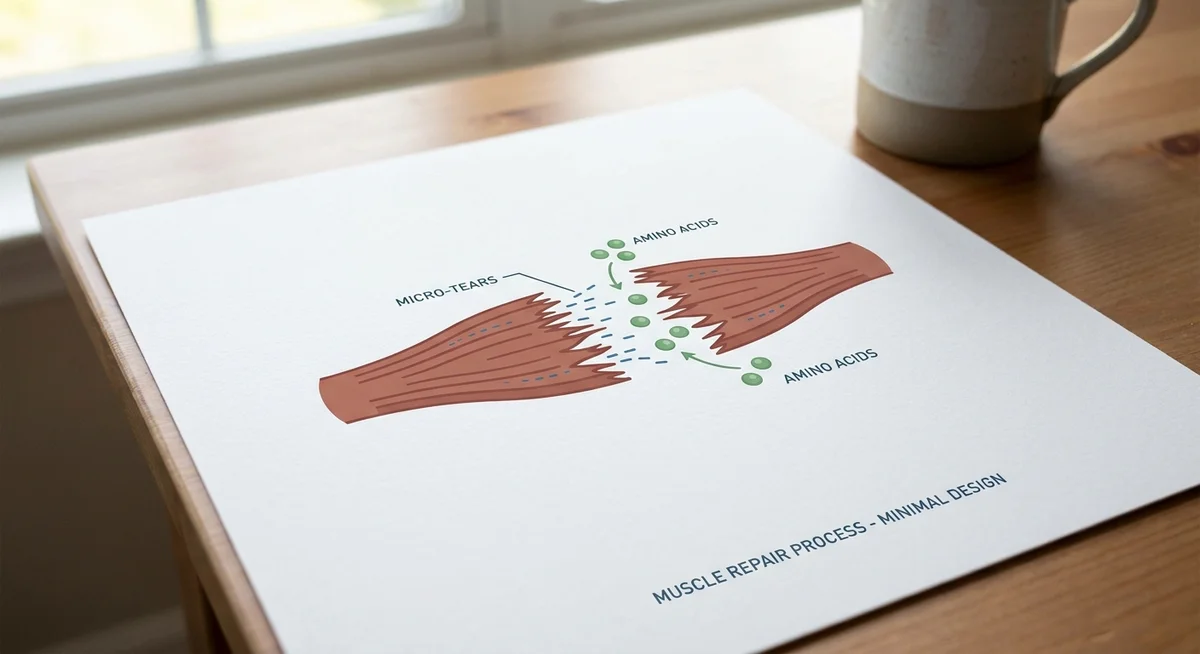
The old "lactic acid" explanation has been mostly debunked. Lactate clears your system within an hour of finishing exercise. What is actually happening during DOMS is a two-stage process: the training session creates tiny tears in muscle fibres (especially during the lowering, or eccentric, phase of lifts), and then your body mounts an inflammatory response to start repairs. That inflammation is what hurts.
This is not a bad thing. The repair process is exactly how muscles get bigger and stronger. But it does mean your muscle tissue is temporarily fragile, force production drops, and you feel stiff and tender. The question is whether nutrition can speed up the repair phase so you are back to full function sooner.
How does WPI 90 fit into the recovery picture?
Muscle repair needs raw materials. Amino acids are those materials, specifically the essential amino acids your body cannot make on its own. Leucine, isoleucine, and valine (the three branched-chain amino acids) are particularly important because they directly signal muscle protein synthesis, the process that patches damaged fibres.
WPI 90 delivers all of this in one clean hit. A standard 30g serve gives you roughly 27g of actual protein, with a leucine content around 2.5 to 3g per serve. That is right at or above the threshold most researchers identify as needed to trigger a meaningful muscle protein synthesis response. Lower-quality proteins, or smaller serves, often fall short of that threshold and deliver a weaker repair signal.
A few things WPI 90 does particularly well for recovery:
What WPI 90 brings to recovery
- Fast absorption means amino acids reach muscle tissue within 60 to 90 minutes of drinking it
- High leucine content triggers muscle protein synthesis more reliably than most other proteins
- Low fat and carb load means digestion is easy, even when your gut is stressed post-training
- Virtually no lactose, so less chance of digestive discomfort that could slow nutrient uptake
What WPI 90 cannot do
- It will not eliminate soreness entirely: some DOMS after hard training is normal and expected
- It will not replace sleep, which is still the most powerful recovery tool you have
- It will not compensate for chronically under-eating total calories
- It will not speed up recovery from injury or overtraining syndrome
What does the research actually say?
There is a solid body of research here, and the results are fairly consistent. Multiple randomised controlled trials have found that whey protein supplementation after resistance training reduces markers of muscle damage (such as creatine kinase levels in the blood), lowers self-reported soreness scores at the 24 and 48 hour marks, and helps restore strength and power output faster compared to placebo or carbohydrate-only controls.
One frequently cited mechanism is that faster muscle protein synthesis means the repair window is shorter. Instead of fibres staying damaged for 72 hours, adequate protein can push that closer to 48 hours. That might not sound dramatic, but if you are training four or five times a week, even half a day's difference in recovery time compounds into meaningfully better training quality over a month.
It is worth noting that most of these studies used whey protein isolate specifically, not blends or concentrates. The reasoning is straightforward: a higher protein percentage per serve means more amino acids per gram, and a faster digestion rate means the delivery is timely rather than slow. This is exactly the profile that WPI 90 has over whey concentrate.
Does timing actually matter for recovery?
For soreness specifically, timing is more relevant than some people give it credit for. The post-exercise window is when damaged muscle fibres are most receptive to amino acid delivery. Blood flow to muscle is still elevated, insulin sensitivity is high, and the molecular machinery for muscle protein synthesis is switched on. Getting protein in during this window (generally within one to two hours of finishing training) appears to produce a stronger repair response than waiting several hours.
That said, if you miss the window, do not panic. Total daily protein intake is still the biggest factor for long-term muscle health. But for minimising DOMS specifically, the evidence does lean toward sooner being better than later. A WPI 90 shake immediately post-session is one of the most practical ways to hit that window, particularly because it requires no cooking and digests quickly.
If you want to understand how to plan your protein across the full day, the guide on spreading protein throughout the day covers the broader strategy in detail.
Does the quality of your WPI 90 change how well it works?
Yes, and this is worth being direct about. Not all products labelled "WPI 90" are created equal. Protein percentage, amino acid profile, and the presence of fillers or nitrogen-boosting additives all affect whether you are actually getting what the label promises. A product that is genuinely 90% protein per 100g will give you a meaningfully larger amino acid dose per serve than one sitting at 80% with the gap filled by glycine or other cheap additives.
If you want to know what to look for on a label, the article on spotting a genuinely high-quality WPI 90 is a good place to start. The short version: check the protein per 100g figure, look for a full amino acid panel if the brand publishes one, and be sceptical of anything with a long ingredient list.
| Recovery factor | High-quality WPI 90 | Generic whey blend |
|---|---|---|
| Protein per 30g serve | ~27g | ~18 to 22g |
| Leucine per serve | ~2.5 to 3g | ~1.5 to 2g |
| Absorption speed | Fast (60 to 90 min) | Variable (slower with fat/fibre) |
| Lactose content | Very low (<1%) | Higher (concentrate-based) |
| Risk of GI discomfort post-training | Low | Moderate to high |
Frequently asked questions
How quickly does WPI 90 start helping with soreness?
You are not going to feel a difference within an hour of drinking your shake. The benefit works over 24 to 48 hours as your muscles repair. Consistent post-workout protein intake across multiple training sessions is where you notice the cumulative effect: sessions feel less punishing, and you bounce back faster week over week. One shake after one session is unlikely to produce a dramatic difference on its own.
Should I take WPI 90 on rest days when I am sore?
Yes. Muscle protein synthesis continues well after the training session is over, and your muscles are still repairing on the days between sessions. Hitting your protein target on rest days (roughly 1.6 to 2.2g per kg of bodyweight for active people) is just as important as hitting it on training days. A shake on a rest day is not redundant; it is supporting the repair process that is already underway.
Is WPI 90 better than other proteins for DOMS?
For post-workout recovery specifically, whey protein isolate performs well in studies compared to plant proteins, casein, and whole food sources consumed at the same time point. The speed of digestion and the leucine content are the two key advantages. Casein is slower-digesting and is often recommended before bed; for the immediate post-workout window, whey isolate tends to be the better fit.
Can I take too much WPI 90 for recovery?
There is no clear benefit to going above around 40g of protein in a single serve; your body can only use so much for muscle protein synthesis at once, and the rest gets oxidised for energy or excreted. Spreading serves across the day is more effective than doubling up in one sitting. Two or three moderate serves spread through the day will serve your recovery better than one giant dose.
Premium WPI 90, made to actually performSee why serious athletes choose a protein powder with nothing added and nothing hidden.