Cold-Processed Whey: What It Means and How to Spot It
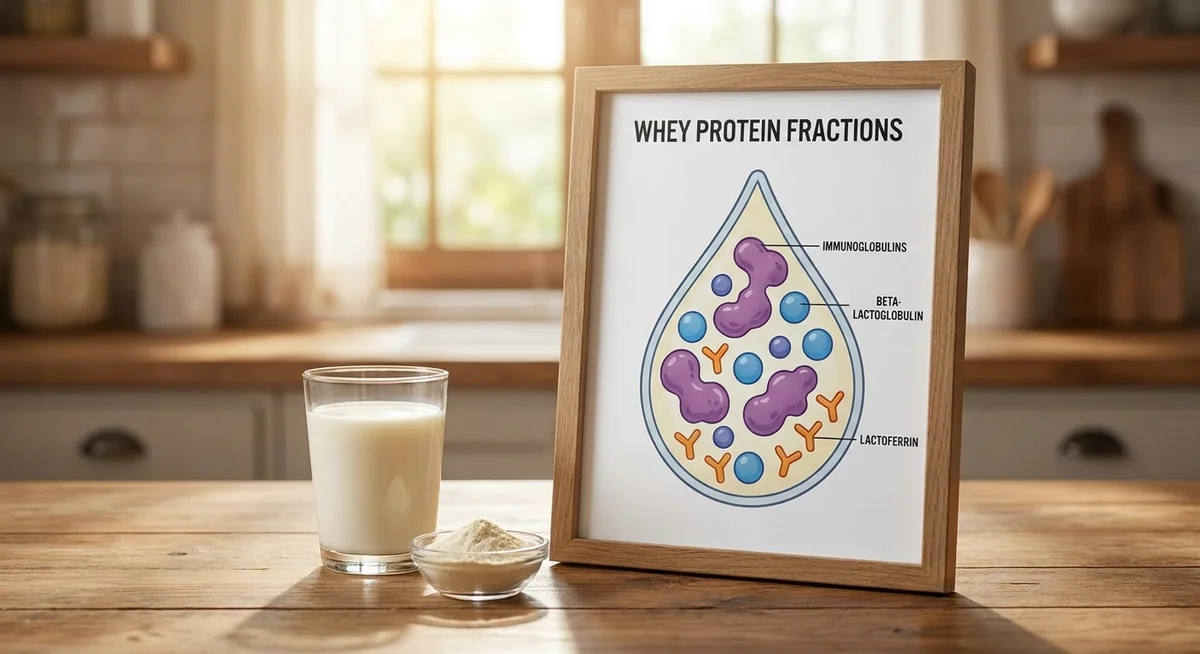
When a brand puts "cold processed" on their label, it sounds impressive. But what does it actually mean? Cold processing refers to keeping the temperature low during every filtration and drying stage of whey production - specifically to protect the proteins that heat quietly destroys. Whether it matters to you depends on how much of those proteins survive in the tub you're currently using.
Key takeaways
- Heat above roughly 70°C denatures whey proteins, changing their shape.
- Cold processing keeps temperatures low throughout filtration and spray drying to preserve fragile native fractions like beta-lactoglobulin, lactoferrin and other minor whey proteins.
- Cross-flow microfiltration (CFM) is the main cold-processing method used in high-quality WPI 90 production.
- Ion exchange processing uses chemical agents and heat, which denatures native protein fractions even if the protein percentage reads the same on the label.
- A few label clues and quality signals help you tell the difference - without needing a lab coat.
What actually happens to whey protein when it gets too hot?
Whey protein is made up of several distinct protein fractions, not just one big homogeneous blob. Beta-lactoglobulin, alpha-lactalbumin, lactoferrin and other minor whey proteins all have specific three-dimensional structures. Those structures are held together by relatively weak chemical bonds.
Heat breaks those bonds. Once a protein unravels from its native shape, it's said to be denatured. Denatured protein isn't poison - your body can still digest it and pull out amino acids. But the native structure of that protein is gone. You still get protein grams on a nutrition panel, but you've lost some of the native protein content that separates a quality WPI 90 from a cheap concentrate.
The critical temperature range is roughly 65-75°C. Most pasteurisation happens right around that zone. Spray drying - the process that turns liquid whey into powder - can hit inlet air temperatures well above 150°C if not carefully controlled. Every time whey protein hits sustained heat above its denaturation threshold, a portion of those native fractions is permanently altered.
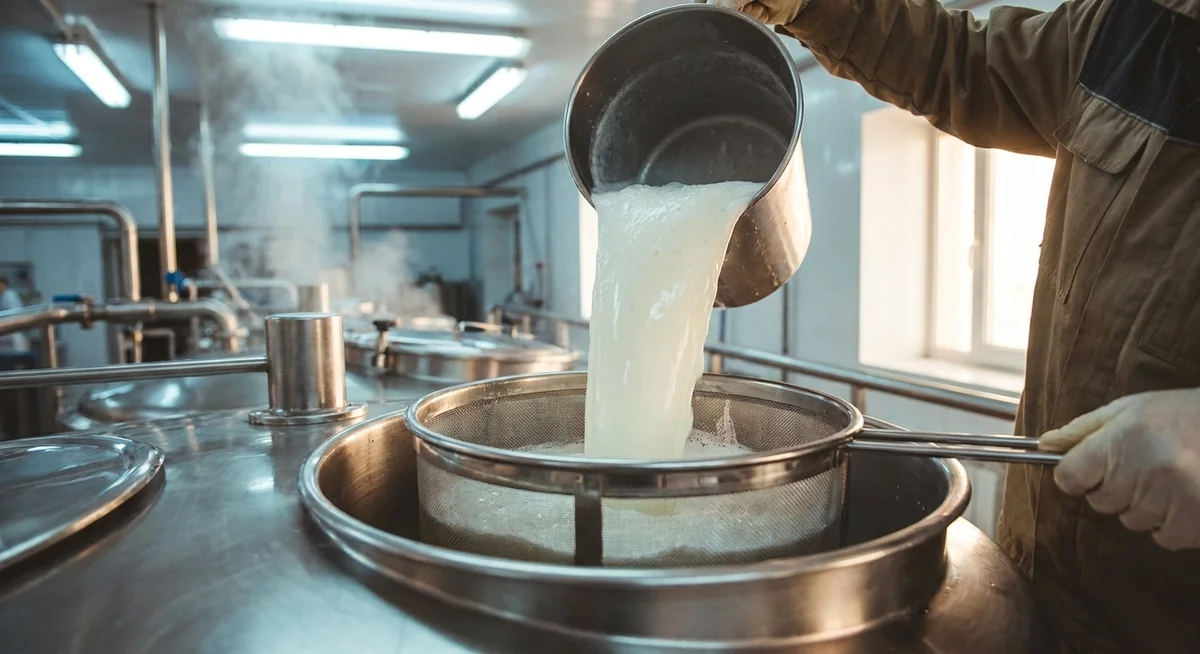
What does cold processing actually look like in a factory?
Cold processing isn't a single technique - it's a temperature philosophy applied across the whole production chain. The two most important stages where heat is either controlled or allowed to run high are filtration and drying.
Filtration: CFM vs. ion exchange
This is where the biggest quality split happens. Cross-flow microfiltration (CFM) uses a physical membrane to separate whey proteins by size and charge, with no heat and no harsh chemicals. The liquid whey passes across the membrane at low pressure and low temperature, and the output is a concentrated protein stream that still contains its native protein fractions in close to their original ratios.
Ion exchange, by contrast, uses chemical binding agents - typically sodium hydroxide and hydrochloric acid - to attract and then release the protein. The process works, and it can produce a very high protein percentage (sometimes even higher than CFM on paper). But the chemical wash and the heat involved disproportionately destroys lactoferrin and other minor whey proteins, which are the most sensitive fractions. You end up with a protein that is numerically pure but with fewer of its native fractions intact.
| Feature | Cross-Flow Microfiltration (CFM) | Ion Exchange |
|---|---|---|
| Processing temperature | Low (cold processed) | Higher, with chemical agents |
| Chemicals used | None | Sodium hydroxide, hydrochloric acid |
| Protein percentage achievable | Up to ~90%+ | Up to ~92%+ |
| Lactoferrin retained | High | Very low |
| Other minor whey proteins retained | High | Low to very low |
| Native protein fractions | Preserved | Partially denatured |
| Cost to produce | Higher | Lower |
Spray drying: where cold processing gets complicated
After filtration, the whey protein is still a liquid. To turn it into powder, it has to be dried. Spray drying blasts the liquid through a nozzle into a chamber of hot air - and if the temperature isn't carefully managed, this stage undoes a lot of the work that careful filtration achieved.
Quality manufacturers use inlet temperatures at the lower end of what's technically possible and control the outlet temperature closely. The protein droplets spend only a fraction of a second in the hot air before they've dried and the temperature at the surface of the particle drops sharply. Done right, the protein doesn't spend enough time at damaging temperatures for significant denaturation to occur. Done cheaply, with higher temperatures to speed throughput, you lose a meaningful portion of the native fractions the filtration stage preserved.
This is one reason that two WPI 90 products can use the same filtration method and still deliver different quality - the drying stage is invisible from the outside unless the manufacturer is transparent about it.
Does cold processing actually change the results you get?
For muscle building in isolation - if you're only measuring how much lean mass you put on per week - the difference between cold-processed and heat-processed whey is probably small. Both deliver high leucine content and a complete amino acid profile. Muscle protein synthesis responds mainly to leucine concentration and total amino acid availability, and both types of WPI 90 cover those bases.
Where the two differ is in how much of the native protein fractions stays intact. You can read more about these fractions inside a quality WPI 90 in our breakdown of the protein fractions that make whey protein work.
How to spot cold-processed whey on a label
Labels aren't always forthcoming. Here's what to look for:
- "Cross-flow microfiltration" or "CFM" - this is the most direct signal. If it's on the label, the filtration stage was cold-processed.
- "Native whey" or "undenatured whey" - terms that indicate the protein fractions have been kept in their natural state throughout processing.
- Published denaturation percentages - some manufacturers test and publish their native protein percentages. Under 5% denaturation is genuinely good. Over 20% is a concern.
- Lactoferrin listed separately - if the brand goes out of their way to mention lactoferrin content, it means they protected it. Manufacturers who use ion exchange or heavy heat processing rarely advertise lactoferrin because there's very little left to advertise.
- "Ion exchange" on the label - respect the honesty, but understand what it means for native protein content.
It's also worth knowing what doesn't tell you much: the protein percentage itself. A 90% protein figure can come from cold-processed CFM or from ion exchange with heavy heat. The number looks the same. The product inside isn't. For a deeper look at how to read the full label, our guide on how to read a whey protein label covers the whole nutrition panel from top to bottom.
Frequently asked questions
Is cold-processed whey always better than heat-processed?
For most people, cold-processed WPI 90 is the better choice - it preserves native protein fractions that heat destroys. The only situation where it doesn't matter much is if you're exclusively measuring the amino acid profile and nothing else. For overall protein quality, cold processing wins.
Does spray drying make cold-processed whey pointless?
Not if it's done well. Well-controlled spray drying keeps particles in the hot air stream for only milliseconds at a time. The surface temperature of the droplet drops as soon as it hits the chamber, so internal denaturation is minimal. The risk is real, but quality manufacturers manage it - and the best ones are transparent about their outlet temperatures and denaturation testing.
How do I know if the WPI 90 I'm buying is cold processed?
Look for "cross-flow microfiltration" or "CFM" on the label or product page. If the brand mentions lactoferrin content specifically, or publishes a denaturation percentage under 5-10%, that's a strong signal. If the label just says "whey protein isolate" with no processing detail, contact the brand and ask directly. Quality producers are usually happy to answer.
Does cold processing affect how the protein tastes or mixes?
Yes, often noticeably. Native, cold-processed whey tends to have a cleaner, slightly milkier flavour compared to ion exchange whey, which can have a faintly chalky or chemical aftertaste. Cold-processed WPI 90 also tends to mix more smoothly because the native protein fractions are more soluble in their undenatured state - which is part of why good mixability is actually a quality signal worth paying attention to.
See how our WPI 90 is madeCold-processed, cross-flow microfiltered, and tested for native protein retention - find out what's in every scoop.