WPI 90 vs. Hydrolysed Whey: Which One Is Actually Worth Buying?
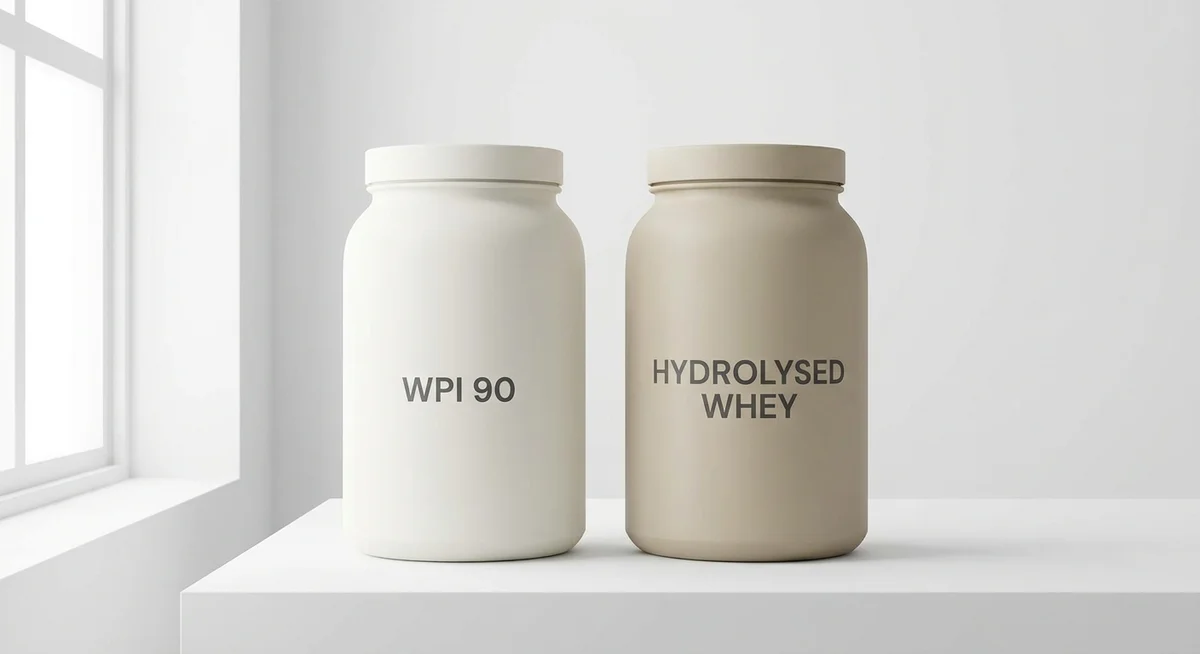
If you've spent more than ten minutes shopping for protein, you've probably noticed that WPI 90 and hydrolysed whey both carry similar marketing claims. Both are "fast-absorbing." Both are "ultra-pure." Both cost more than a standard tub of concentrate. So what's the real difference, and is one actually worth the extra money over the other? The short answer: for most people, WPI 90 wins on value. Here's why.
Key takeaways
- WPI 90 contains at least 90% protein by weight after microfiltration removes fat and lactose.
- Hydrolysed whey is WPI that has been enzymatically broken into smaller peptide fragments, adding a processing step and cost.
- Absorption speed differences between the two are real but minor for most training goals.
- Hydrolysed whey often tastes more bitter and costs 30-60% more per serve.
- Unless you have a specific clinical need, WPI 90 delivers nearly identical practical results at a better price.
What is WPI 90, exactly?
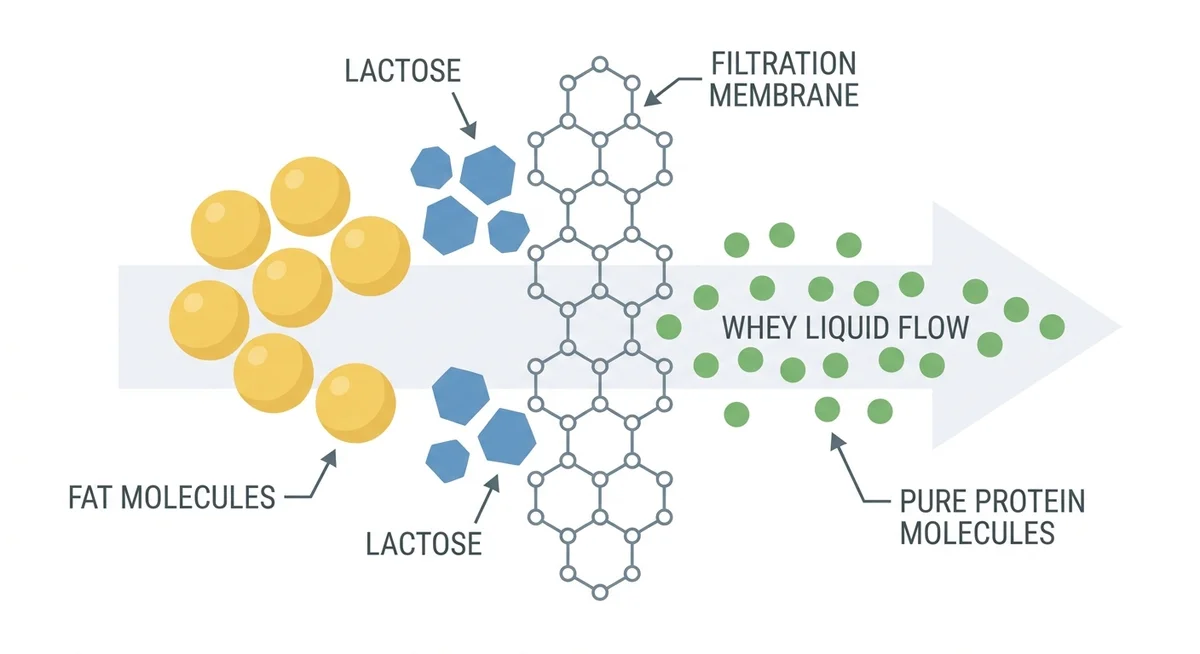
WPI 90 (whey protein isolate at 90% purity) starts life the same way all whey does: as the liquid left behind when milk is curdled to make cheese. That liquid gets filtered, usually through a process called cross-flow microfiltration, which strips out most of the fat, carbohydrates, and lactose. What remains is a powder that's roughly 90 grams of protein per 100 grams of product.
That 90% figure isn't marketing. It's a measurable standard, and it's why reading a protein label carefully matters so much when you're comparing products. A powder that claims to be "isolate" but only hits 80-85% protein per 100g hasn't met the WPI 90 bar.
The filtration process also preserves the whey's natural bioactive fractions: immunoglobulins, lactoferrin, and beta-lactoglobulin. These aren't just filler words. They're the proteins within the protein that support immune function and tissue repair.
What does hydrolysed whey actually do differently?
Hydrolysed whey (also called whey hydrolysate or WPH) is WPI that goes through one more step: enzymatic hydrolysis. Specific enzymes are added to the protein and break the long protein chains into shorter fragments called peptides. Some of these fragments are so short they're called di- or tri-peptides, meaning just two or three amino acids linked together.
The claimed benefit is faster digestion. Because the protein is already partially broken down before you drink it, your gut theoretically has less work to do and amino acids arrive in the bloodstream slightly sooner.
The reality is more nuanced than the marketing suggests. Studies measuring blood amino acid peaks after WPI vs. WPH show that WPH does absorb a little faster. But "a little faster" is doing a lot of heavy lifting in those claims. We're talking about a window of maybe 15-30 minutes earlier peak, in a context where your anabolic response to protein extends for several hours after training anyway.
| Feature | WPI 90 | Hydrolysed Whey |
|---|---|---|
| Protein per 100g | ~90g | ~85-90g (varies) |
| Processing steps | Filtration | Filtration + enzymatic hydrolysis |
| Absorption speed | Fast | Slightly faster |
| Bioactive proteins preserved | Yes | Partially (hydrolysis breaks some) |
| Taste | Mild, clean | Often bitter (due to free peptides) |
| Cost per serve | Moderate-premium | High to very high |
| Best for | Most training goals | Clinical recovery, specific allergy contexts |
Does faster absorption actually change your results?
This is where a lot of people get misled by supplement marketing. The concept of an "anabolic window" - a narrow post-workout period where protein timing is critical - has been significantly overstated in popular fitness culture. Research over the past decade points to total daily protein intake as the primary driver of muscle protein synthesis, with timing playing a supporting role rather than a starring one.
If you're already eating enough protein across the day (more on what "enough" means in our protein needs breakdown), the difference between amino acids arriving 15 minutes earlier or later post-workout is unlikely to move the needle on your actual muscle growth or recovery.
There are specific cases where hydrolysed whey has more of an argument. People recovering from surgery or burns, where rapid nitrogen delivery matters acutely. Athletes doing multiple training sessions per day with minimal recovery windows. Individuals with certain digestive conditions that make full protein digestion difficult. Outside of those scenarios, the practical advantage is thin.
The taste and cost trade-off
Hydrolysed whey has a reputation for tasting bitter, and it's earned. The free amino acids and short peptides released during hydrolysis, particularly the branched-chain amino acids leucine, isoleucine, and valine, are naturally bitter compounds. Manufacturers work around this with extra flavouring and sweeteners, which sometimes helps and sometimes just creates a strange aftertaste.
WPI 90, filtered but not hydrolysed, tastes cleaner. The protein chains are intact, the bitter free peptides aren't floating around in the mix, and a well-made unflavoured WPI 90 has a mild, almost neutral flavour. That's not a minor point if you're drinking this stuff every day.
On price, hydrolysed whey typically costs 30-60% more per serve than a quality WPI 90. Over a month of daily use, that difference adds up to real money. For a marginal absorption advantage that most users won't notice in practice, the premium is hard to justify.
When hydrolysed whey makes sense
- Multiple training sessions per day with short turnaround
- Post-surgical or clinical recovery under medical supervision
- Specific digestive conditions affecting protein breakdown
- Competitive athletes where marginal gains compound over time
When WPI 90 is the smarter pick
- One training session per day (the vast majority of people)
- Budget matters and you want high protein per dollar
- You want bioactive fractions preserved
- You prefer a cleaner, milder taste
- You care about ingredient transparency and label clarity
What about the amino acid profile?
Both WPI 90 and hydrolysed whey (which starts as WPI) share the same source amino acid profile: high in leucine, isoleucine, and valine, with a full complement of essential amino acids. The hydrolysis process doesn't add or remove amino acids - it just cuts the chains at different lengths. So if you're comparing a quality WPI 90 to a quality hydrolysate gram for gram of protein, the amino acid content is effectively the same. The amino acid profile per scoop is driven by the whey source, not the hydrolysis step.
How to choose between them
Start with your actual training schedule and budget. If you train once a day and you're eating across three or more meals, your absorption rate from your post-workout shake is not the limiting factor in your results. WPI 90 gives you the purity, the clean taste, the intact bioactive fractions, and a lower cost per serve.
If you're a competitive athlete training twice a day and recovery windows are genuinely compressed, hydrolysed whey has an argument worth hearing. But even then, it's a marginal optimization on top of an already solid base. Getting total daily protein right, training hard, and sleeping well will do more for your results than the form of whey in your shaker.
Quality matters either way. A low-grade hydrolysate won't outperform a high-quality WPI 90. The filtration process and the source milk both shape what ends up in the tub. That's worth thinking about before you spend the premium on hydrolysis.
Frequently asked questions
Is hydrolysed whey better for muscle growth than WPI 90?
For most people training once a day, the evidence doesn't show a meaningful difference in muscle growth outcomes between hydrolysed whey and WPI 90. Total daily protein intake and training quality are the bigger variables. The marginal absorption speed advantage of hydrolysate doesn't reliably translate to more muscle over time for the typical gym-goer.
Can WPI 90 cause digestive issues like concentrate can?
WPI 90 removes the vast majority of lactose during filtration, making it much gentler on sensitive stomachs than whey concentrate. If you're lactose-sensitive rather than clinically allergic to milk protein, WPI 90 is usually a workable option. Hydrolysed whey reduces the digestive load further, but most people with lactose sensitivity do fine on WPI 90 without needing the extra processing step.
Does hydrolysed whey mix better than WPI 90?
WPI 90 already mixes very well due to its high protein purity and low fat content. Hydrolysed whey can actually be slightly harder to work with in some formulations because the free peptides affect solubility differently. Neither is particularly difficult to mix with a shaker bottle and cold water.
What should I look for on the label to confirm I'm buying genuine WPI 90?
Check the nutrition panel for protein per 100g. A genuine WPI 90 should show 88-92g of protein per 100g of powder. If it's below 85g, the product likely contains concentrate or fillers. The ingredient list should show whey protein isolate as the first (and ideally only) protein source. Our guide on how to read a protein label walks through each panel element in detail.
Try a premium WPI 90 that delivers what the label saysSee our range of high-purity whey protein isolate, made from quality Australian milk.