The Amino Acid Breakdown: What WPI 90 Actually Delivers Per Scoop
Protein grams get all the attention on a nutrition label, but grams alone don't tell the whole story. What your body actually uses after a training session is a pool of individual amino acids, and the composition of that pool is where WPI 90 quietly outperforms a lot of what's on the shelf. Here's what the amino acid profile of a high-quality whey protein isolate looks like, and why it's worth knowing before you commit to a tub.
Key takeaways
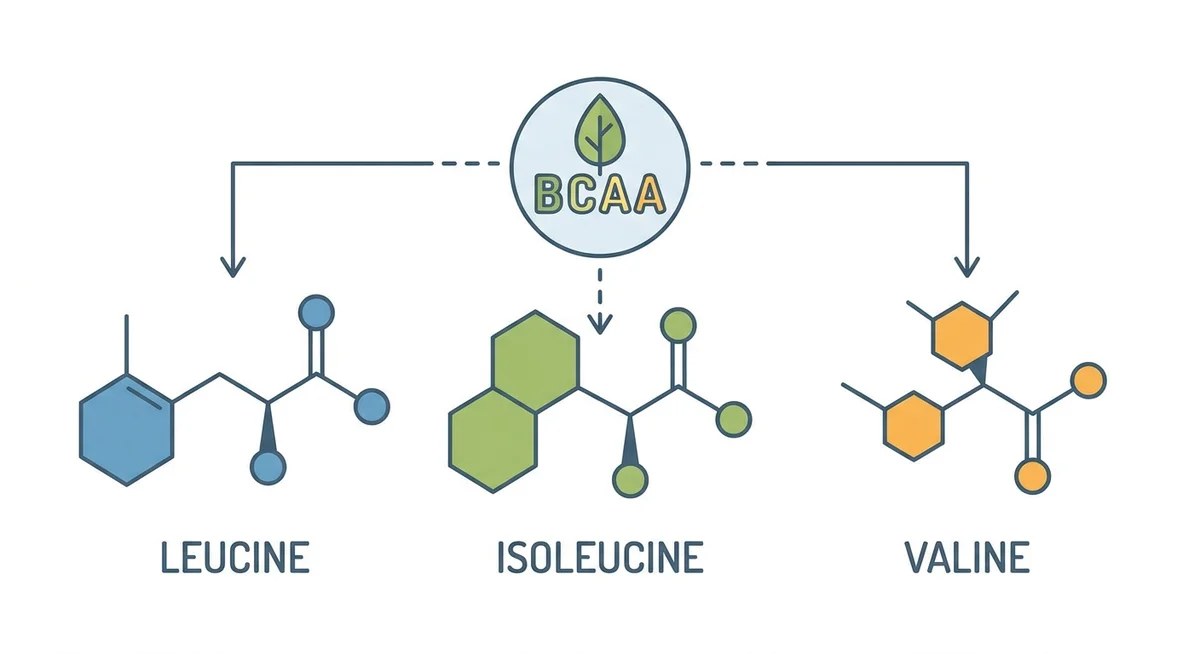
- Whey protein contains all nine essential amino acids, including the three BCAAs (leucine, isoleucine, valine).
- WPI 90 delivers more usable protein per gram than concentrate, which means more amino acids and fewer filler calories per scoop.
- Leucine is the key trigger for muscle protein synthesis, and whey is one of the richest dietary sources of it.
- The filtration process that creates WPI 90 preserves the full amino acid profile while stripping fat and lactose.
- A complete, well-dosed amino acid pool is what separates recovery from real adaptation.
What are amino acids and why does the breakdown matter?
Amino acids are the building blocks your body uses to repair muscle tissue, produce enzymes, regulate hormones, and carry out just about every metabolic process that keeps you functioning. There are 20 amino acids involved in human protein synthesis. Nine of them are classified as "essential" because your body cannot make them on its own; you have to eat them. The remaining 11 are non-essential, meaning your body can synthesise them from other compounds, though dietary sources still help when demand is high (after hard training, for example).
When you see "25g of protein" on a label, that number represents the total mass of amino acids in one serving. But the ratio of those amino acids matters just as much as the total. A protein source loaded with non-essential amino acids and light on essentials will behave very differently in the body than one skewed toward the essentials. Whey is skewed toward the essentials, and that's one of the main reasons it's used so widely in sports nutrition.
What does the amino acid profile of WPI 90 actually look like?
A standard 30g serving of WPI 90 (at 90% protein content) delivers around 27g of protein, which breaks down roughly like this across the key amino acids:
| Amino Acid | Type | Approx. per 30g scoop | Why it matters |
|---|---|---|---|
| Leucine | Essential / BCAA | ~2.7g | Primary trigger for muscle protein synthesis |
| Isoleucine | Essential / BCAA | ~1.5g | Supports energy production and glucose uptake |
| Valine | Essential / BCAA | ~1.4g | Muscle repair and nitrogen balance |
| Glutamine | Non-essential (conditionally) | ~4.0g | Gut health, immune function, recovery |
| Lysine | Essential | ~2.4g | Collagen synthesis and calcium absorption |
| Threonine | Essential | ~1.8g | Immune function and connective tissue |
| Methionine | Essential | ~0.5g | Antioxidant production (via glutathione) |
| Phenylalanine | Essential | ~0.8g | Neurotransmitter precursor |
| Tryptophan | Essential | ~0.5g | Serotonin and melatonin production |
| Histidine | Essential | ~0.5g | Tissue repair and red blood cell production |
These figures sit within the typical range for a high-quality WPI 90 product. Exact values vary slightly between batches and manufacturers, so always check the specific amino acid panel on your product's label if you want the precise numbers for your tub.
Why leucine gets so much attention from researchers
Of all the amino acids in whey, leucine has the strongest body of research behind it for muscle building specifically. It acts as a direct signal to the mTOR pathway, which is the cellular switch that turns on muscle protein synthesis. Without enough leucine in a single meal, that switch doesn't fully flip, even if total protein intake for the day looks fine.
Research generally points to around 2 to 3 grams of leucine per meal as the threshold needed to maximally stimulate muscle protein synthesis. A standard scoop of WPI 90 comfortably clears that bar on its own, around 2.5 to 2.7g per 30g serving depending on the product. A scoop of whey concentrate (typically 70 to 80% protein) at the same 30g will deliver noticeably less leucine simply because there's less actual protein in the scoop.
BCAAs from whole protein vs. standalone BCAA supplements
BCAA supplements (powders or capsules containing just leucine, isoleucine, and valine) became popular on the idea that you could spike muscle protein synthesis without eating full protein. The research has since cooled considerably on that claim. BCAAs without the other essential amino acids can trigger the mTOR signal, but the body doesn't have the raw materials to complete the protein synthesis process, so the effect is blunted.
Standalone BCAA supplements
- Deliver only leucine, isoleucine, valine
- Spike mTOR but can't complete synthesis without other EAAs
- Often low in actual protein content (3 to 5g per serve)
- Cost per gram of protein is usually higher
- Useful if you're eating a full meal alongside, not as a standalone
WPI 90 (whole protein)
- Contains all nine essential amino acids
- BCAAs arrive with the full complement of EAAs to complete the job
- 25 to 27g of protein per 30g scoop
- Better cost-per-gram of actual protein
- Works as a complete standalone protein source
The short version: the BCAAs in a scoop of WPI 90 are more useful than the same grams of leucine from a standalone BCAA product because all the supporting amino acids arrive with them. You're not just triggering synthesis; you're giving the body everything it needs to follow through.
How filtration affects the amino acid profile
One concern people raise about heavily filtered proteins is whether the processing destroys any of the amino acids. It's a fair question. The answer, for cold cross-flow microfiltration (the most common method for producing WPI 90), is no. The filtering process removes fat, water, and lactose through a physical membrane, not heat or chemical treatment. The amino acid profile stays intact.
This is actually one of the advantages of the better filtration methods over older techniques like ion exchange, which can alter the ratio of certain protein fractions. Cold-processed WPI 90 preserves the full amino acid spectrum in roughly the same proportions as the original whey liquid, just concentrated. You get more amino acids per gram because there's less else in the way.
If you want to understand more about how the filtration process works and why it matters for what ends up in your scoop, The Filter Files goes into that in detail. And if you're curious about how WPI 90 compares to concentrate and hydrolysate across the whole protein hierarchy, The Protein Pyramid covers the full stack.
Does the amino acid profile differ between flavours or batches?
Amino acid content comes from the protein itself, not from flavouring, sweeteners, or other additives. A natural unflavoured WPI 90 and a chocolate-flavoured version of the same base protein will have essentially identical amino acid profiles. Where variation does occur is between different batches of raw whey and between manufacturers who source from different dairy regions or use different processing conditions.
This is why sourcing and manufacturing consistency matters. A premium WPI 90 from a supplier who tests each batch and publishes amino acid panels gives you predictable delivery. A budget powder from a less transparent supply chain might list "25g protein" but offer a different amino acid split than you'd expect. The number on the front panel and the profile behind it are two different things.
Frequently asked questions
Does WPI 90 have more BCAAs than regular whey concentrate?
Yes, per gram of product. Because WPI 90 is 90% protein and concentrate is typically 70 to 80%, a 30g scoop of isolate contains more protein and therefore more BCAAs than the same scoop weight of concentrate. If you match them on equal protein doses (both at 25g of protein, for example), the amino acid split looks similar, but you'll need a larger scoop of concentrate to get there.
Can I get enough amino acids from food without supplementing?
Yes, if you're eating varied whole foods with quality protein sources across the day. Chicken, eggs, fish, dairy, and legumes all carry reasonable amino acid profiles. Whey protein is a supplement, not a replacement. Its advantages are speed of digestion, convenience, and the ability to hit a precise protein target without the fat and calories that come with whole food portions.
Is the glutamine in whey protein the same as glutamine supplements?
Structurally, yes. Glutamine found naturally in whey protein is the same amino acid as standalone glutamine powders. The difference is that in whey it arrives alongside the full protein matrix, which some research suggests may support absorption and gut integrity better than isolated glutamine on its own. Standalone glutamine supplements have mixed evidence for athletic performance, whereas whey protein's total amino acid package has a much stronger research record.
Why do some labels list "amino acid spiking" as a concern?
Amino acid spiking is when manufacturers add cheap individual amino acids (typically glycine, taurine, or creatine) to inflate the total nitrogen count, which makes the protein content look higher on a standard test than it actually is. A reputable WPI 90 product should list protein from whey protein isolate as the sole or primary protein source, with no long list of individually added amino acids. If you see taurine or glycine near the top of the ingredient list, that's worth a second look.
See our WPI 90 range High-purity whey protein isolate with a full amino acid panel, no fillers.