WPI 90 and Other Supplements: What to Stack, What to Skip
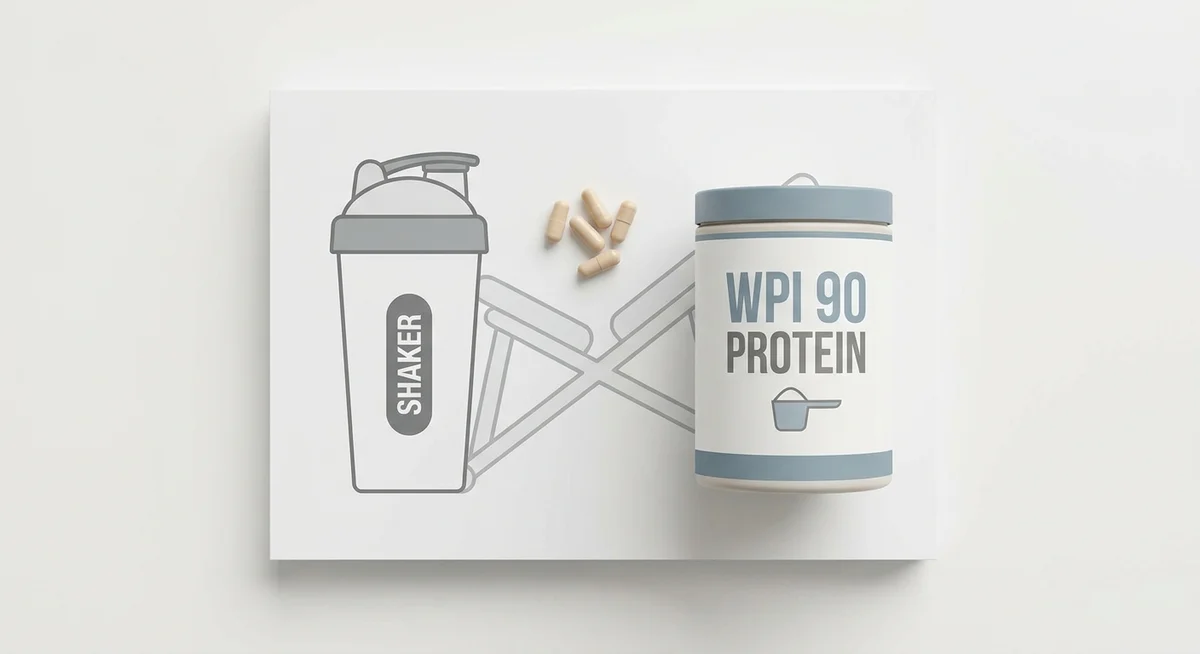
If you're already using WPI 90 consistently, you've done most of the work. But once the protein habit is locked in, it's natural to wonder what else belongs in the stack. Creatine? Collagen? Caffeine? The honest answer is: some combos genuinely add up, and some are just extra spending. Here's what the evidence actually says about pairing WPI 90 with other common supplements.
Key takeaways
- WPI 90 pairs well with creatine monohydrate. Timing is flexible and the combination has solid research behind it.
- Collagen and WPI 90 serve different purposes. They can complement each other, but collagen is not a protein replacement.
- Caffeine does not interfere with protein absorption when taken around the same time.
- Most "protein booster" blends add cost without adding meaningful results over a quality WPI 90 on its own.
- Stacking works best when each supplement has a clear, separate job in your routine.
Is WPI 90 + creatine the most researched stack in gym culture?
Yes, and for good reason. Creatine monohydrate is one of the most studied sports supplements in existence, and its mechanism is completely different from protein's. Protein builds and repairs muscle tissue. Creatine tops up phosphocreatine stores in your muscles, helping you squeeze out more reps before fatigue kicks in. They do different jobs, so combining them makes straightforward sense.
You don't need to take them at the exact same moment. Some people mix creatine directly into their protein shake for convenience, and that's fine. Others take creatine separately. The research on creatine timing is mixed enough that "whenever you remember" is a reasonable strategy as long as you're consistent.
One thing to watch: if you're buying a pre-blended "protein + creatine" product, check the creatine dose. The effective dose for most people is around 3-5 grams per day. Some blended products include a token 1 gram to put it on the label. You're better off buying a simple, unflavoured creatine monohydrate and adding it to your own WPI 90 shake so you control the dose.

What about collagen protein? Does it work with WPI 90?
Collagen supplements have had a solid run of popularity, and they do have a real use case. Collagen is a structural protein found in tendons, ligaments, cartilage, and skin. The research on collagen peptides for joint support and tendon repair is genuinely interesting, particularly for people doing high-impact training or recovering from an injury.
The catch is that collagen is not a complete protein. It's low in several essential amino acids and almost entirely missing tryptophan, so it cannot replace WPI 90 for muscle protein synthesis. Think of them as working different corners of the recovery picture.
What WPI 90 does
- Delivers all essential amino acids for muscle repair
- High leucine content triggers muscle protein synthesis
- Fast absorption post-workout
- Supports muscle retention on a calorie deficit
What collagen does
- Supplies glycine, proline, and hydroxyproline for connective tissue
- May support tendon and ligament repair
- Often recommended with vitamin C for collagen synthesis
- Not a substitute for complete protein sources
If joint health is a genuine concern for you, collagen peptides taken 30-60 minutes before training (alongside some vitamin C) is the protocol that appears most often in the current research. Your WPI 90 shake then does its usual job post-workout. The two don't conflict; they just operate on different tissues.
Does caffeine mess with protein absorption?
Short answer: no. Caffeine is a stimulant that affects your central nervous system and can raise training intensity. It does not block or slow protein absorption in any meaningful way. If you like a pre-workout coffee before a session and a protein shake after it, that combination is completely fine.
Where people sometimes run into trouble is when a stimulant-heavy pre-workout suppresses their appetite enough that they skip their post-workout meal or shake entirely. If that sounds like you, the fix is simple: have your WPI 90 shake regardless of whether you feel hungry, because the anabolic window doesn't wait for your appetite to return.
Which supplement combinations are mostly a waste of money?
Here's a table of common additions you'll see marketed alongside protein, and an honest take on each one.
| Supplement | Evidence level | Worth stacking with WPI 90? |
|---|---|---|
| Creatine monohydrate | Strong | Yes. Separate jobs, proven results. |
| Collagen peptides | Moderate (joint/tendon focus) | Yes, if joint recovery is a goal. Not a protein replacement. |
| BCAAs | Weak when protein intake is adequate | No. WPI 90 already delivers BCAAs in full. Redundant. |
| Glutamine | Weak for healthy individuals | No. Whey is already high in glutamine. Saves you money to skip it. |
| Digestive enzymes | Modest, situational | Sometimes. If you have gut discomfort with protein, worth trying. WPI 90 is already low in lactose, so many people don't need them. |
| Caffeine (pre-workout) | Strong | Fine to use alongside WPI 90. Just don't let it crowd out your post-workout shake. |
| "Anabolic activator" blends | Minimal to none | No. Usually underdosed proprietary blends. Skip and save the money for quality protein. |
BCAAs are worth singling out because they're still heavily marketed as a protein companion. The reality is that if you're hitting your daily protein target with a quality WPI 90, you're already getting leucine, isoleucine, and valine in the doses you need. Paying for a separate BCAA supplement on top of that is paying for the same amino acids twice.
What's the simplest, most effective stack for most people?
For the overwhelming majority of people training consistently, the stack that delivers the best results per dollar is about as simple as it gets:
- WPI 90 daily to hit your protein target. If you want a clear look at how much protein you actually need, that breakdown will give you your number.
- Creatine monohydrate (3-5g daily), taken whenever is convenient. Mixed into your shake or separate, it doesn't matter much.
- Collagen peptides (if relevant) if you're dealing with joint load or tendon issues. Take pre-training with vitamin C, not as a protein replacement.
Everything else is optional at best. Supplements that promise dramatic results on top of this trio usually can't deliver on that promise, because the foundation is already doing the heavy lifting.
Does the quality of your WPI 90 change how well supplements stack with it?
It does, indirectly. A lower-quality protein powder with fillers, added amino acids spiked onto the label, or significant lactose can make it harder to gauge what's actually working. When you know exactly what's in your protein, you can make cleaner decisions about what to add.
Understanding how to read a whey protein label is genuinely useful here. If the ingredient list is cluttered, the protein percentage is below 85%, or you see free amino acids like taurine or glycine high on the list, the powder is likely spiked. Any supplement you stack on top of that baseline becomes harder to evaluate.
FAQ: WPI 90 supplement stacking
Can I mix creatine directly into my WPI 90 shake?
Yes, completely fine. Creatine monohydrate dissolves reasonably well in water and won't affect the taste or texture of your shake in a noticeable way. The combination is convenient and there's no nutritional downside. Just make sure you're adding the right dose (around 3-5g) rather than relying on a pre-blend that may include less.
Do I need BCAAs if I'm already using WPI 90?
No. WPI 90 already contains all three branched-chain amino acids in meaningful amounts, including leucine at the doses associated with triggering muscle protein synthesis. Adding a separate BCAA supplement when protein intake is adequate adds cost without adding results. The research on BCAAs only shows benefit when total protein intake is low.
Is it safe to take multiple supplements at the same time?
For the supplements covered here (WPI 90, creatine, collagen, caffeine), yes. None of them interact negatively with each other at normal doses. If you're taking prescription medication or have a medical condition, it's worth checking with your doctor before adding anything new, but these are all widely used without issue in healthy adults.
What if I notice gut discomfort when I combine supplements?
Start by ruling out the protein itself. WPI 90 is very low in lactose, which removes the most common cause of protein-related gut trouble. If you're still getting discomfort, try spacing your supplements out rather than taking everything at once, and make sure you're drinking enough water throughout the day. Some people find digestive enzyme supplements helpful, particularly if they're taking a high overall supplement load around training.
See how our WPI 90 is madeQuality starts at the source. Find out what goes into every batch.