From Cow to Canister: The Real Story Behind WPI 90 and Why Whey Quality Actually Matters

Whey protein has gone from a niche bodybuilder staple to something tucked into kitchen cupboards next to the coffee and the cereal. But while almost everyone has heard of it, very few people actually know what whey is, where it comes from, or why one tub costs $40 and another costs $120. Spoiler: the difference is real, and it shows up in the ingredient list, the texture, and the way the body actually uses it.
This is a quick tour through the world of whey, from the dairy farm all the way to the shaker bottle, with a particular focus on why Whey Protein Isolate 90 (WPI 90) has earned its reputation as the cleanest, most efficient protein on the shelf.
What Whey Protein Actually Is
Whey is the liquid that separates from milk during cheesemaking. For thousands of years it was considered a byproduct, often poured out or fed to livestock. Then food scientists figured out something interesting: that runny, slightly yellow liquid is packed with some of the highest quality protein found anywhere in nature.
Milk is roughly 80% casein and 20% whey. When milk is curdled to make cheese, the solid curds become the cheese and the liquid whey gets drained off. That liquid is then filtered, dried, and turned into the powder that ends up in tubs around the world.
What makes whey special is its amino acid profile. It contains all nine essential amino acids and is particularly rich in leucine, the amino acid most directly responsible for triggering muscle protein synthesis. It also digests faster than almost any other protein source, which is why people drink it after workouts when the body is hungry for repair material.
The Three Main Types of Whey, Explained Without the Jargon
Walk into any supplement shop and the labels can blur together. Concentrate, isolate, hydrolysate, native, grass-fed, cold-processed. Here is what actually matters.
Whey Protein Concentrate (WPC)
This is the most common and the cheapest. Concentrates typically range from 30% to 80% protein by weight, with the rest made up of lactose (milk sugar), fat, and some moisture. A standard WPC 80 is a solid product, but it still contains a meaningful amount of carbs and fat, and people who are sensitive to lactose often feel it.
Whey Protein Isolate (WPI)
Isolate goes through extra filtering to strip out almost all the lactose, fat, and carbohydrates. The result is a powder that is at least 90% protein by weight. WPI 90 means 90 grams of protein per 100 grams of powder, which is about as pure as whey gets without moving into hydrolysed territory. It mixes thinner, sits lighter on the stomach, and tends to suit people with sensitive digestion.
Whey Protein Hydrolysate (WPH)
Hydrolysate is whey that has been pre-digested using enzymes, breaking the protein down into smaller fragments. It absorbs the fastest of the three but tastes notoriously bitter and costs significantly more. It is mostly used in clinical nutrition and elite sports settings.
How WPI 90 Is Actually Made
The jump from raw whey liquid to a 90% pure protein powder is where the real engineering happens. There are two main methods used to produce isolate, and the one chosen has a big impact on the final product.
Ion Exchange
This method uses charged resins to attract and separate the protein molecules from everything else. It can produce extremely high protein percentages, sometimes above 92%, but it has a downside: it can damage some of the more fragile, beneficial protein fractions like immunoglobulins and lactoferrin. Basically, it gets the protein number up but loses some of the goodness along the way.
Cross-Flow Microfiltration (CFM)
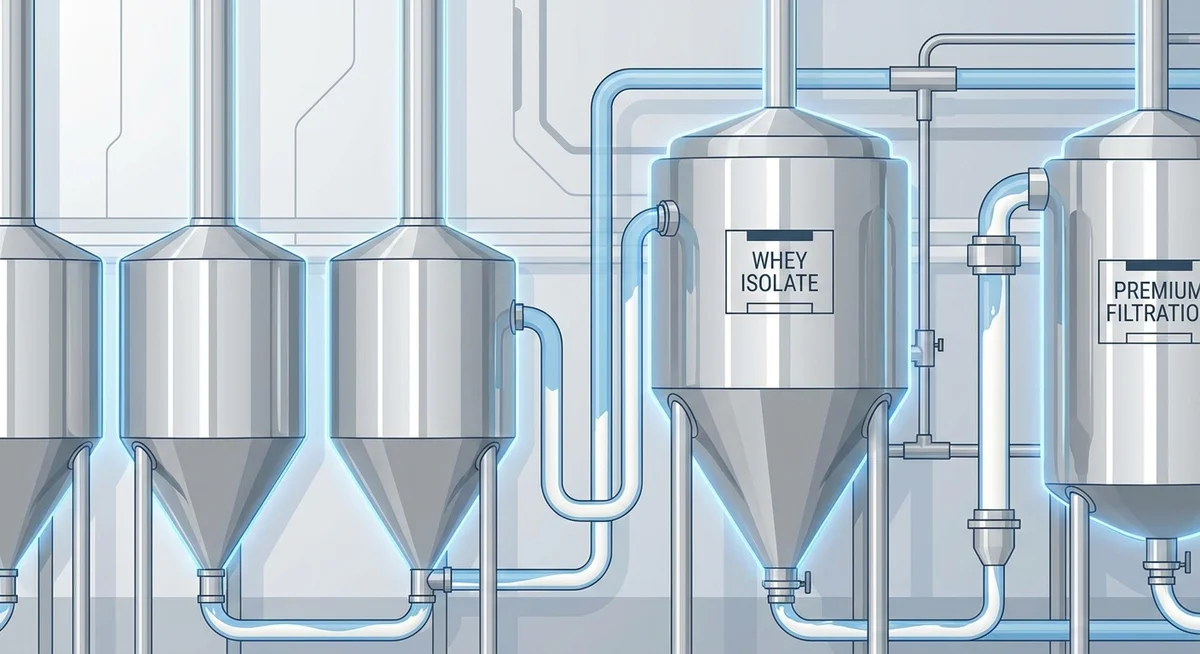
This is the gentler, more modern approach and the one used for premium products like The Whey Co's WPI 90. Liquid whey is passed through a series of ceramic membranes at low temperatures and low pressure. The membranes have pores small enough to let lactose, fat, and minerals pass through while holding back the protein.
Because no harsh chemicals or high heat are involved, the protein keeps its native structure. That means more of the bioactive components survive intact, including the small but valuable fractions that support immune function and gut health. It costs more to produce, but the end product is genuinely superior.
After filtration, the concentrated protein liquid is spray dried, a process that turns it into the fine powder that goes into the tub. Quality producers spray dry at lower temperatures to protect the protein further.
Why WPI 90 Stands Apart
So why pick a 90% isolate over a cheaper concentrate? It comes down to four things.
- More protein per scoop. A 30 gram serve of WPI 90 delivers roughly 27 grams of actual protein. The same serve of an 80% concentrate delivers about 24 grams, and a lot of the rest is lactose and fat.
- Almost no lactose. Most isolates contain less than 1% lactose, which makes them suitable for the majority of people who normally feel bloated or uncomfortable after dairy.
- Minimal fat and carbs. Useful for anyone tracking macros carefully or trying to keep total calories in check while hitting a high protein target.
- Cleaner mixing and lighter taste. Isolate dissolves into a thinner, smoother liquid. No chalky aftertaste, no thick milky residue at the bottom of the shaker.
The practical effect is that WPI 90 fits into more lifestyles. It works for someone cutting weight, someone bulking, someone who just wants extra protein in their morning oats, and someone who avoids dairy because of digestive issues.

The Benefits That Actually Show Up
Marketing claims around protein powder can get a bit ridiculous, so it is worth sticking to what the science actually supports.
Muscle Repair and Growth
This is the headline benefit. Whey is rich in branched chain amino acids, particularly leucine, and it is absorbed quickly. Studies consistently show that consuming 20 to 40 grams of whey protein after resistance training helps trigger muscle protein synthesis more effectively than most other protein sources.
Satiety and Body Composition
Protein is the most filling macronutrient. A whey shake between meals tends to take the edge off appetite far more than a snack of similar calories made up of carbs or fat. For people trying to manage their weight, hitting a higher daily protein target makes the whole process easier.
Recovery and Immune Support
The bioactive fractions preserved in cross-flow filtered isolate, including immunoglobulins and lactoferrin, have been linked in research to better recovery and a healthier immune response. These compounds are easy to destroy with rough processing, which is part of why production method matters.
Everyday Convenience
Sometimes the underrated benefit is just speed. A scoop in water, shake, done. 27 grams of high quality protein in under a minute, no cooking, no dishes, no thinking. For busy mornings or post-gym chaos, that matters.
Why Quality Is Not Just Marketing
Two tubs of WPI on a shelf can look almost identical. Same protein number on the front, similar serving size, similar claims. The difference shows up in places most people never look.
The cheapest way to make protein powder is rarely the best way to make protein powder.
Cheaper isolates are often produced using higher heat, harsher chemicals, or blends that include amino acid spiking, where free form aminos like glycine and taurine are added to inflate the protein reading on a lab test without actually delivering complete protein. The label says 90%, but the protein the body can actually use is lower.
Quality WPI starts with the milk itself. Pasture-raised, well-treated cows produce milk with a better fatty acid and micronutrient profile. From there, it depends on whether the producer uses cross-flow microfiltration, keeps temperatures low, avoids unnecessary additives, and tests the final product independently for purity, heavy metals, and contamination.
The Whey Co's WPI 90 is built around those choices. The whey is sourced from grass-fed dairy, processed using cross-flow microfiltration, kept free of artificial fillers, and finished with a clean ingredient list short enough to read in a few seconds. No proprietary blends hiding cheap fillers, no synthetic sweeteners doing heavy lifting on the flavour, no shortcuts in processing.

Fitting WPI 90 Into a Real Life
For most adults, hitting somewhere between 1.6 and 2.2 grams of protein per kilogram of body weight per day supports muscle maintenance, recovery, and general body composition goals. Getting that from food alone is doable but not always practical.
One or two scoops of WPI 90 a day fills the gaps without adding much in the way of calories, sugar, or digestive baggage. It blends into smoothies, stirs into yoghurt, mixes with oats, or just goes in the shaker with cold water